
How to Select Metal Zippers for Different Fabrics
Metal zippers are widely used in clothing, bags, footwear, and various accessories because they stay strong, resist wear, and provide a more premium appearance. Selecting the right metal zipper for different fabrics needs to think it through. If you grab the wrong zipper, it can quietly mess with the garment’s functionality, overall look, how it feels on skin, and even how long it lasts. Factors like fabric thickness, overall weight, flexibility, and the intended use all steer which metal zipper is the best match. Once you understand how metal zippers and fabrics actually “work together”, manufacturers, designers, and consumers get better performance and a more professional finish.
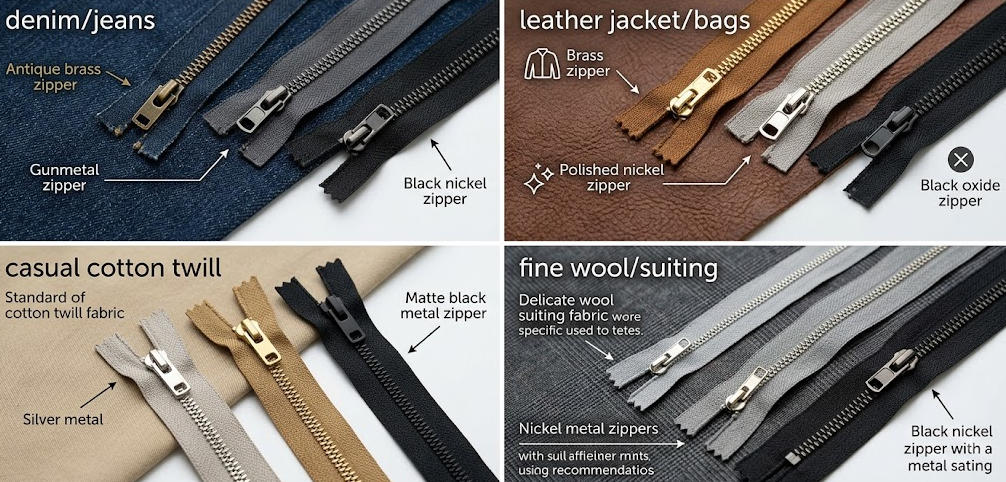
Understanding the Relationship Between Metal Zippers and Fabrics
Metal zippers are well known for their strength, durability, and that distinct visual style. Compared with nylon or plastic zippers, metal zippers rely on separate metal teeth that interlock tightly, so they’re better for situations where mechanical strength matters a lot. Typically, the metal zipper material can be brass, aluminum, a copper alloy, or zinc alloy, and each one brings its own mix of strength, weight, and appearance.
When you’re selecting a metal zipper, start with the fabric structure, honestly. Heavier, thicker, and more rigid textiles usually pair best with stronger zippers and larger teeth. Lighter, more flexible fabrics usually need smaller zipper sizes so the closure doesn’t ruin comfort or change the look in an obvious way. A zipper that’s too weak might buckle or fail when tension increases, but a zipper that’s too large can make the product feel stiff, awkward, and not really move the same.
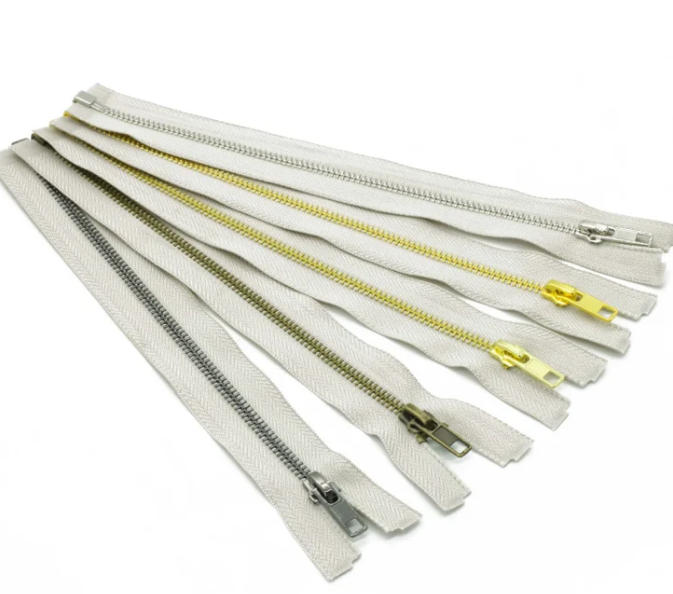
Different Types of Metal Zippers
| Type of Metal Zipper | Main Material | Features |
| Brass Zipper | Brass alloy | Strong durability, classic appearance, good wear resistance, suitable for heavy-duty use |
| Aluminum Zipper | Aluminum alloy | Lightweight, smooth operation, corrosion-resistant, available in various colors |
| Copper Zipper | Copper alloy | Premium appearance, excellent strength, vintage style |
| Zinc Alloy Zipper | Zinc alloy | Cost-effective, strong, easy to customize with different finishes |
| Antique Metal Zipper | Brass, copper, or zinc alloy with antique coating | Retro appearance, decorative finish, durable surface |
| Heavy-Duty Metal Zipper | Brass, copper, or reinforced alloy | Large teeth, high tensile strength, designed for frequent use |
| Lightweight Metal Zipper | Aluminum or thin alloy materials | Small teeth, reduced weight, comfortable for soft fabrics |
| Waterproof Metal Zipper | Treated metal alloy with protective coating | Improved moisture resistance, suitable for outdoor conditions |
| Two-Way Metal Zipper | Brass, aluminum, or alloy materials | Two sliders allow opening from both ends |
| Invisible Metal Zipper | Fine metal teeth with matching fabric tape | Teeth are less noticeable when closed, provides a clean appearance |
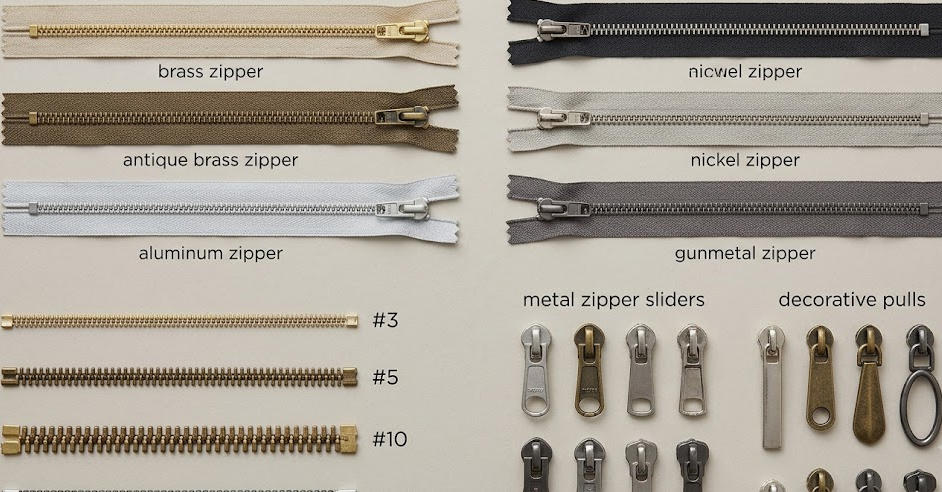
Different Fabric Requirements for Metal Zippers
1. Denim Fabrics
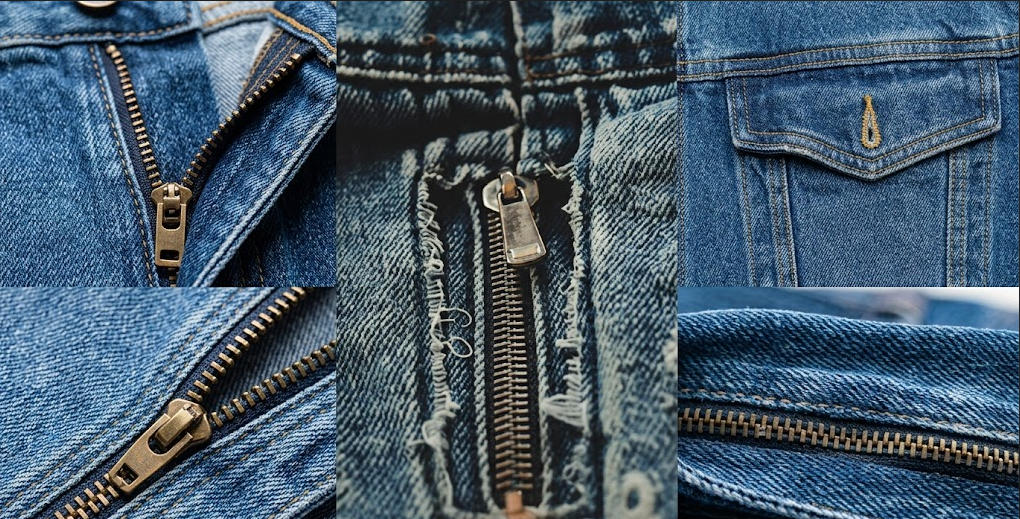
Denim, a thick solid and abrasion-resistant type of cloth, is usually seen in jeans, jackets, and workwear. Since denim garments get pulled on again and again and they are washed often, the zipper has to be really durable.
For denim, heavy-duty metal zippers with large teeth tend to work best. Brass zippers and antique finish metal zippers are very popular, they bring strong mechanical behavior and they also match the rugged look of denim items.
Key Selection Principles for Denim Fabrics
| Selection Factor | Recommendation |
| Zipper Strength | Choose stronger metal zippers for thick and heavy denim to prevent tooth separation and slider damage |
| Zipper Material | Brass and copper alloy zippers are preferred for durability and classic denim appearance |
| Zipper Size | Match zipper size with denim thickness; heavier denim requires larger teeth |
| Finish Selection | Brass, antique, black, and gunmetal finishes can complement different denim styles |
| Slider Quality | Use strong locking sliders for jeans and jackets that experience frequent movement |
| Durability Requirements | Select zippers with high wear resistance for long-lasting denim products |
2. Leather Fabrics
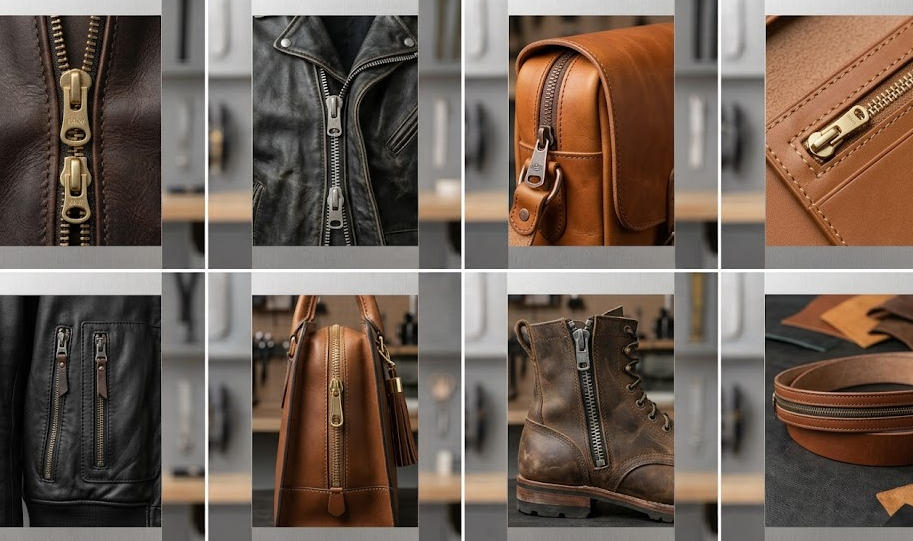
Leather is a premium material, commonly used for jackets handbags shoes, and accessories too. Because leather is thick and strong but also less flexible than textile fabrics, the zipper needs to be picked with care so it moves smoothly, without scuffing or stressing the material.
Heavy-duty metal zippers are used quite often in leather goods because they can take high tension and they still work through opening and closing a lot, even when things are pushed and pulled. Brass zippers, copper zippers, and gunmetal finished zippers are a few common picks; they look especially rich while still holding up well over time.
Also, the surface treatment matters a lot for leather uses. A metal finish that matches the rest of the leather can lift the whole look, but a bad tone pairing can bring down the overall visual quality. High-quality sliders and corrosion-resistant metal parts are just as important, if the goal is a leather item that stays reliable for the long haul.
3. Cotton and Lightweight Fabrics
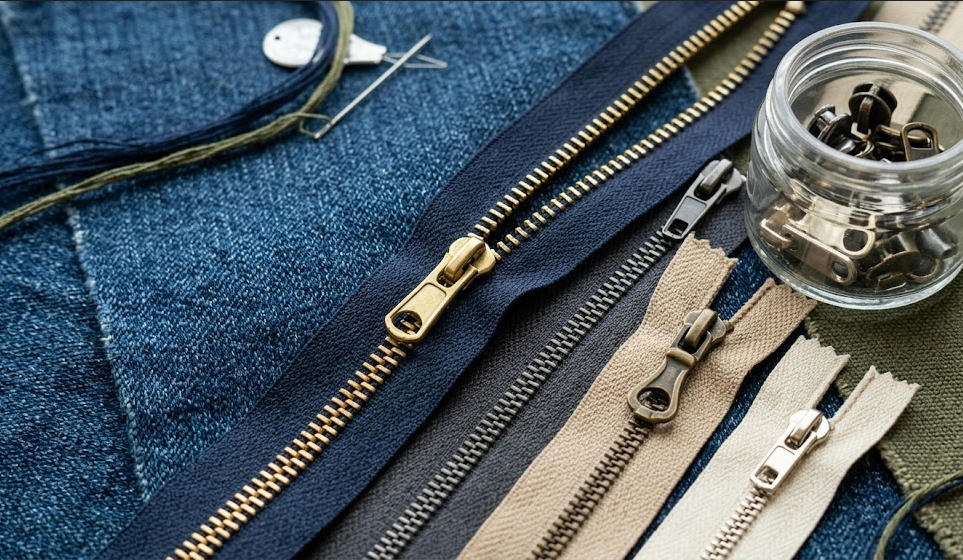
Cotton fabrics show up everywhere, in shirts, casual jackets, skirts, and even everyday bags. Since cotton is gentler and more pliant than denim or leather, using an oversized heavy zipper can interfere with both comfort and appearance, and the result may feel awkward on the piece.
Lightweight metal zippers with smaller teeth are usually preferred for cotton items. Aluminum zippers work well too, because they give a metallic appearance, while keeping the overall weight down a bit.
For cotton fabrics, zipper manufacturers should focus on:
| Fabric Type | Suitable Metal Zipper Features |
| Cotton shirts | Small teeth, lightweight design |
| Cotton jackets | Medium-size teeth with smooth operation |
| Canvas bags | Strong tape and medium or large teeth |
The zipper should provide enough strength while maintaining the softness and flexibility of the cotton material.
4. Wool and Thick Fabrics
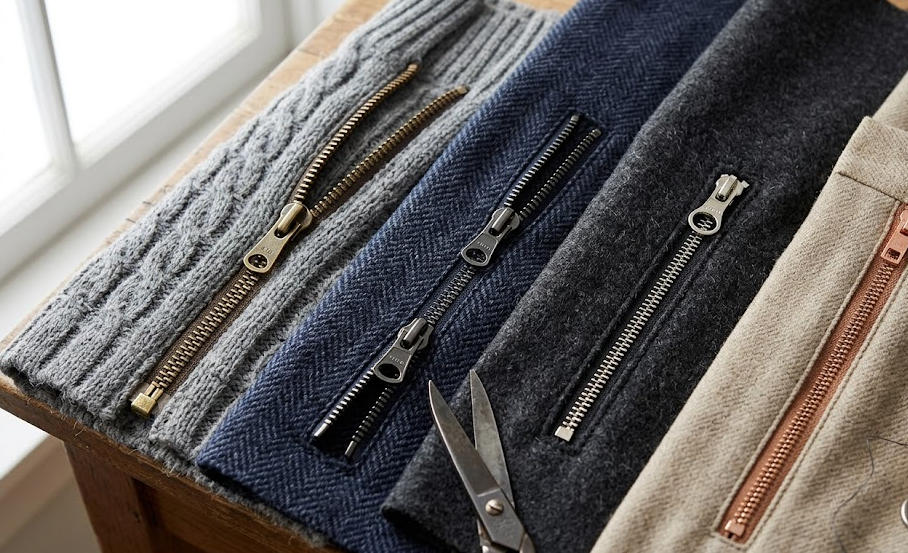
Wool coats, jackets, and winter clothing typically rely on thick fabrics that need a durable kind of closure. If the zipper is too small, it may have trouble going through fabric bulk, and it will face repeated pull and tension.
Medium or heavy metal zippers are often used for wool garments. It helps if the zipper has a sturdy slider, plus corrosion resistant teeth, so it stays reliable in chilly and damp surroundings.
Key factors to consider are:
- Matching zipper gauge to fabric thickness
- Making sure it moves smoothly across multiple fabric layers
- Picking a zipper length that fits coat and jacket patterns
When a metal zipper is chosen well, it improves the day to day function and also the visual quality of winter apparel.
5. Synthetic Fabrics
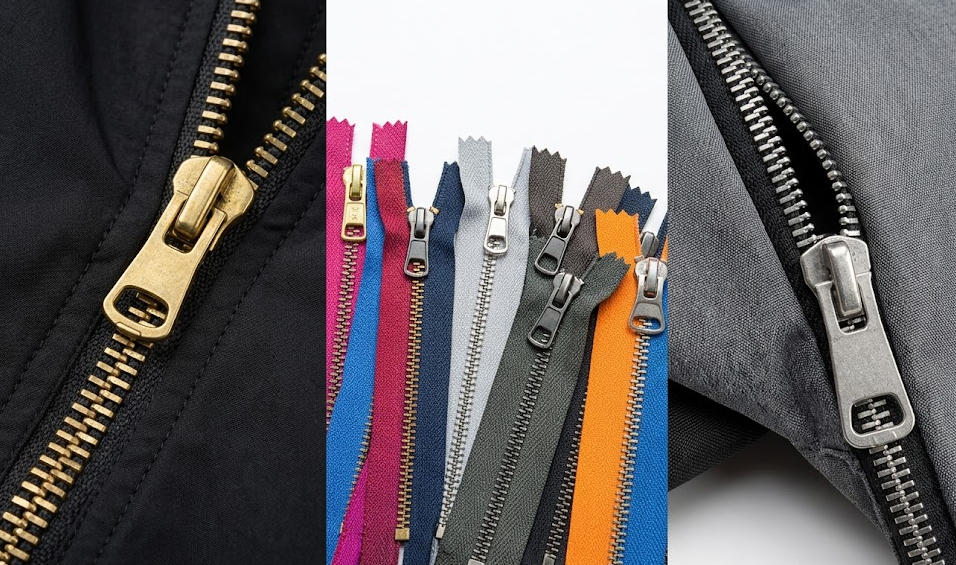
Synthetic fabrics like polyester, nylon, and blended textiles tend to show up in sportswear, outdoor garments and even fashion lines. What matters is that these materials can be very different in thickness and springiness, so the zipper choice usually depends on what the piece is for.
| Synthetic Fabric Type | Fabric Characteristics | Recommended Zipper Type | Key Selection Considerations |
| Polyester Fabric | Lightweight, durable, wrinkle-resistant, and widely used in apparel | Lightweight to medium metal zippers (#3 to #5) | Choose zippers with smooth operation, corrosion resistance, and suitable weight |
| Nylon Fabric | Soft, flexible, abrasion-resistant, and commonly used in outdoor products | Lightweight aluminum or standard metal zippers (#3 to #5) | Select lightweight zippers that maintain fabric flexibility and reduce stress on seams |
| Spandex / Elastane Blends | Highly elastic, stretchable, and body-fitting | Small metal zippers with flexible zipper tape (#3 to #4) | Avoid oversized zippers that restrict fabric movement; ensure smooth opening and closing |
| Polyester-Cotton Blends | Balanced strength, moderate thickness, and good stability | Medium metal zippers (#5) | Match zipper strength with fabric thickness and garment structure |
| Microfiber Fabric | Soft texture, lightweight, and smooth surface | Fine-tooth metal zippers (#3 to #5) | Use lightweight zippers to maintain a clean appearance and comfortable feel |
| Fleece and Synthetic Knits | Soft, warm, and thicker than regular synthetic fabrics | Medium metal zippers (#5 to #8) | Choose durable sliders and smooth-running teeth to handle thicker layers |
Balance Fabric Weight and Metal Zipper Size
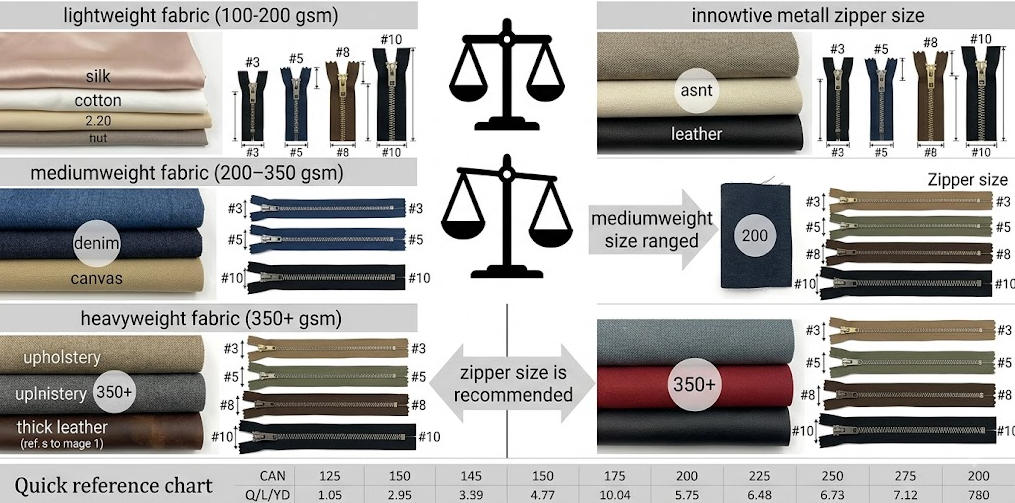
One of the most important factors when selecting a metal zipper is the balance between fabric weight and zipper size. A zipper should be strong enough to support the fabric but not so large that it affects comfort or design.
| Fabric Weight / Type | Fabric Characteristics | Recommended Metal Zipper Size | Suitable Metal Zipper Features |
| Lightweight Fabrics | Thin, soft, flexible, and sensitive to added weight | Small-size metal zippers (such as #3 or #4) | Lightweight construction, fine teeth, smooth operation, minimal stiffness |
| Medium-Weight Fabrics | Moderate thickness with good structure and flexibility | Standard metal zippers (such as #5) | Balanced strength, reliable performance, various metal finishes available |
| Heavy Fabrics | Thick, durable, and resistant to stretching | Large-size metal zippers (such as #8 or #10) | Strong teeth, reinforced tape, high pull strength |
Match Metal Finishes with Fabric Design
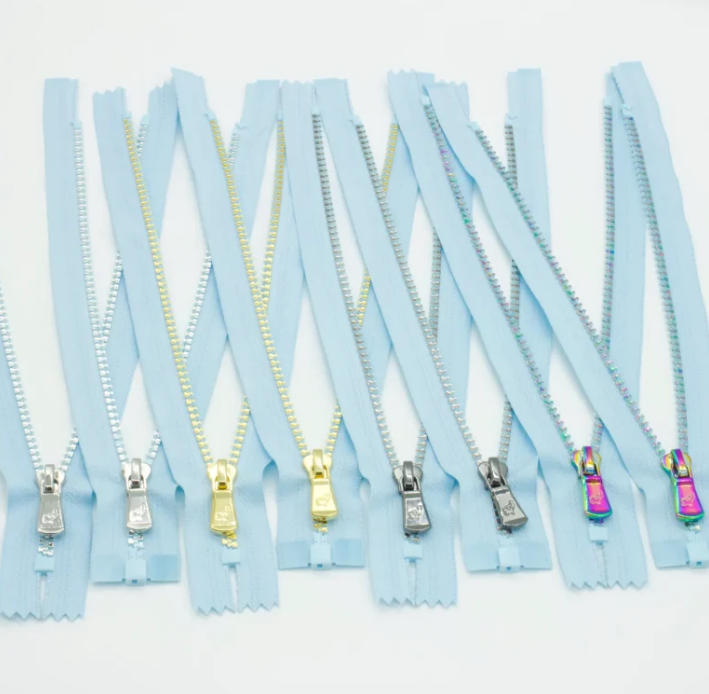
Besides functionality, metal zippers affect the whole look of the product, more than people expect. A particular metal finish can push the visual tone in a specific direction.
Some common finishes are listed below, including:
- Brass finish for classic, and vintage moods
- Silver finish for modern, clean designs
- Black or gunmetal finish for industrial looks and fashion uses
- Antique finish for rustic character, or premium products
Designers should pick zipper colors and finishes that match the fabric texture and the overall style of the item.
Evaluate Zipper Quality and Manufacturing Requirements
For manufacturers, zipper quality really hits product reliability and customer happiness. Before you choose a metal zipper, you should check factors like the pull strength, slider durability, tooth alignment, corrosion resistance, and how it performs after washing. If even one of these parts is slightly off, the whole piece can become less dependable.
A good metal zipper ought to run smoothly, keep steady performance after repeated use, and handle the conditions expected during the product’s whole life. In addition, collaborating with a dependable zipper supplier makes it easier to tailor things like zipper size, the base material, color, and the final finish to match different fabric needs. So the result feels more intentional, and less improvisation.
Final Thoughts
Selecting the proper metal zipper for each fabric is trickier than people expect. You kind of need to get what the fabric does, and what the zipper must handle, too. With thick stuff like denim or leather, it usually makes sense to use heavy-duty metal zippers. Lighter textiles such as cotton and polyester, however, tend to do better with smaller and more lightweight options. When the zipper size, the metal material, the finish, and the overall structure are matched well, you end up with better durability, improved appearance, and enhanced user experience.
When manufacturers take time to match metal zippers with fabric types, the results are not only functional but also stylish and long-lasting.