
How to Choose the Right Slider for Two-way Zippers
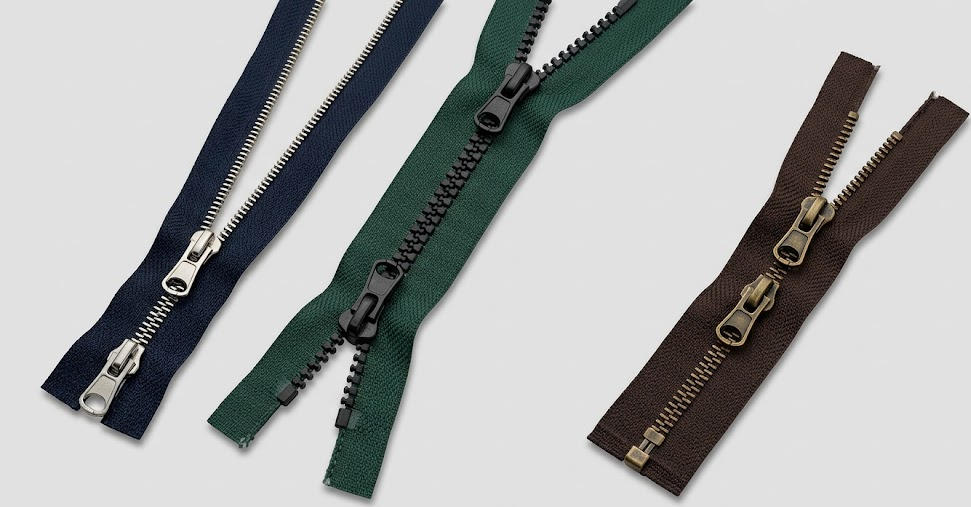
Two-way zippers show up on many items like jackets, coats, travel bags, backpacks, and sleeping bags. They are designed for opening and closing from more than one side. Most one-way zippers only move in one direction. A two-way zipper uses two sliders on the same zipper track, so a person can open it from the top end, the bottom end, or in both directions depending on how it is set up.
Selecting the right slider matters. It can ensure smooth operation, durability, and a good user experience. The wrong slider may cause zipper jamming, poor engagement, excessive wear, or compatibility problems during garment production. For manufacturers, designers, and purchasing teams, it helps to know slider types, materials, sizes, and functional requirements. That way, the finished zipper fits both technical and aesthetic expectations.
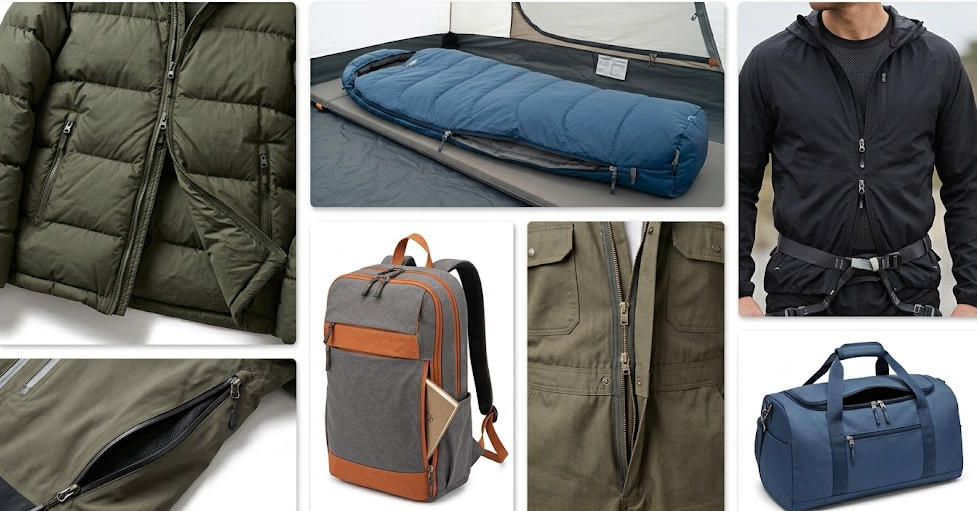
Table of Contents
How Two-way Zipper Sliders Work
Start by looking at how the zipper is built. Al two-way zipper has two rows of zipper teeth or coils. It also has two sliders, a zipper tape, and end parts like top and bottom stops.
Both sliders run on the same zipper chain. In many designs, they can move on their own. This lets the wearer open the zipper from either side. For instance, a two-way jacket zipper can be opened from the bottom. That can make walking and sitting feel easier.
Still, setups are not all the same. Some sliders are placed so they move in the same general direction. Other designs use sliders that face opposite ways, or they use special layouts. Because of that, a buyer should check the intended opening method before choosing a slider.
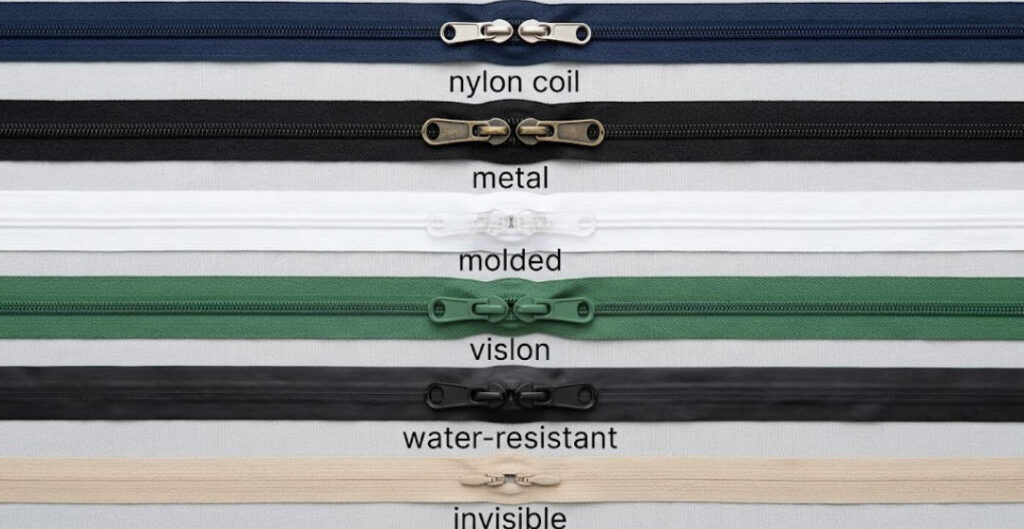
Key Factors to Consider for Choosing the Right Slider for Two-Way Zippers
1. Slider Type
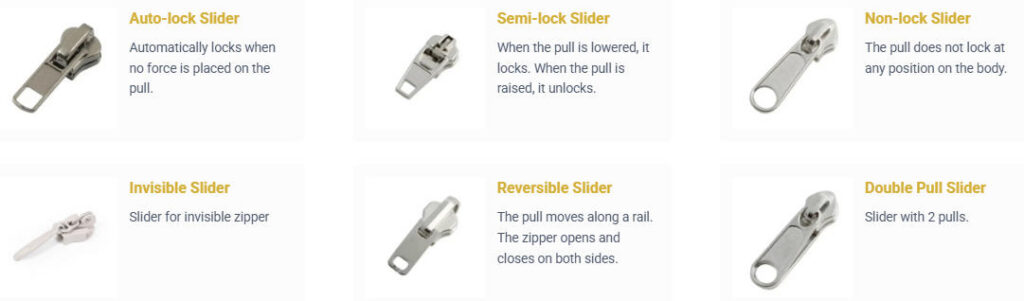
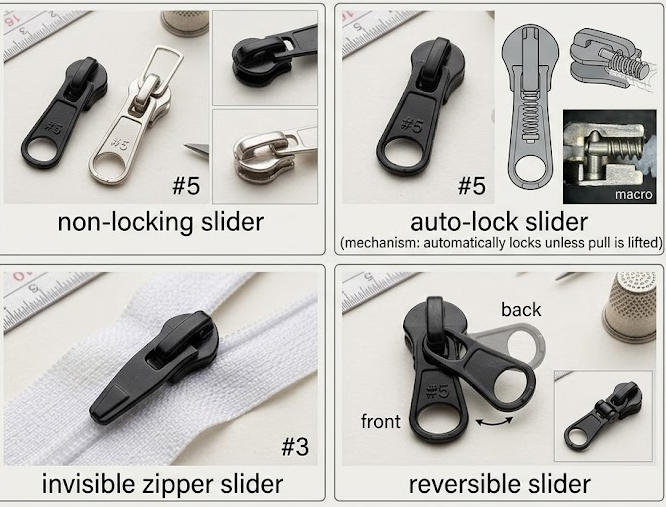
Different designs in zipper sliders offer different levels of security, convenience, and functionality. The most suitable option depends on the product’s intended use and performance requirements.
| Slider Type | Main Features | Advantages | Common Applications |
| Non-Locking Slider | Moves freely along the zipper chain without a locking mechanism | Simple operation, easy movement, and cost-effective design | Bags, luggage compartments, and selected apparel |
| Auto-Lock Slider | Uses a locking mechanism that helps prevent unintended slider movement when the pull tab is released | Improved closure security and reliable positioning | Jackets, coats, outdoor clothing, and backpacks |
| Semi-Auto-Lock Slider | Provides a locking function under specified pull-tab conditions, depending on the design | Balances ease of operation and resistance to unwanted movement | Casual jackets, bags, and everyday garments |
| Pin-Lock Slider | Uses a pin associated with the pull-tab mechanism to engage the zipper elements and resist movement | Helps secure the zipper when properly engaged | Selected garments and specialty zipper applications |
| Reversible Slider | Designed to allow operation from either side of a garment or product, depending on its construction | Convenient access and suitability for reversible designs | Reversible jackets, coats, and specialized apparel |
| Double-Pull Slider | Features two pull tabs on one slider body, allowing operation from either side of the slider | Flexible operation and convenient access | Selected bags, luggage, and specialized two-way zipper designs |
| Decorative Slider | Features customized shapes, finishes, logos, or pull-tab designs | Enhances product appearance and brand identity | Fashion garments, handbags, and premium accessories |
A two-way zipper typically uses two separate sliders on one zipper chain. The slider types above describe different locking, operating, or design features; they are not all mutually exclusive categories. For example, a two-way zipper may use two auto-lock sliders or another compatible combination.
2. Matching the Slider Size to the Zipper Chain
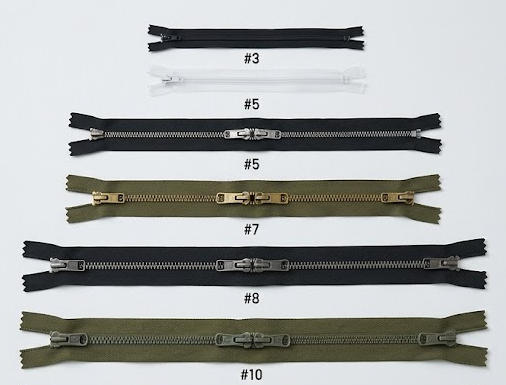
Slider size is one of the most important selection criteria. Zippers are commonly classified by nominal chain size, such as #3, #5, #8, and #10. These numbers generally correspond to the approximate width of the closed zipper chain in millimeters, although actual dimensions vary by zipper construction and manufacturer.
A slider designed for a #5 zipper, for example, should not automatically be assumed compatible with every #5 zipper from every supplier. Tooth shape, coil structure, chain thickness, and manufacturing tolerances can affect compatibility.
| Zipper Size | Typical Applications | Slider Selection Considerations |
| #3 | Lightweight garments, small bags, and accessories | Prioritize low weight and smooth operation |
| #5 | Jackets, hoodies, backpacks, and everyday bags | Balance durability, appearance, and ease of movement |
| #8 | Heavy-duty bags, outdoor equipment, and larger luggage | Check strength, chain engagement, and load requirements |
| #10 | Large luggage, equipment bags, and heavy-duty applications | Verify structural compatibility and resistance to demanding use |
These are general application examples rather than fixed rules. Always match the slider to the exact zipper chain specification and confirm compatibility through supplier documentation and physical testing.
3. Slider Material
Slider material has a direct effect on weight, strength, resistance to rust, cost, and overall appearance. The best choice depends on the setting where the zipper will be used and how long you expect it to work.
Metal sliders are often picked for denim, jackets, and luggage. They tend to look strong and feel solid. Zinc alloy and similar metal parts can offer a mix of strength, different finish options, and easier production. Even so, the alloy choice, the plating, and how well it resists corrosion should be checked for the real use case.
Plastic sliders are common for lighter items. They work well for casual bags and some garments where keeping weight down matters. Their results depend on the resin used, the slider shape, and how well it is made.
Some sliders get special coatings. These can help for outdoor products or places with damp air, heavy handling, or exposure to certain chemicals. A decorative look is not the same as corrosion protection. So you still need to review testing results and the stated material specs.
For two-way zippers, slider material should also match the zipper chain and the rest of the product build. Both sliders must work reliably for the full life of the item.
4. Considering the Application and Performance Requirements
The best slider for a two-way zipper depends heavily on the product in which it will be installed.
| Application | Key Performance Requirements | Recommended Slider Features | Key Considerations |
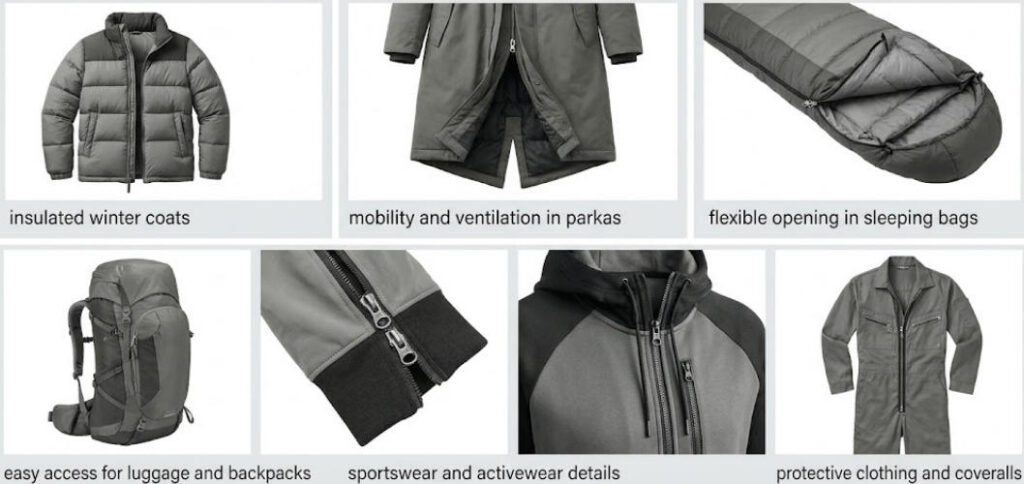
| Jackets and Coats | Smooth opening, secure closure, and frequent-use durability | Auto-lock or compatible non-locking sliders | Ensure the bottom slider allows convenient movement when sitting or walking |
| Outdoor and Winter Clothing | Reliable operation in cold conditions and resistance to wear | Durable metal or suitable engineered-plastic sliders with appropriate locking functions | Test slider movement with thick fabrics, gloves, and outdoor exposure |
| Backpacks | Strength, smooth movement, and resistance to repeated pulling | Durable sliders matched to the zipper chain, with suitable locking options | Check load conditions, abrasion resistance, and pull-tab strength |
| Luggage and Travel Bags | High durability, reliable engagement, and easy access from either end | Robust sliders with suitable pull tabs and locking mechanisms | Verify resistance to repeated use, bending, and handling stress |
| Sleeping Bags | Smooth movement, low operating force, and reduced fabric snagging | Lightweight sliders designed for the selected zipper chain | Test operation around curved sections and thick lining fabrics |
| Reversible Garments | Convenient operation from both sides and correct slider orientation | Compatible reversible or double-sided slider designs | Confirm pull-tab accessibility and correct opening direction on both sides |
| Sportswear and Activewear | Lightweight construction, flexibility, and reliable operation during movement | Compact sliders with suitable locking or non-locking functions | Consider garment stretch, moisture exposure, and frequent washing |
| Workwear and Protective Clothing | Dependable closure, durability, and ease of operation | Strong sliders with secure locking where required | Evaluate compatibility with protective garment construction and applicable safety requirements |
| Handbags and Fashion Accessories | Smooth movement, attractive appearance, and suitable durability | Metal or plastic sliders with customized finishes and pull tabs | Balance appearance, weight, cost, and functional performance |
| Heavy-duty Equipment Bags | High mechanical strength and reliable operation under demanding conditions | Heavy-duty sliders matched to a compatible large zipper chain | Test pulling forces, repeated cycles, and environmental exposure |
Choose the slider based on the product’s actual operating conditions rather than application alone. Confirm zipper chain compatibility, slider orientation, locking behavior, pull-tab clearance, and durability through sample testing before mass production.
5. Slider Pulls and Ergonomics
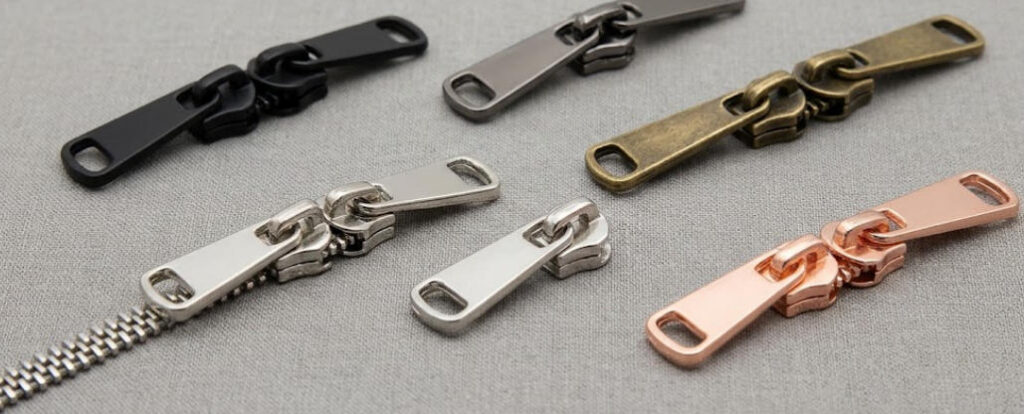
A pull tab changes how easy it is to use a zipper, and how reliably people can do it. A slider can fit on paper, but it can still feel awkward if the tab is too small, hard to grab, or set in a bad spot.
For everyday clothes, a smaller pull tab can look neat and may reduce snags. For outdoor coats, work jackets, and luggage, a bigger tab can help when hands are in gloves.
For two-way zippers, check the space between the two pull tabs as the sliders meet. If the tabs are too large or designed poorly, they can bump, stack in an odd way, or make movement harder.
Custom pull tabs can also help brand look through shape, color, logo, or surface finish. Still, any added decoration should not weaken the slider or limit its motion.
6. Durability and Quality Control
Slider selection should match what the product must handle in real life. It should also match the quality checks used during build. A slider that works during early assembly may later fail after many cycles if its internal shape, metal, or surface finish is not right.
Key checks should include:
- Opening and closing tests: Make sure both sliders run smoothly along the full zipper length.
- Engagement tests: Confirm the zipper parts come together each time without gaps or wrong alignment.
- Repeated-cycle tests: Test after many open and close cycles.
- Pull and strength tests: Check that the slider and chain handle the forces expected in daily use.
- Corrosion and finish tests: Confirm it holds up with moisture, sweat, washing, and similar exposure.
- Interference checks: Confirm the two sliders and pull tabs do not block each other.
- End-stop checks: Make sure the sliders stay in place and work with the end components you selected.
Zipper quality control methods and acceptance criteria should be based on the product’s requirements and applicable industry standards. For demanding applications, customers should request samples and documented test results from the zipper supplier.
7. Balancing Cost, Customization and Production Needs
Price is an important factor, mainly when brands buy zippers in high volume. Still, the cheapest slider can raise total cost if it causes assembly issues, more returns, or early failures.
Basic sliders are often priced well and are easy to get. They can fit normal production runs. Custom sliders can be a better choice when the product needs a specific pull-tab shape, surface finish, brand markings, or a special locking setup.
When comparing suppliers, do not look only at unit price. Check minimum order quantities, whether samples are offered, and lead times. Also ask about how steady the results are from one batch to the next. Review what quality-control paperwork is shared. Confirm the supplier can build compatible two-way zipper assemblies.
For OEM and custom garment work, it helps to confirm the slider details early. Doing this cuts down the chance of finding a mismatch after the zipper tape, chain, and garment parts are already locked in.
Common Mistakes to Avoid When Choosing Two-Way Zipper Sliders
| Common mistake | Potential problem | Recommended solution |
| Selecting sliders by zipper size alone | Poor engagement or difficult movement | Verify the exact chain and slider compatibility |
| Ignoring slider orientation | Incorrect opening behavior | Confirm whether same-facing or opposing sliders are required |
| Choosing the wrong locking mechanism | Accidental movement or difficult operation | Match locking behavior to the product’s needs |
| Overlooking pull-tab clearance | Sliders collide or become awkward to handle | Test both sliders across their full travel |
| Prioritizing appearance over performance | Premature wear or unreliable operation | Evaluate material, construction, and durability |
| Skipping sample testing | Production defects may go unnoticed | Test a complete zipper assembly before mass production |
| Comparing suppliers only by price | Inconsistent quality or higher long-term costs | Assess quality, lead time, and total production cost |
How to Choose a Reliable Zipper Manufacturer
A reliable zipper manufacturer helps customers match sliders to the right zipper chains, garment styles, and real use conditions. Solid suppliers can explain slider options, how the lock works, what materials are used, the surface finish, the pull-tab style, and two-way zipper setups.
When you judge a supplier, ask for technical specs, ask for samples, and get written proof that the slider fits the zipper chain. For custom orders, share the garment category, zipper length, chain size, which direction the opening should work, how often the zipper will be used, and the environment it will face.
Also make sure the chosen sliders can be put together the same way each time in production. Confirm that replacement parts will still be sold when you need them later.
Summary
Picking the right slider for a two-way zipper takes more than a good size and a nice finish. You should account for the zipper chain, slider type, locking mechanism, material, pull-tab design, application, and durability requirements.
Start by listing what the product must do. Then verify that the slider matches the exact zipper chain. Test both sliders together as a full setup. When you work with a skilled zipper manufacturer and run the right quality checks, brands can improve zipper reliability, user convenience, and long-term product performance.