
The Working Principle of a Zipper: How Zipper Slider Interlocks the Teeth
A zipper opens and closes through the movement of its slider along two rows of interlocking teeth. As you pull the slider upward, its internal channels guide the teeth on both sides together, forming a closed fastening. Pulling it in the opposite direction separates the teeth and opens the zipper.
The key lies in the shape of the slider and the arrangement of the teeth. These parts must fit and move together properly for the zipper to operate smoothly. Their design also affects how securely the zipper closes and how well it performs with repeated use.
Table of Contents
What Are the Main Parts of a Zipper?
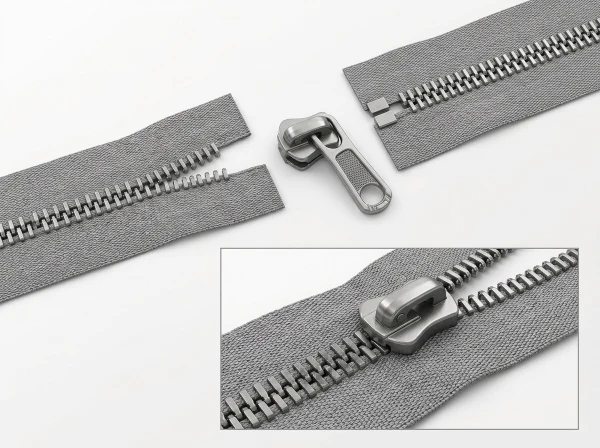
A standard zipper consists of three main parts: the teeth (also called elements), the slider, and the tape. Each plays a specific role in keeping the zipper aligned and allowing it to open and close.
Zipper Teeth (Elements)
The teeth are the interlocking components attached along the edges of the two zipper tapes. As the slider moves upward, the teeth on one side engage with those on the other, forming a continuous chain that holds the opening closed.
The slider moves along the zipper to connect or separate the teeth. Inside, it has a Y-shaped channel that guides the two rows together as it moves in one direction and separates them when moved in the opposite direction.
Zipper Tape
The tape is the fabric strip that holds the teeth in place and allows the zipper to be sewn into garments, bags, and other products. Its strength and stability also help keep the zipper aligned during use.
These three parts need to be properly matched. If the slider does not fit the teeth, or the teeth are poorly aligned, the zipper may become difficult to open and close.
How Does a Zipper Slider Interlock the Teeth?
The slider controls how the two rows of zipper teeth connect and separate. Its internal channel guides each row into the correct position as the slider moves along the zipper.
How Does the Y-Shaped Channel Inside a Zipper Slider Work?
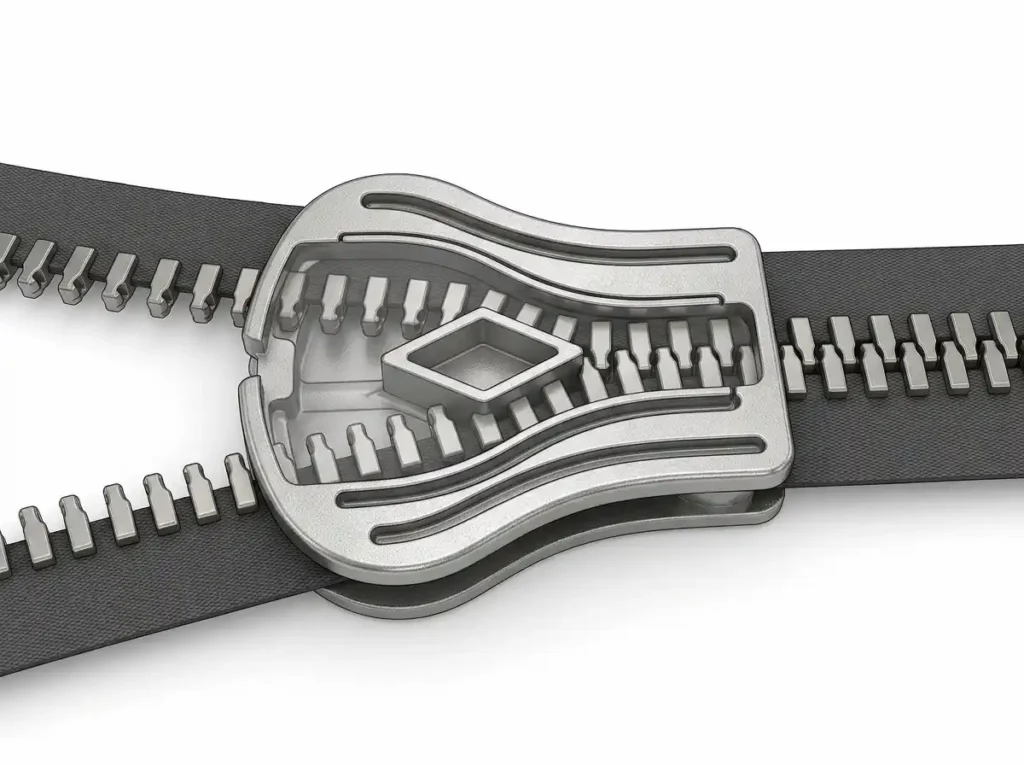
A standard zipper slider has a Y-shaped channel inside. At the wider end, two separate openings guide the rows of teeth into the slider. These passages gradually come together to form a narrower exit.
A small central part, known as the diamond, sits between the two passages. It helps guide the teeth and keeps both rows aligned as they move through the slider.
When you pull the slider in the closing direction, the two rows enter through separate openings. As the channel narrows, the teeth are pushed into an interlocking position, forming a connected chain as they leave the slider.
Pulling the slider in the opposite direction reverses this process. The channel guides the connected teeth apart, allowing the two rows to exit through separate openings.
The internal design may vary between slider types, but the principle is the same: the Y-shaped channel controls the alignment and movement of the teeth.
How Do Two Rows of Zipper Teeth Mesh Together?
The two rows of zipper teeth are arranged so that each tooth fits into the gap between two teeth on the opposite side.
As the slider moves upward, it guides the rows together. The teeth interlock in an alternating pattern, with each tooth fitting into the space between its counterparts. Their shape and spacing help keep the connection secure once the zipper is closed.
This arrangement is important. If the teeth are poorly spaced or misaligned, they may fail to mesh properly, making the zipper difficult to close or causing it to separate under tension.
Once the teeth pass through the slider and interlock, they form a continuous chain that holds the two sides of the fabric together. Moving the slider in the opposite direction separates the teeth and opens the zipper.
How Does a Zipper Slider Separate the Interlocked Teeth?
Opening a zipper is essentially the reverse of closing it.
As the slider moves downward, its internal channel guides the interlocked teeth apart. The teeth gradually disengage as they pass through the wider section of the Y-shaped channel, leaving two separate rows behind.
This allows the zipper to open smoothly along its length. The slider separates the teeth continuously as it moves, so there is no need to pull them apart individually.
Reference: https://www.ykk.com/english/ykk/tech/01.html
Do Different Types of Zipper Teeth Work in the Same Way?
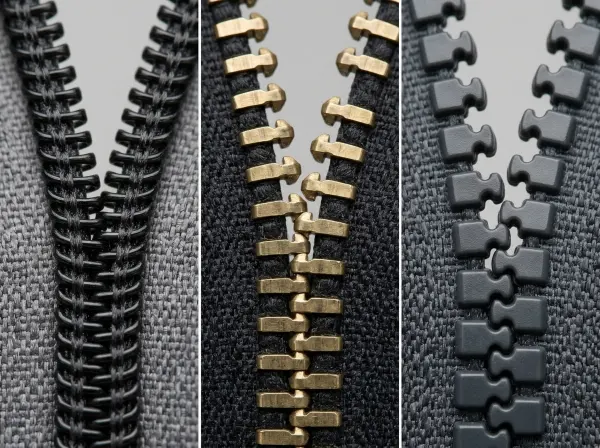
Coil, metal, and Vislon zippers have different tooth structures, but they all work on the same principle. The slider brings the two rows of elements together to close the zipper and separates them to open it. The main difference lies in how the elements are made and how they fit together.
Coil Zipper Teeth
Coil zippers are made from a continuous spiral of synthetic material, usually polyester or nylon, sewn or woven onto the edges of the zipper tape. The loops of the spiral form the interlocking elements.
Their flexible construction allows the zipper to bend easily, making coil zippers a common choice for clothing, bags, and other products with curved openings. They are also lightweight and work well in applications where flexibility is important.
Metal Zipper Teeth
Metal zippers have individual teeth attached to both sides of the zipper tape. Common materials include brass, aluminum, and other metal alloys.
Each tooth has a shaped profile that fits into the spaces between the teeth on the opposite side. Metal zippers are often used in jeans, jackets, handbags, and luggage, where a firm fastening and distinct metallic appearance are preferred.
Vislon Zipper Teeth
Vislon zippers use individual plastic elements molded onto the zipper tape. These elements are typically made from materials such as polyacetal, and their shape, size, and color can be varied during production.
The molded teeth interlock as the slider moves, forming a lightweight fastening. Vislon zippers are commonly found in sportswear, outdoor clothing, jackets, and bags, particularly where a lightweight construction and larger, more visible teeth are desired.
Although the three types differ in material and construction, the operating principle remains the same: the slider guides the elements into place to close the zipper and separates them to open it.
Reference: https://www.ykk.com.hk/html/en/products_zipper1.htm
Why Do Zipper Teeth Sometimes Fail to Interlock Properly?
If a zipper separates shortly after being closed, the problem may lie with the slider, the teeth, or the fit between them. Several common issues can prevent the two rows from interlocking properly.
Worn or Deformed Zipper Slider
A slider must hold the two rows of teeth at the correct distance as they pass through its internal channel. With repeated use, the slider can wear down or become wider. It may then fail to press the teeth together firmly enough, allowing the zipper to separate behind it.
Damaged or Misaligned Zipper Teeth
Bent, missing, or damaged teeth can prevent the two rows from connecting properly. A single damaged section may interrupt the interlocking chain, making the zipper difficult to close or causing it to come apart during use.
Incorrect Slider and Zipper Size Matching
The slider must be compatible with the size and structure of the zipper teeth. If the slider is too loose, the teeth may not engage securely. If it is too tight, the zipper may become difficult to pull or the teeth may not pass through smoothly. Either problem can affect the zipper’s performance.
For zipper manufacturers, consistent tooth dimensions and proper slider matching are essential to product quality. Checking these details during production helps reduce fitting problems and zipper failures.
Frequently Asked Questions
How Do Zipper Teeth Lock Together?
The slider guides the two rows of teeth toward each other. Each tooth fits into the gap between two teeth on the opposite side, creating an interlocking chain that keeps the zipper closed.
Why Does a Zipper Split Open Behind the Slider?
This often happens when the slider can no longer hold the teeth together firmly enough. A worn or stretched slider is a common cause, but damaged teeth or an incompatible slider can also prevent proper engagement.
What Is the Y-Shaped Channel Inside a Zipper Slider?
It is the internal passage that guides the two rows of teeth through the slider. The two sides of the channel come together as the zipper closes and separate as it opens, controlling how the teeth engage and disengage.
Do Metal and Plastic Zippers Work the Same Way?
Yes. Both use a slider to bring two rows of teeth together or separate them. The difference is in the materials and tooth design: metal zippers use individual metal elements, while plastic zippers typically use molded or continuous plastic elements.