
Waterproof zippers help shield products from rain, wetness, dust, and other outside conditions. You will see them on outdoor clothes, waterproof bags, suitcases, tents, marine gear, sports items, and safety equipment. In waterproof zipper lines, two coatings show up a lot: polyurethane (PU) coated and thermoplastic polyurethane (TPU) coated.
Both options aim to improve water resistance. However, PU-coated zippers and TPU-coated zippers differ in material properties, flexibility, durability, environmental performance, and application suitability. Knowing these differences helps manufacturers, designers, and buyers select the right waterproof zipper for their products.
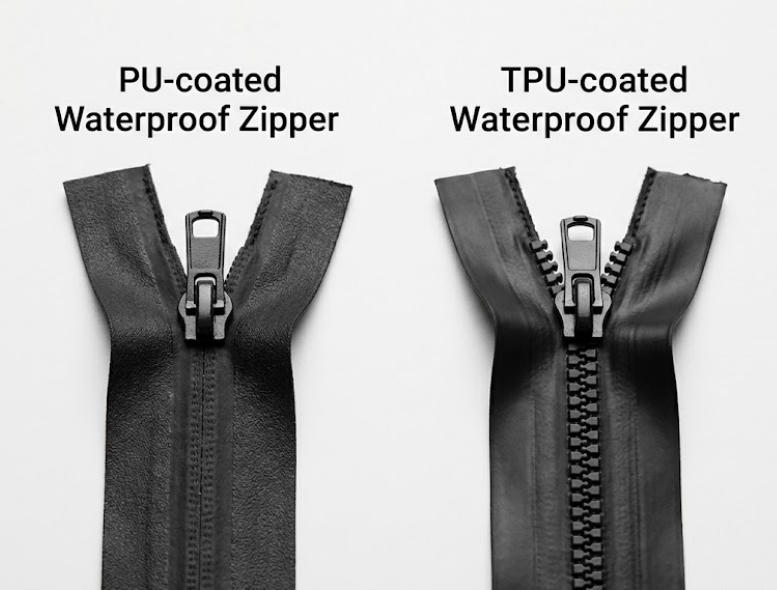
Table of Contents
An Overview of PU-coated Waterproof Zippers
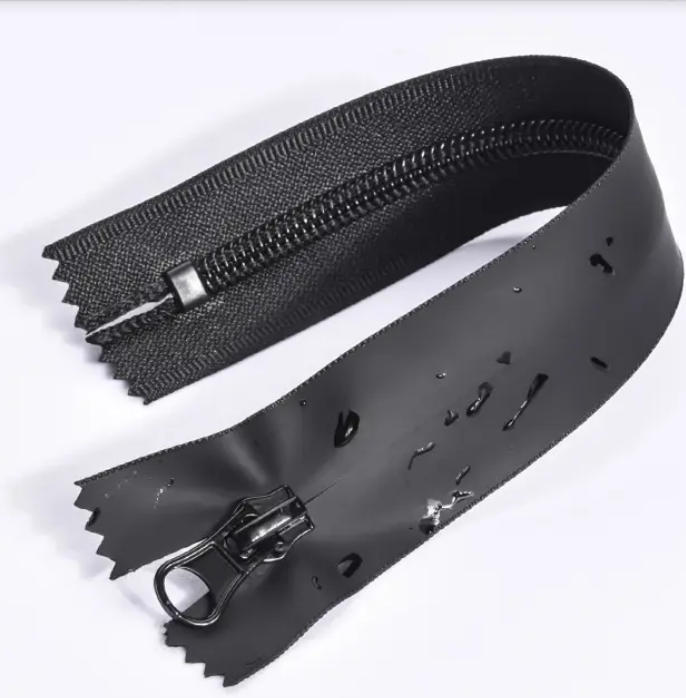
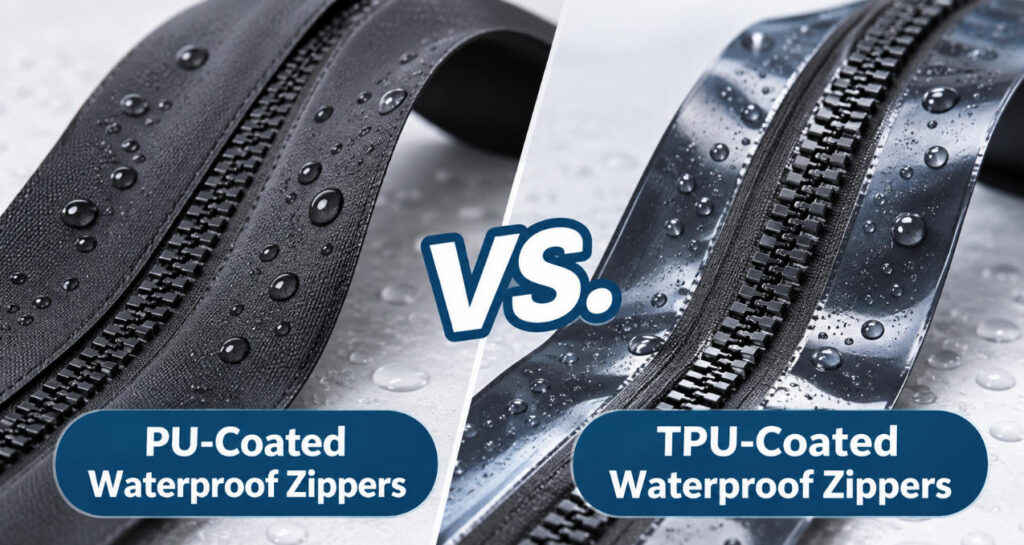
PU-coated waterproof zippers use a polyurethane layer, either as a coating or a film on the zipper tape, to limit water getting through. Polyurethane is a polymer that is valued for being flexible, sticking well, and having a softer feel.
That PU layer sits on top of the zipper tape. It acts as a barrier so water has a harder time moving through the material path. The exact results can change with the mix used for coating and with how it is made. So, PU-coated zippers may vary in how waterproof they are, how the surface looks, and how they flex.
An Overview of TPU-coated Waterproof Zippers
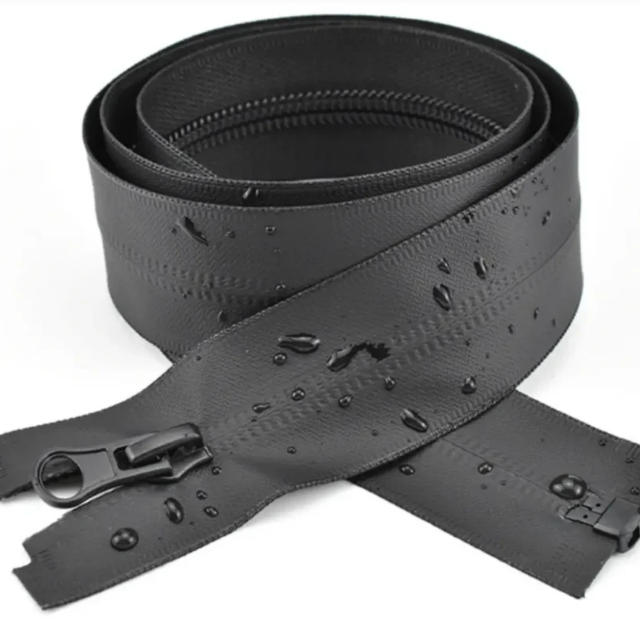
TPU-coated waterproof zippers use thermoplastic polyurethane as the protective layer. TPU is a kind of polyurethane that can stretch and also be processed like a thermoplastic.
In many cases, TPU is picked for its strong resistance to abrasion, its ability to stretch, its mechanical strength, and its ability to handle harsh outdoor wear. It fits well when the product will bend and pull many times and when it will face tough weather.
Key Differences Between PU-Coated and TPU-Coated Waterproof Zippers
1. Material Composition and Structure
The first difference is what each coating is made of and how it is built onto the zipper.
PU-coated Waterproof Zippers
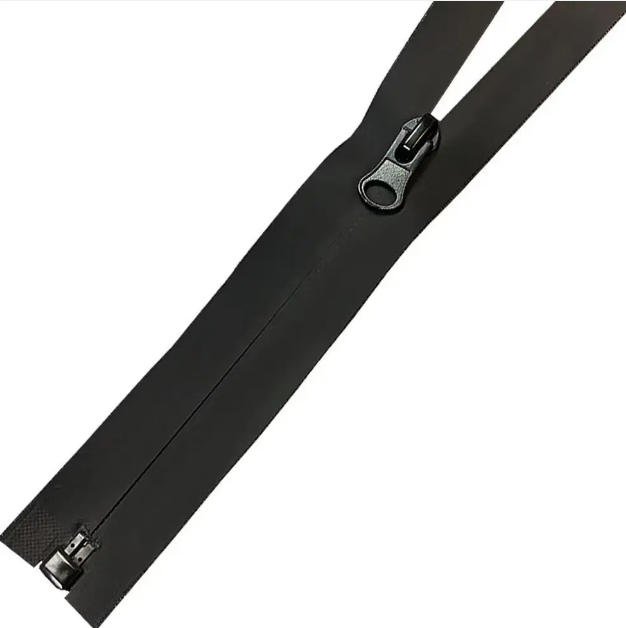
PU-coated waterproof zippers have polyurethane put onto the zipper tape. That layer makes a barrier surface that lowers the chance of water moving through the textile. PU coatings can be adjusted for different softness, coating thickness, and surface feel.
TPU-coated Waterproof Zippers
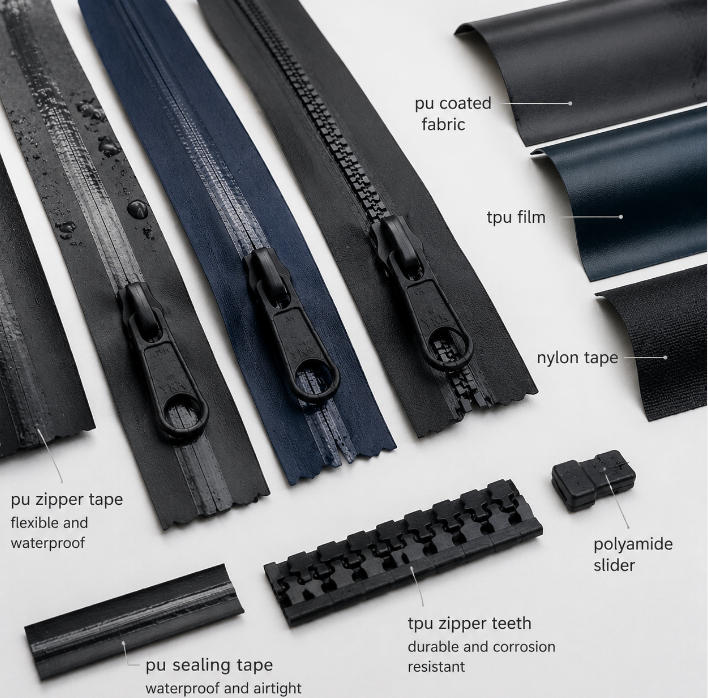
TPU-coated waterproof zippers use thermoplastic polyurethane, which is an elastomeric material. It keeps flexibility while still allowing thermoplastic processing. TPU coating is often sold as a film, or it is added using coating and lamination steps. It forms a tough protective layer that can stay elastic and hold up under mechanical strain.
2. Waterproof Performance
Waterproof zipper coatings are mainly made to stop water. With PU and TPU, the coating can act like a shield. This helps reduce water travel through the zipper tape.
That said, real water blocking depends on more than one thing:
- Coating thickness: If the layer is too thin, the barrier may not hold.
- Coating uniformity: If the coating is spotty, small weak areas can form.
- Bonding Quality: The coating must stick well to the zipper tape. If it peels, leakage can happen.
- Zipper Construction: Tooth shape, sealing layers, and the slider design all change how well it keeps water out.
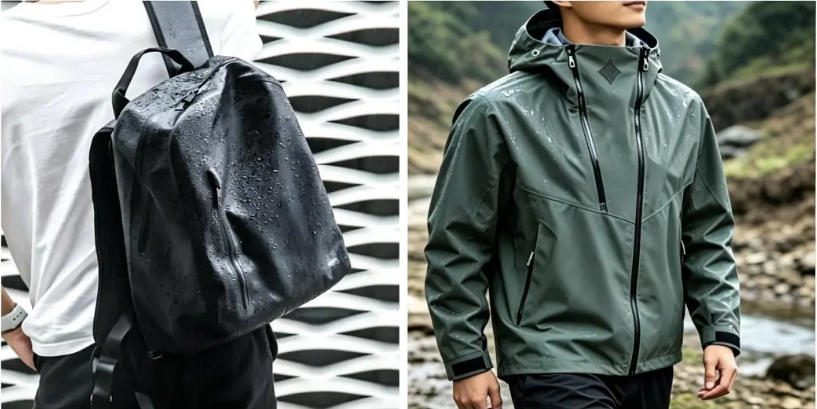
PU coatings are often used for daily outdoor items. TPU coatings are commonly chosen when higher wear and repeated stress are expected.
A coated zipper is not always fully waterproof by default. Buyers should confirm performance using proper water-resistance tests.
3. Flexibility and Elasticity
Flexibility matters a lot for waterproof zippers. This is true for clothing, sportswear, and outdoor gear.
PU-coated zippers
PU coatings usually feel soft. They bend easily, so they fit well on items that need easy movement. This softness is useful for light clothing and smaller accessories.
TPU-coated zippers
TPU coatings tend to be both flexible and elastic. They can stretch and then return closer to their original shape. Because of that, they are a good match for gear that gets bent and folded often, with regular mechanical contact.
For applications requiring a soft surface and economical flexibility, PU may be appropriate. For products requiring greater elastic recovery and mechanical durability, TPU can offer advantages.
4. Abrasion and Wear Resistance
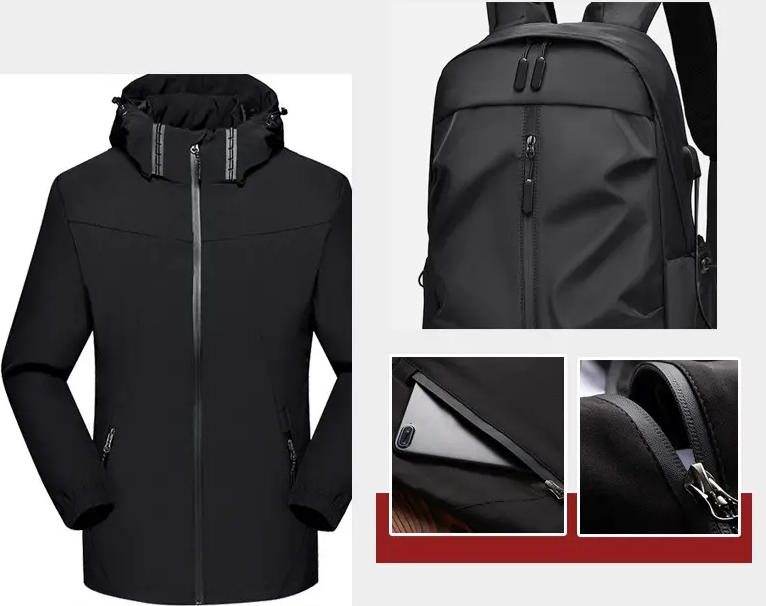
Waterproof zippers are frequently exposed to friction during daily use. Backpacks rub against clothing, outdoor jackets experience repeated movement, and marine equipment may come into contact with rough surfaces.
TPU generally provides better abrasion resistance than many conventional PU coating formulations. This makes TPU-coated zippers suitable for demanding applications involving frequent handling and surface friction.
PU-coated zippers can also provide good wear resistance, but their performance varies according to coating formulation and thickness.
| Wear-Related Factor | PU-coated Zippers | TPU-coated Zippers |
| Surface Friction | Moderate to good resistance | Generally high resistance |
| Repeated Bending | Good | Very good |
| Surface Scratching | Depends on coating formulation | Often better resistance |
| Long-Term Wear | Suitable for general use | Suitable for demanding use |
| Heavy-Duty Applications | Depends on product design | Often preferred |
5. Hydrolysis and Environmental Resistance
Hydrolysis occurs when moisture reacts with susceptible chemical bonds in a material, potentially causing deterioration over time. It is an important consideration for waterproof zippers frequently exposed to humid or wet environments.
Some polyester-based PU formulations are particularly vulnerable to hydrolysis, which can lead to coating degradation, cracking, or peeling. Polyether-based PU formulations can offer improved hydrolysis resistance.
Many TPU formulations also provide good hydrolysis resistance, although performance depends on whether the material is polyester-based or polyether-based.
Environmental performance should also consider temperature, UV exposure, cleaning chemicals, and storage conditions.
| Environmental Factor | PU-coated Zippers | TPU-coated Zippers |
| Moisture Exposure | Depends on PU formulation | Generally good with suitable grades |
| Hydrolysis Resistance | Varies significantly | Often good, especially with suitable polyether grades |
| UV Exposure | Formulation-dependent | Formulation-dependent |
| Temperature Changes | Depends on coating grade | Depends on TPU grade |
| Chemical Exposure | Varies by formulation | Varies by TPU formulation |
| Long-Term Outdoor Use | Suitable with proper material selection | Often preferred for demanding conditions |
6. Appearance and Surface Finish
Appearance is an important consideration for manufacturers of apparel, luggage, and outdoor accessories often need the zipper to match the product style. At the same time, it must still work well as a waterproof zipper.
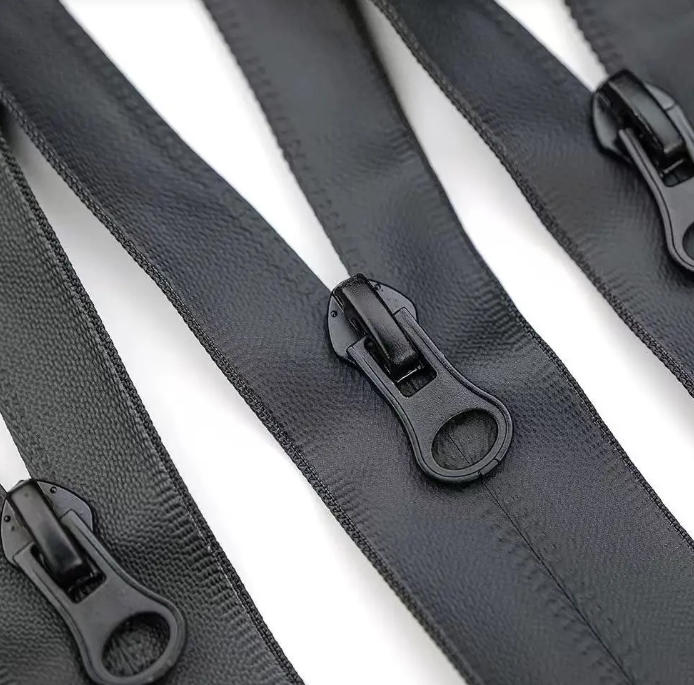
PU-coated zippers can be finished in several ways. Common options include matte, smooth, and glossy looks. Colors can also be selected to fit the product needs.
TPU-coated zippers also come in different colors and finishes. Depending on how they are made, they may show a smooth surface, a shine, or a more textured look.
When choosing between PU and TPU, manufacturers often check:
- Surface smoothness and texture.
- Color match across production runs.
- Gloss level and overall look.
- Coating thickness and how clear it is.
- How the coating fits with the product’s fabric and design.
7. Manufacturing Processes and Production Costs
The manufacturing processes used for PU-coated and TPU-coated waterproof zippers can influence product quality, production efficiency, and final cost.
| Manufacturing Factor | PU-coated Zippers | TPU-coated Zippers |
| Coating Method | PU coating, transfer coating, or lamination | TPU film lamination or specialized coating |
| Processing Requirements | Depends on coating chemistry and curing process | Requires suitable thermoplastic processing conditions |
| Temperature Control | Important | Particularly important during thermal processing |
| Bonding Control | Essential for coating adhesion | Essential for film and tape bonding |
| Production Cost | Generally lower | Generally higher |
| Customization | Colors, thickness, and surface finishes | Colors, film thickness, and surface finishes |
| Quality Control | Coating uniformity and adhesion | Film consistency, bonding, and flexibility |
PU-coated waterproof zippers are generally more economical for standard products and large-volume applications. TPU-coated options may involve higher material and processing costs but can provide additional performance benefits for specialized products.
8. Applications
The choice of coating depends largely on the product’s intended use and operating environment.
| Industry / Application | Suitable Coating | Main Requirements |
| Outdoor Jackets | PU / TPU | Water resistance and flexibility |
| Rainwear | PU / TPU | Lightweight construction and moisture protection |
| Casual Backpacks | PU | Cost-effectiveness and water resistance |
| Professional Hiking Backpacks | TPU | Abrasion resistance and durability |
| Diving Suits | TPU | Flexibility and reliable water protection |
| Waterproof Dry Bags | TPU | Mechanical strength and wear resistance |
| Camping Tents | PU / TPU | Weather resistance and flexibility |
| Marine Equipment Bags | TPU | Durability and environmental resistance |
| Sportswear | PU / TPU | Lightweight performance and flexibility |
| Travel Luggage | PU / TPU | Surface durability and water resistance |
Summary Comparison Chart of PU-coated and TPU-coated Waterproof Zippers
| Comparison Factor | PU-coated Waterproof Zippers | TPU-coated Waterproof Zippers |
| Material Structure | Polyurethane coating or film | Thermoplastic polyurethane elastomer |
| Waterproof Performance | Good water resistance | Good to excellent water resistance, depending on construction |
| Flexibility | Soft and flexible | Highly flexible with elastic recovery |
| Abrasion Resistance | Moderate to good | Generally excellent |
| Tear Resistance | Good, depending on formulation | Generally higher |
| Hydrolysis Resistance | Varies by formulation; some grades are vulnerable | Often better with suitable TPU grades |
| Moisture Resistance | Suitable for general wet environments | Suitable for demanding moisture-exposure conditions |
| Chemical Resistance | Depends on coating formulation | Generally good, depending on TPU grade |
| Temperature Resistance | Depends on material formulation | Depends on TPU grade |
| Surface Finish | Matte, smooth, or glossy | Smooth, glossy, or textured |
| Coating Thickness | Available in different thicknesses | Available in different film and coating thicknesses |
| Durability | Suitable for general applications | Often preferred for heavy-duty applications |
| Manufacturing Process | PU coating, transfer coating, or lamination | TPU film lamination or specialized coating |
| Production Cost | Generally lower | Generally higher |
| Customization | Colors, thicknesses, and surface finishes | Colors, film thicknesses, and surface finishes |
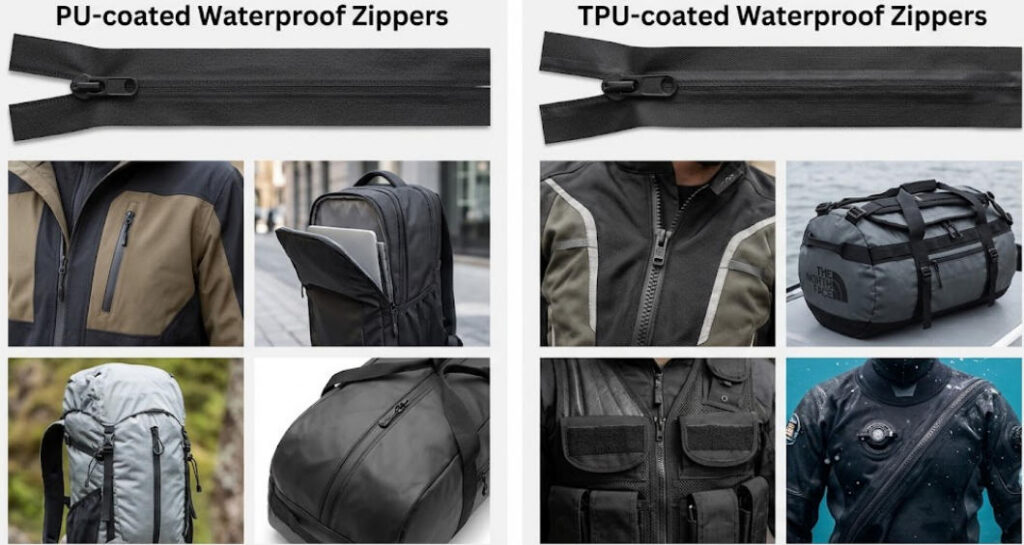
| Typical Applications | Rainwear, casual backpacks, luggage, and outdoor clothing | Diving suits, dry bags, marine equipment, and professional outdoor gear |
How to Choose Between PU-coated and TPU-coated Waterproof Zippers
Selecting between PU-coated and TPU-coated waterproof zippers requires balancing functional requirements, product design, and manufacturing budgets.
Here are several important considerations:
1. Identify the Application
Decide if it goes on daily wear, outdoor gear, diving items, or marine accessories. Each use case pushes different needs for water sealing and wear resistance.
2. Evaluate the Operating Environment
Think about rain, damp air, sun exposure, hot and cold swings, and contact with chemicals. If the item will see tough outdoor use, the coating needs to match that reality. Many teams choose a TPU or PU mix made for harsh environments.
3. Consider Expected Product Lifespan
If the product is meant for long, repeated use, TPU is often a stronger pick for wear and mechanical performance. If the job needs only decent durability, PU can work as a simpler option.
4. Compare Material and Production Costs
PU-coated zippers are usually a better fit when a maker wants lower costs. TPU-coated zippers are worth the extra price only when the added performance matters for the target product.
5. Test Samples Before Mass Production
Run checks for waterproof behavior, how well the coating sticks, abrasion wear, pull strength, bending during use, and aging after exposure to heat, light, and weather.
Summary
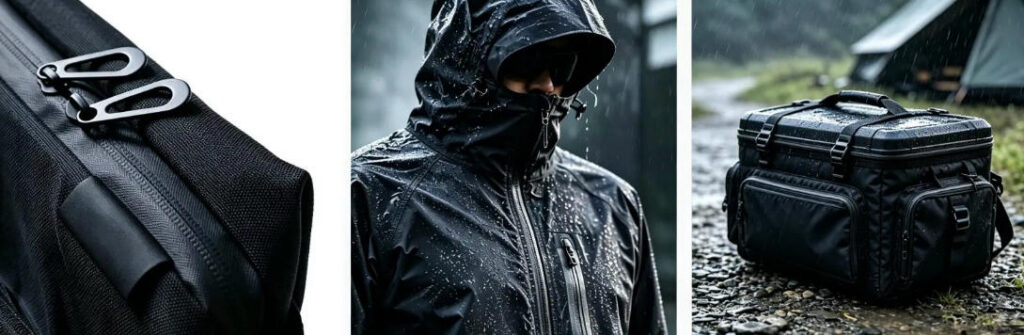
- PU-coated waterproof zippers are generally more cost-effective, soft, and flexible, making them suitable for everyday apparel, rainwear, backpacks, and general outdoor accessories.
- TPU-coated waterproof zippers are often preferred for applications requiring higher abrasion resistance, elasticity, mechanical strength, and improved hydrolysis resistance with suitable material grades. They are particularly useful for diving equipment, waterproof dry bags, marine products, and high-performance outdoor gear.
Final Thoughts
Both PU-coated and TPU-coated waterproof zippers can solve the same basic problem, which is water resistance. However, they bring different strengths.
There is not one coating that always wins. The right decision depends on the product use, the environment, expected lifespan, and budget. When you weigh these points, you can select a zipper that matches quality goals without overspending.