
How Many Parts Are Actually in a Zipper?
A zipper may look like a simple fastening, but it is made up of several parts that need to work together properly. The slider has to move smoothly, the teeth need to align, and the stops keep everything in place. When one part is damaged, worn, or poorly aligned, the zipper may stick, separate, or fail to close properly.
So, how many parts in a zipper, and what does each one do? The following guide looks at the key components of a typical zipper and explains their roles.
Table of Contents
The Main Parts of a Zipper
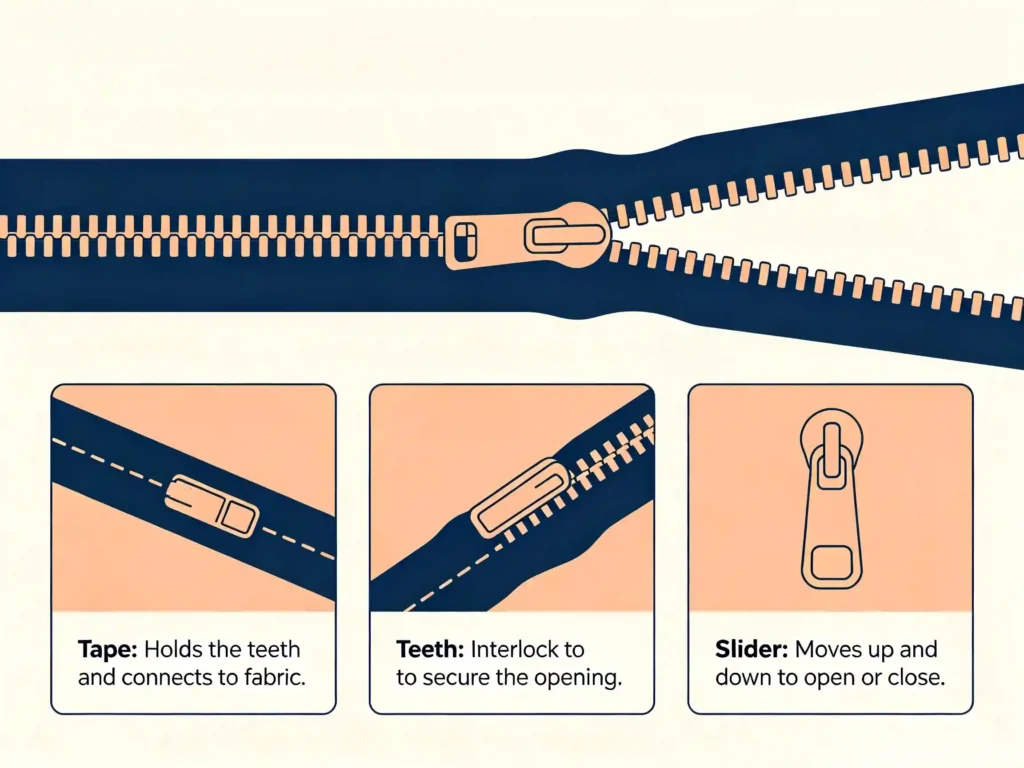
A standard zipper has three main parts: the tape, teeth, and slider. Each one has a different job, and they need to work together for the zipper to open and close properly.
1. The Tape
The tape is the fabric strip that runs along both sides of the zipper. Polyester is commonly used, although some zippers are made with cotton or other materials.
The teeth are attached along the inner edge of the tape, while the outer edge is sewn into the garment, bag, or other product. The tape also helps keep the zipper in position. If it is too weak or poorly made, the zipper may not sit properly in the seam and can wear out faster with regular use.
2. The Teeth (also called Elements)
The teeth are the parts that lock together to close the zipper. Depending on the zipper design, they may be made from metal, molded plastic, or formed as a continuous nylon coil.
As the slider moves along the zipper, the teeth come together on one side and separate on the other. Their shape, size, and spacing all matter. If the teeth are not made or positioned consistently, the zipper may feel rough when pulled or fail to stay closed when the garment or bag is under tension.
3. The Slider
The slider is the part that moves along the zipper and controls whether it is open or closed. Inside the slider is a shaped passage that guides the two rows of teeth together or pulls them apart as it moves.
The pull tab is attached to the slider and is the part you hold when opening or closing the zipper. Because the slider has to guide and align the teeth while moving along the tape, it plays a key role in how smoothly the zipper works. When a zipper starts sticking, separating, or becoming difficult to use, the slider is often one of the first parts worth checking.
What Other Parts Does a Zipper Need?
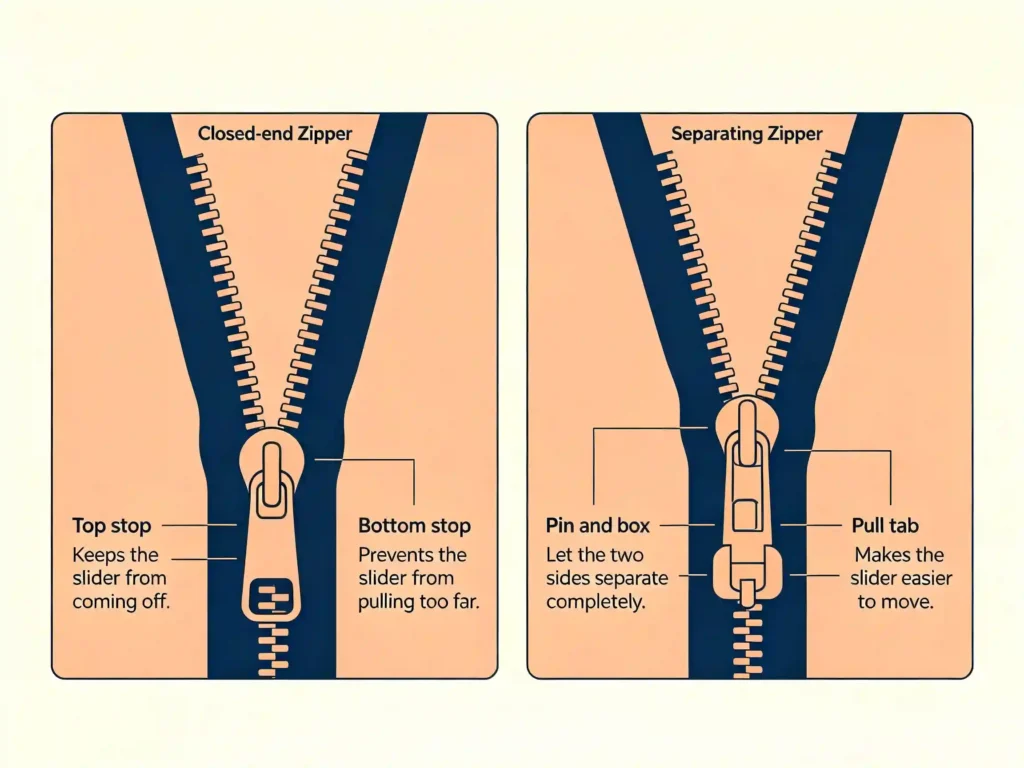
Besides the tape, teeth, and slider, a zipper may have a few other parts. These depend mainly on the type of zipper. A closed-end zipper, such as the kind often used on pockets and skirts, is built differently from a separating zipper used on jackets.
- Top stops are placed at the upper ends of the zipper. They keep the slider from moving past the last tooth and coming off the zipper.
- Bottom stops are used on closed-end zippers. They hold the two sides together at the bottom and prevent the slider from coming off that end.
- Insertion pins and retainer boxes are found on separating zippers. The insertion pin fits into the retainer box on the opposite side, allowing the two sides of the zipper to be connected or separated completely.
- Some zippers also have reinforcement film or additional stitching around the lower section. These extra supports help strengthen areas that are likely to receive more pulling or movement during use.
The number of parts can therefore vary from one zipper to another. A simple closed-end zipper may only need the three main components along with top and bottom stops, while a jacket zipper needs an insertion pin and retainer box so the two sides can separate. The design changes, but the basic job of the zipper stays the same: keeping the two sides aligned while allowing them to open and close smoothly.
How Do These Parts Work Together?
A zipper works because each part does its job at the right time. When you pull the tab, the slider moves along the zipper tape. Inside the slider, the two rows of elements are guided through a narrow passage. As the slider moves up, the elements come together and lock. Moving it back down separates them again.
The zipper tape holds the elements in place and gives the whole assembly enough support to be sewn into a garment, bag, or other product. The top and bottom stops keep the slider from traveling too far.
A separating zipper works in much the same way, but it has one additional step. Before the zipper can close, the insertion pin needs to fit properly into the retainer box. This lines up the two sides and allows the slider to move upward and engage the elements.
Each component is relatively small, but the zipper only works properly when they are correctly positioned and matched.
Does Every Zipper Have the Same Parts?
No. The parts can vary depending on the type of zipper.
A closed-end zipper usually has top stops and a bottom stop. A separating zipper, such as the one used on a jacket, has an insertion pin and retainer box instead of a fixed bottom. A two-way separating zipper has a few additional components because it uses two sliders.
The elements can also be different. Some zippers have individual metal or molded teeth, while others use a continuous nylon coil.
These differences are mainly related to how the zipper is designed to work. A jacket zipper needs to separate completely, while a pocket zipper only needs to open and close from one end. Zippers used on bags or other products may also need components that can handle more frequent movement.
Conclusion
A typical zipper has 5 to 8 main parts, depending on its construction. The main ones are the zipper tape, teeth or coil, slider, pull tab, and stops. Separating zippers also have an insertion pin and retainer box.
The exact construction changes with the type of zipper. A closed-end zipper has a different bottom structure from a separating zipper used on a jacket, while coil zippers use a continuous coil instead of individual teeth.
Luxzipper manufactures zippers and zipper components for apparel, bags, and other products, with different constructions available for specific design and performance requirements. If you are looking for custom zippers or bulk zipper orders, you can contact us to discuss your requirements.