
How Metal Zippers are Used for Leather Jackets
Metal zippers are a common hardware choice on leather jackets. You will see them on classic biker styles and also on everyday fashion pieces. They look bold and they work well. Leather itself is thick and tough, and it can feel heavy. So the metal zipper has to be picked and fitted with care, or the jacket will not function right or will not look clean.
When you know how metal zippers are used for leather jackets, you can better judge why the right zipper matters. This applies to manufacturers, designers, and consumers who want a solid garment.
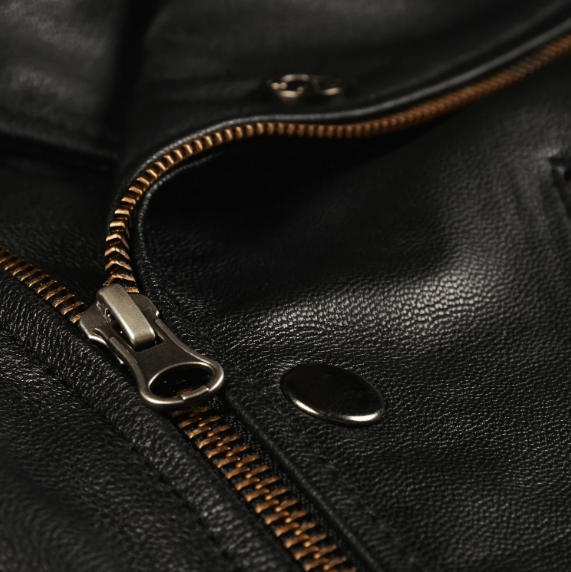
Table of Contents
Key Applications of Metal Zippers for Leather Jackets
Metal zippers do more than zip up and zip down. They can also act as decoration. You can change the zipper size, how it is built, where it sits on the jacket, and the final surface finish. Knowing the main uses can help you choose the appropriate zipper for each area of a leather jacket.
1. Main Front Closures
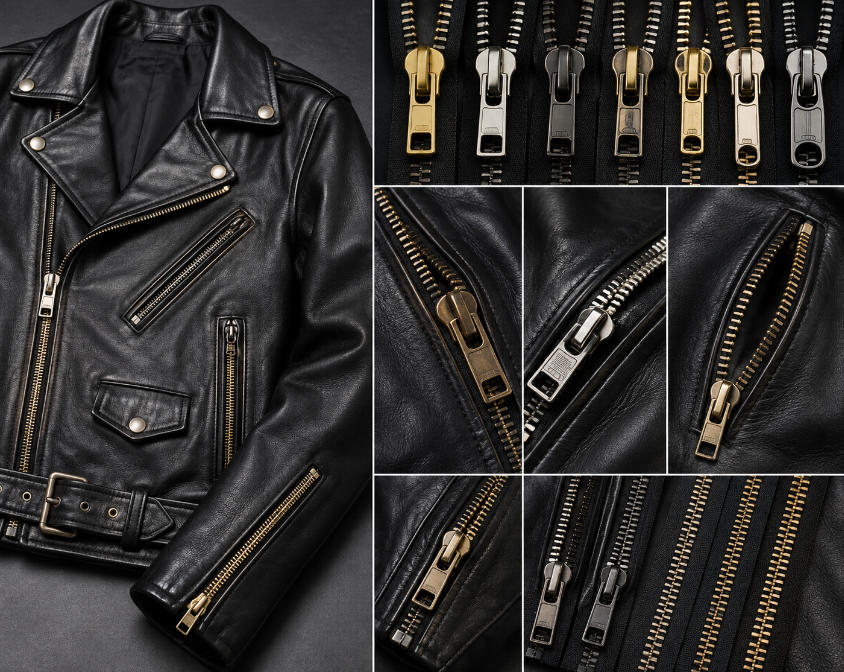
The front zipper is one of the biggest uses of metal zippers on leather jackets. A separating metal zipper lets the wearer open the entire front. That makes it simpler to put the jacket on and take it off.
This front zipper also has to handle stress. It joins two heavy leather panels, so the pull can be strong. Because of that, makers often choose metal zipper builds that fit the leather thickness and weight.
The look of the front zipper matters too. A brass zipper that shows can fit a vintage or classic style. Finishes like silver, gunmetal, or black can shift the jacket toward a newer look.
2. Jacket Pocket Closures
Metal zippers are also used on leather jacket pockets. The point is a tighter closure. Zipped pockets help keep items from slipping out while you move.
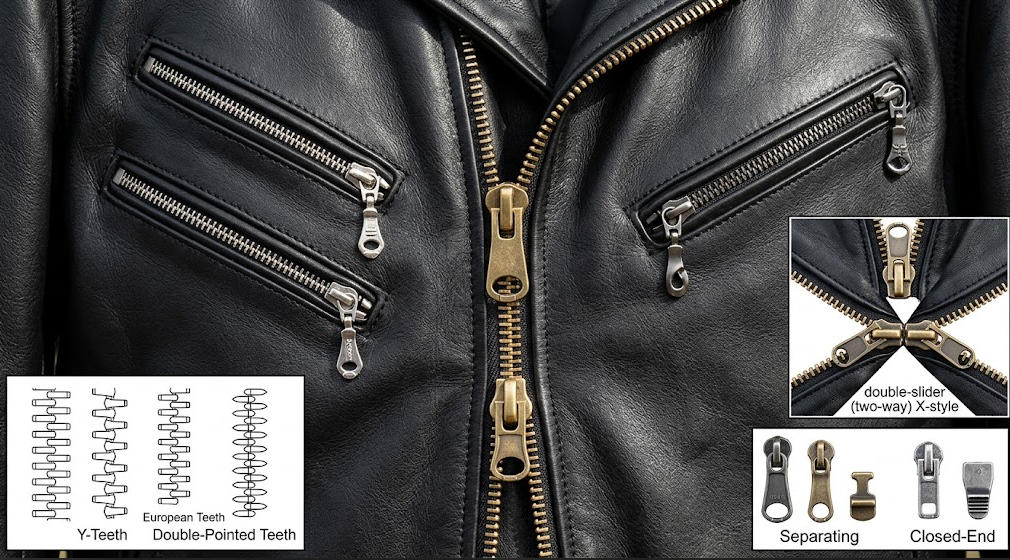
Pocket zippers can be placed in different ways. They may run horizontally, go vertical, or sit on a diagonal. The jacket layout and the intended style often decide the placement. Diagonal metal zippers are common on many motorcycle and biker jackets.
Since pocket zippers are usually shorter than front zippers, zipper manufacturers can use smaller sizes. Even with a smaller size, the zipper still needs enough strength.
3. Sleeve Cuffs
At the sleeve cuffs, metal zippers show up a lot. A short zipper can change the wrist opening. It can also help the jacket sit more snugly on the arm.
A cuff zipper can also make the jacket easier to wear. It helps when the leather is thick and stiff. In motorcycle jackets, a closer cuff can hold the sleeve in place while riding.
This zipper should move smoothly. It also needs to work reliably because the cuff area bends and shifts often.
4. Two-Way Front Openings
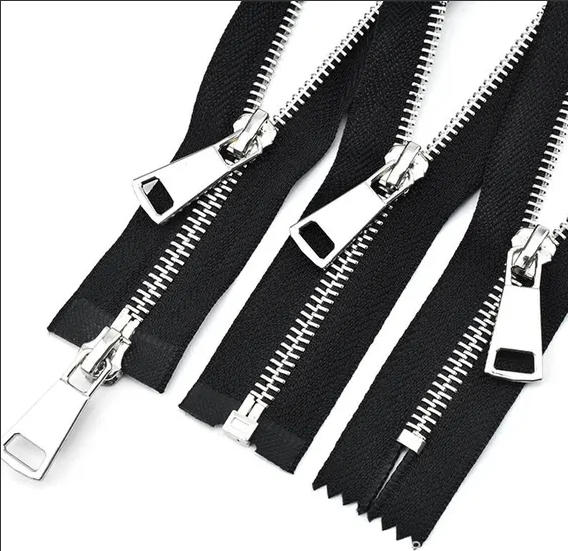
Long leather overcoats and many bike jackets do well with two-way metal zippers. With this setup, two zipper pulls ride on the same track. Each one can slide on its own.
Because of that, you can unzip just the bottom part of the coat. The front stays mostly shut. That helps when you are parked, driving, or riding on a motorcycle.
Two-way metal zippers also add metal strength where you need it. At the same time, they allow more room to move. That makes them a good fit for clothing that must feel practical and comfortable.
5. Chest Pockets
Chest pockets often use metal zippers. You see this on motorcycle styles, military-inspired looks, and utility leather jackets. A zipped chest pocket keeps items from shifting. It also adds to the rough, tough look of the coat.
Some designs place a chest zipper at an angle. That slant can turn into a clear design line over the leather. It can also make the pocket quicker to reach.
You can match the zipper size and the final finish to the rest of the jacket hardware. That helps the pieces look like they belong together.
6. Interior Pockets
Interior pockets are not as easy to see as outside pockets. Still, metal zippers can help add an extra layer of protection. They work well on pockets meant for small valuables or items you grab often.
A small metal zipper can close a pocket tightly. It does not add a lot of extra thickness inside the jacket. When picking one, you need to think about the space between the lining and the leather outer layer.
7. Ventilation Openings
Some motorcycle and performance jackets put metal zippers into vent areas. When it gets warmer, opening those zippers lets more air move through. When it is colder, you can close them to hold heat in.
The zipper has to run without sticking. It also should stay shut during riding and regular motion. The zipper placement and build should fit cleanly into the leather panels. It must not make the jacket sit wrong.
8. Decorative Zipper Details
Metal zippers can be used for looks too. In some designs, zippers are added to sleeves, shoulders, or pockets. They do not only serve a purpose. They also change the look in a clear way.
To get different visual results, designers choose tooth sizes, pull styles, and finishes. Bigger teeth can lean into a rugged look. Smaller polished zippers can feel more neat and controlled.
These decorative zips show up a lot on trend-focused leather jackets. In those pieces, the hardware is part of the main style.
9. Motorcycle and Riding Jackets
Motorcycle jackets are a major use for metal zippers. These jackets need tough hardware. Riders expect the garment to take stress from motion, wind, moisture, and regular handling.
Metal zippers show up in many spots on the jacket. You may see them on the main front closure, the pockets, the cuffs, and the ventilation panels. With heavy-duty builds, the zipper gear can hold up in tough riding conditions.
Metal hardware also adds to the rugged look people expect from motorcycle leather. The shiny parts fit that classic style without feeling out of place.
10. Bomber and Aviator Jackets
Bomber and aviator leather jackets often use metal zippers too. These pieces usually mix solid function with an old-school appearance.
A front metal zipper acts as the main closure. Smaller zippers sometimes appear on pockets or near sleeve details. Brass or antique-style finishes can give a vintage tone that matches traditional aviator designs.
Some newer versions switch to darker metal or a polished look. That can read cleaner in the final style.
11. Fashion and Designer Leather Jackets
In today’s fashion, metal zippers can do more than just close the garment. They can also be treated like visible design elements. Designers can shift zipper location, change zipper size, adjust the shape, and pick finishes to shape a unique look.
Bigger zippers tend to feel bold and industrial. Smaller, fine-toothed zippers can feel quieter and more subtle. More than one zipper can be used, either set up for balance or used in a less even layout.
Because of that, metal zippers work in both familiar and more experimental jacket designs.
12. Custom Leather Jackets
Custom and handmade leather jackets often use metal zippers to show the maker’s choices. The metal type, the finish, the pull style, and the zipper layout can be picked to match what a customer wants.
For instance, a vintage-style handmade jacket might use antique brass hardware. A newer custom jacket may go with matte black or gunmetal parts instead.
When the zipper is chosen this way, it becomes part of the jacket’s overall identity. It is not just a tool for opening and closing.
How to Choose the Right Metal Zipper for a Leather Jacket
Choosing a metal zipper is not just about picking a color that looks right. You have to think about zipper length, the metal itself, how the teeth are built, the slider style, the surface finish, and how it will be installed. You also need to decide what the jacket will be used for. When those points are matched, makers and designers can choose metal zippers that fit a leather jacket well and hold up over time.
1. Consider the Type of Leather
Start with the leather type and thickness. A light lambskin or a thinner fashion leather does not need the same zipper setup as thick cowhide or leather made for rides.
If the jacket is heavy, the front zipper gets real pressure. The stitching around it also takes extra strain. In that case, a sturdier zipper with bigger teeth can help it work better.
For lighter leather, the goal is balance. A smaller zipper may look more even and it will not add extra bulk.
Leather flex matters too. When the leather bends easily, it can pair well with a zipper that feels smooth and flexible. When the leather is stiff, a stronger zipper system is often the better choice.
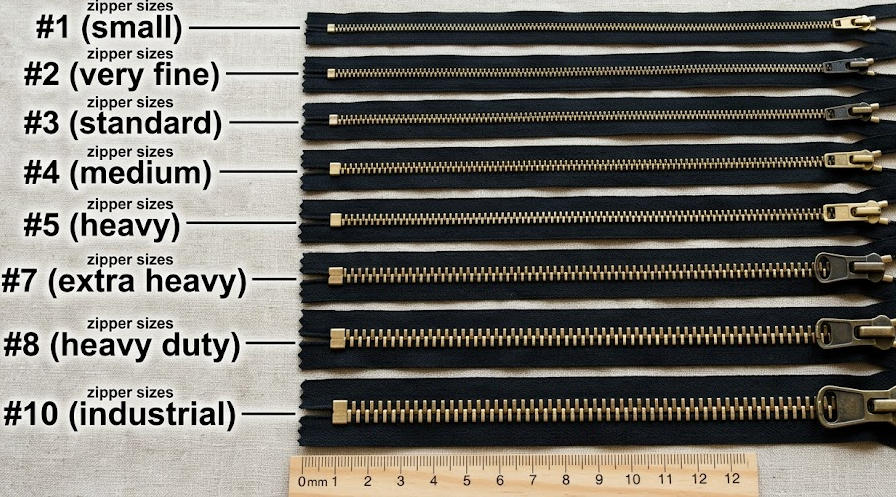
2. Choose the Appropriate Zipper Size
Zipper size has a direct effect on both performance and appearance.
| Zipper Size | Tooth Width | Recommended Leather Jacket Application | Key Characteristics |
| #3 | 3 mm | Lightweight fashion jackets, thin leather pockets | Lightweight, fine appearance, suitable for less demanding applications |
| #5 | 5 mm | Standard leather jacket fronts, pockets, cuffs | Balanced strength, smooth operation, versatile choice |
| #7 | 7 mm | Medium-to-heavy leather jackets, motorcycle jackets | Stronger construction and better durability |
| #8 | 8 mm | Heavy-duty motorcycle and work jackets | Excellent strength for thick leather and frequent use |
| #10 | 10 mm | Heavy motorcycle jackets, tactical-style leather jackets, oversized designs | Maximum visual impact and heavy-duty performance |
| #12 or larger | 12+ mm | Specialty, industrial, or highly rugged leather garments | Extremely robust, but heavier and less suitable for everyday fashion jackets |
For most leather jackets, #5 or #7 metal zippers provide a good balance between appearance, strength, weight, and ease of operation. Thicker motorcycle or workwear jackets may benefit from #8–#10, while lightweight fashion jackets can use smaller sizes such as #3–#5.
3. Evaluate the Metal Material
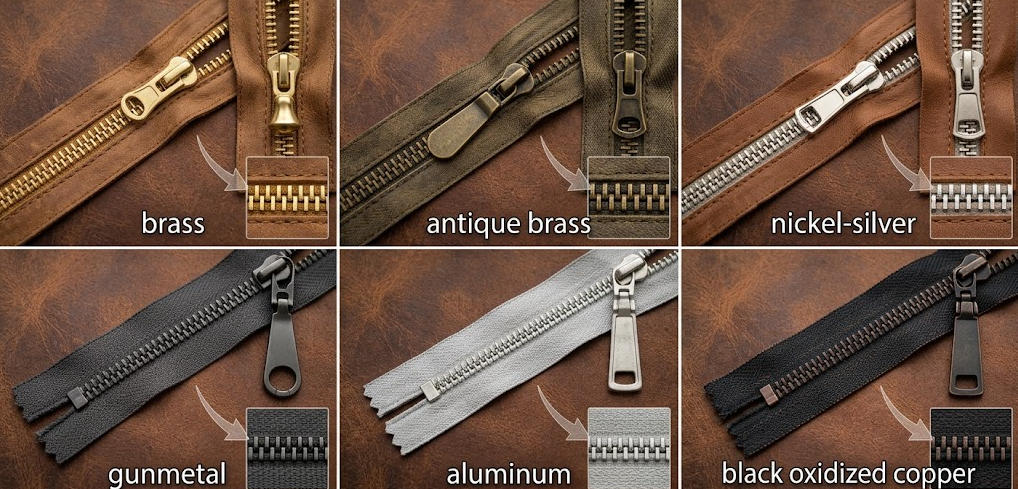
Different metals provide different combinations of strength, weight, corrosion resistance, and appearance.
| Metal | Main Characteristics | Advantages | Recommended Leather Jacket Applications |
| Brass | Strong, durable, warm golden tone | Long-lasting, classic appearance, good corrosion resistance | Biker jackets, vintage jackets, bomber jackets |
| Aluminum | Lightweight with a bright metallic appearance | Reduces hardware weight, good corrosion resistance | Lightweight leather jackets, fashion jackets |
| Stainless Steel | Strong and highly corrosion-resistant | Excellent durability and moisture resistance | Motorcycle jackets, outdoor jackets, heavy-duty leatherwear |
| Zinc Alloy | Versatile and easy to finish in different styles | Cost-effective, customizable, available in many finishes | Fashion jackets, designer leatherwear, decorative zippers |
| Nickel-Plated Metal | Smooth silver-colored surface | Attractive appearance, good wear resistance | Contemporary leather jackets, premium fashion designs |
| Copper | Reddish-brown metallic appearance | Distinctive aesthetic and natural patina | Vintage, handcrafted, and specialty leather jackets |
For a rugged, traditional leather jacket, brass is a popular choice. For lightweight designs, aluminum can be considered, while stainless steel is better suited to applications where durability and corrosion resistance are particularly important.
4. Pay Attention to Tooth Construction
The zipper teeth are a key part. They have to stay lined up and lock together as the zipper opens and closes.
Bigger metal teeth often look rugged. They usually fit thick leather jackets well. Smaller teeth tend to look cleaner, which can suit lighter jackets and fashion styles.
Teeth also need to be made the same all the way along. If they are off, the slider can snag, skip, or run unevenly. Well-made teeth should be shaped carefully and set straight on the zipper tape.
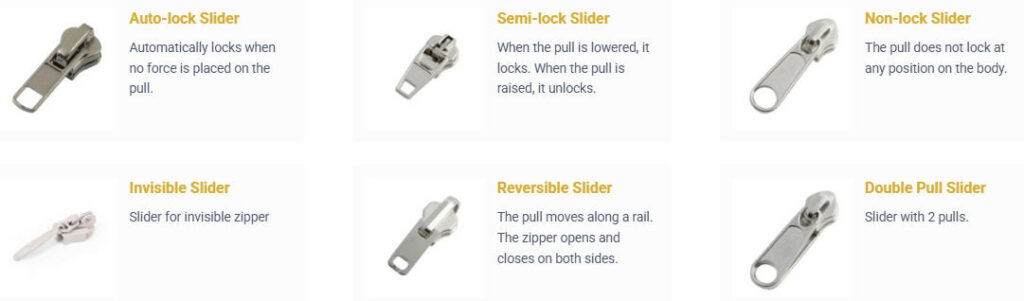
5. Select the Right Slider
The zipper slider decides how smoothly the zipper moves. Even a good zipper chain can feel rough if the slider does not match it.
A locking slider can stop accidental opening. That helps with motorcycle jackets and outdoor wear. A standard slider is fine for many daily fashion pieces. A two-way slider can be useful on longer jackets or items meant for riding.
The pull tab should be checked as well. A bigger pull tab can be easier to use with gloves. A smaller or more decorative pull can also give a neater look.
6. Consider the Zipper Configuration
Think about where the zipper will sit on the jacket. That placement guides the right configuration. A front jacket usually needs an open-end zipper since both sides must separate fully.
For pockets, a sealed-end zipper is usually enough. If the coat is longer or it is a motorcycle style, a two-way zipper can help. With two-way zippers, the bottom part can open on its own. That makes it easier to move.
Picking the wrong setup can change how the jacket works and how it feels. That is why the intended use matters before you place an order.
7. Match the Zipper Finish With the Jacket
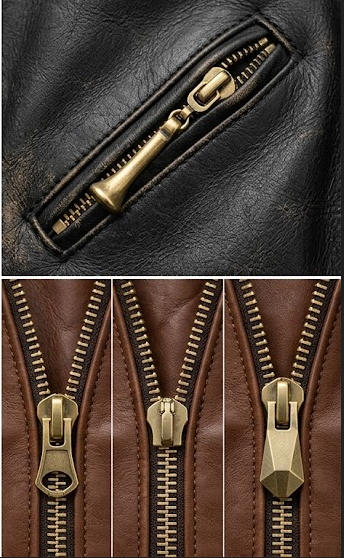
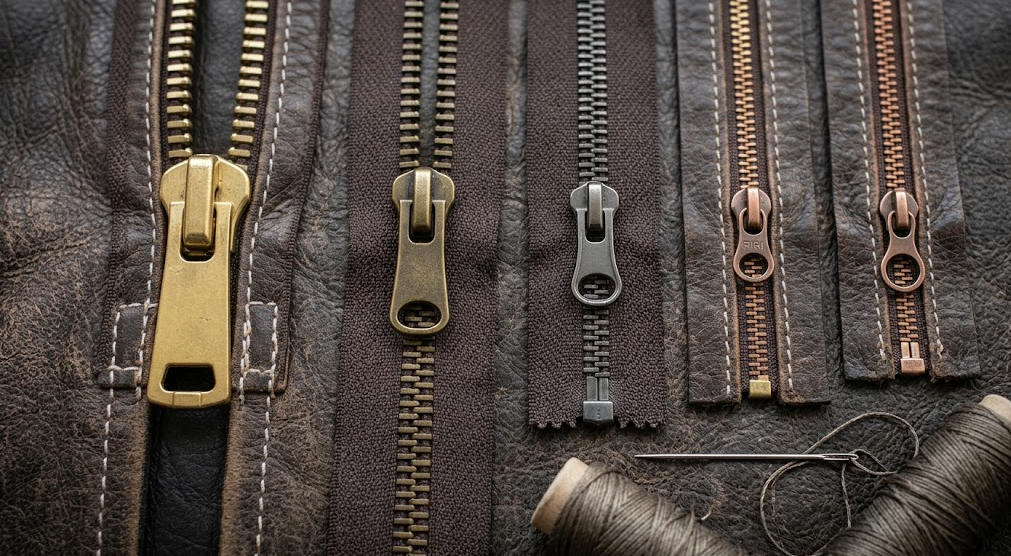
The appearance of the zipper should fit the leather and the rest of the hardware. You can find metal zippers in polished brass, antique brass, silver, nickel, gunmetal, and matte black.
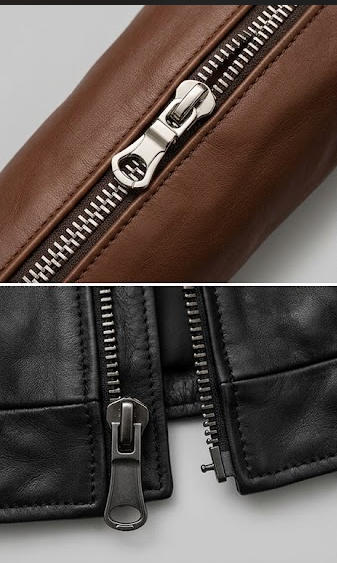
A brown or worn leather jacket often looks best with an antique brass or bronze-style finish. A black leather jacket can pair with silver, gunmetal, or black hardware. The choice depends on the look you want.
When a jacket has several metal parts, keep them consistent. If you match the zipper with snaps, buckles, rivets, and buttons, the overall look stays more unified.
8. Assess Durability and Expected Usage
Think about how often the jacket will be used and in what conditions. A leather jacket for occasional style wear does not always need the toughest build. A jacket meant for daily riding usually needs more.
Using the zipper a lot can wear down the slider and teeth over time. Being outside can also add moisture and dirt. Those factors can affect metal hardware.
For tough use, aim for strong construction. Look for dependable plating or finishing too. Choose parts made for repeated action. A better zipper can lower the chance of early failure and expensive fixes.
9. Check Compatibility With Leather Construction
Leather needs careful work at install time. Many light fabrics bounce back after punctures. Leather often does not. Because of that, the zipper must match the leather thickness and how the panels are built.
During production, consider the zipper tape width and the stitching area. Also check the tooth shape and size. If the zipper is too bulky or too stiff, it may affect how the leather folds. If it is too narrow, it may not support the seams well.
After that, stitch the zipper down securely. Even a strong metal zipper can fail early if the surrounding stitching is weak.
10. Consider Weight
Metal zippers add more weight than many synthetic options. For one zipper, the extra weight may not seem big. Still, a leather jacket can have more than one zipper. Common spots include the front, pockets, cuffs, and other areas.
For a heavy motorcycle jacket, extra zipper weight can be fine since toughness matters most. With lightweight leather fashion, designers often choose smaller or lighter metal parts to keep the feel easy and allow easy movement.
You are trying to keep two things in line. You want solid strength and you also want the jacket to stay light enough to wear comfortably.
11. Consider Corrosion Resistance
Leather jackets may get hit by rain, damp air, sweat, and other wet conditions. If the metal fittings are not protected well, they can discolor and then corrode over time.
Because of that, the zipper base metal and its surface coating should be checked, mainly for jackets made for outdoor use. Some metals, like stainless steel, and metals with good finishes or plating, tend to hold up better against the weather.
Storage and upkeep still matter too. If you care for the jacket, the zipper usually keeps its look and function longer.
12. Consider the Jacket’s Design and Style
A zipper should fit the jacket’s look. It should not feel stuck on later. A vintage motorcycle style often needs more visible metal hardware. A clean minimalist style may look better with a zipper that is less noticeable.
The zipper size, shape, coating, pull tab design, and where it sits can change how the jacket looks. These details can help the maker lean into a rugged classic feel, a modern look, a luxury vibe, or a more industrial look.
13. Balance Quality and Cost
Cost matters as well, especially for makers who buy zippers in bulk. Picking the cheapest zipper may cut early production costs. Still, weak hardware can cause zipper problems. That can lead to complaints, refunds, repairs, and other extra costs.
A better route is to match the zipper to the job it must do. Think about where the jacket will be used and how long the zipper is expected to last. A higher-cost zipper can make sense for top leather jackets. For budget products, a solid mid-tier option may work better.
The aim is to land on the right mix of cost, function, appearance, and long-term durability.
Testing the Zipper After Installation
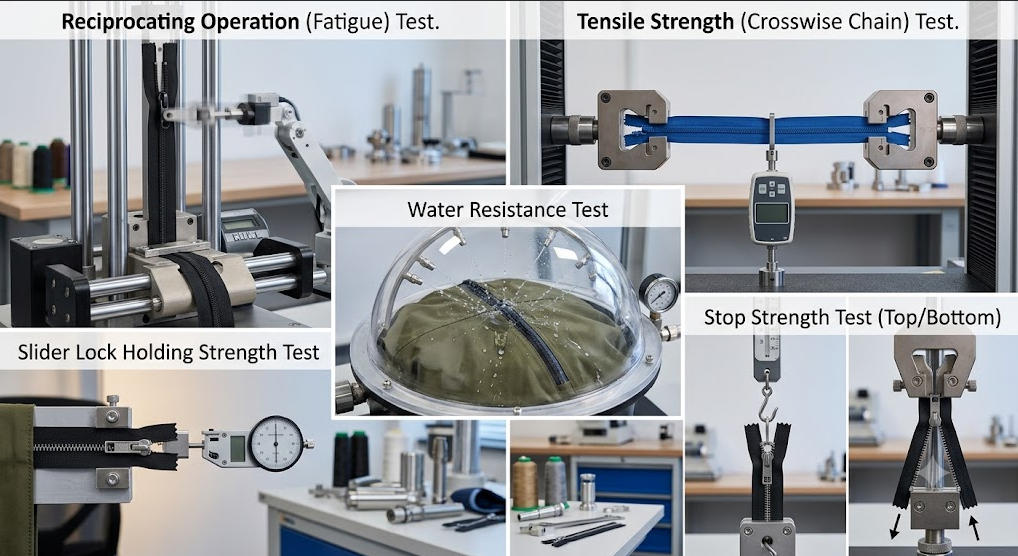
After installation, the zipper should be checked before the jacket ships. The slider should glide with no heavy drag. The teeth should also line up and grip well from one end to the other.
It should be tested in ways that feel like real wear. Opening and closing many times can reveal issues. Watch for misalignment, uneven slider movement, stitch problems, or weak tooth contact.
For tough leather jackets, extra wear tests may be needed too. The goal is to confirm the zipper can handle the expected use.
Maintaining Metal Zippers on Leather Jackets
Proper maintenance helps a metal zipper last longer. You should clear out dirt, grit, and any trapped moisture from the zipper at intervals. If the slider feels tight or hard to move, do not push it harder. Pushing can bend or wear the teeth and may harm the slider parts.
Sometimes a proper zipper lubricant improves movement. Still, the leather near the zipper needs care too. Follow the leather maker’s directions for cleaning and conditioning that area.
Also, try to keep the jacket dry. Store it in a suitable place with good conditions. This reduces rust risk and slows down hardware wear.
Summary
Metal zippers show up on leather jackets for function and style. They help keep the front closure secure. They can cover and protect pockets. They also help with sleeve cuff adjustment. Many designs even allow two-way opening. The shiny look of metal zippers can add a worn-in feel, a rugged tone, or a more modern vibe to a leather jacket.
How well a metal zipper works comes down to the right choices. Pick the correct size and the right metal type. Also match the configuration and the finish to the leather and the job it must do. Good installation matters, and so does routine cleaning and maintenance. If those points are handled well, a metal zipper can stay strong and look good on a quality leather jacket.