
How to Choose the Right Zipper Size
Zippers are kinda small, but essential parts; they play a major role in the function, durability, and appearance of many products. Selecting the right zipper size is an important decision because it can affect product performance and user experience. If the zipper is too small, it might not give enough strength, but if it is too large, then it can mess with the appearance and the overall flexibility of the finished item.
Getting familiar with zipper sizing standards, matching it to the use case, making sure materials work well together, and setting realistic expectations for performance can really help zipper manufacturers select the most suitable zipper size for different kinds of products.
Understanding Zipper Size Standards
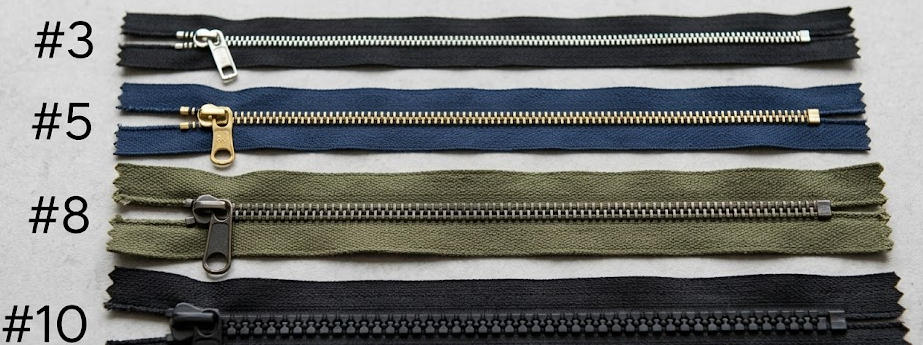
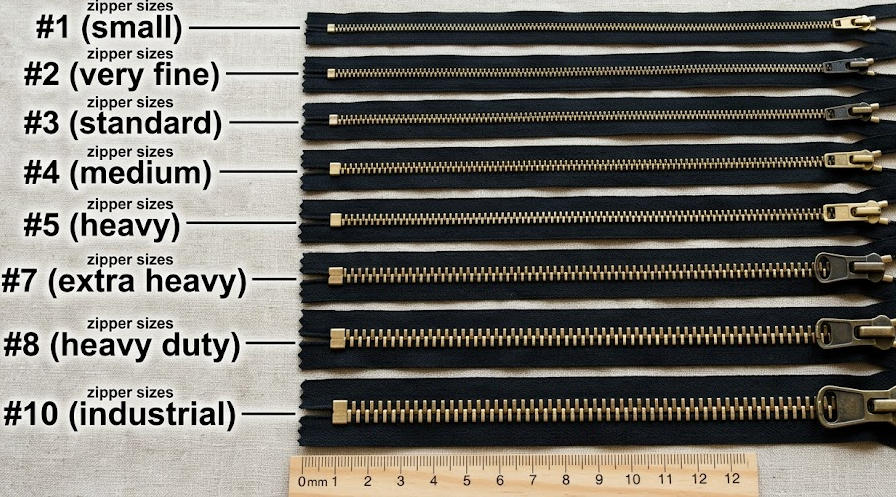
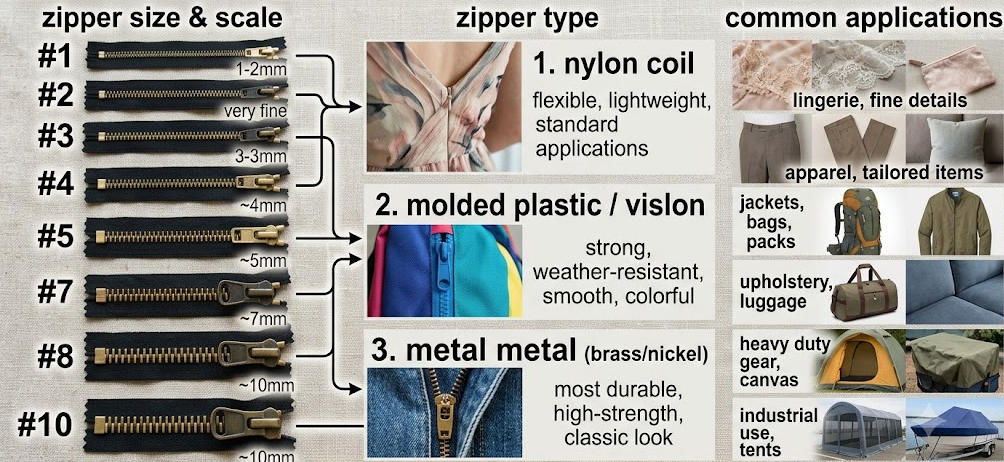
Zipper sizes are usually identified by numbers such as #3, #5, #7, #8, and #10. These numbers roughly indicate the width of the zipper teeth when the zipper is fully closed. In general, a higher number means the zipper is bigger, the teeth are sturdier, and it can handle more load-bearing weight.
| Zipper Size | Approximate Tooth Width | Common Applications | Main Characteristics |
| #1 | Around 1 mm | Small accessories, lightweight pouches, delicate products | Ultra-lightweight, flexible, suitable for low-stress applications |
| #2 | Around 2 mm | Wallets, small bags, children’s clothing, thin fabrics | Compact design with smooth operation for lightweight products |
| #3 | Around 3 mm | Dresses, skirts, shirts, pillow covers, small accessories | Lightweight and discreet, ideal for fashion and decorative applications |
| #4 | Around 4 mm | Medium clothing, handbags, casual jackets | Provides a balance between flexibility and durability |
| #5 | Around 5 mm | Jackets, jeans, backpacks, handbags, everyday clothing | One of the most common zipper sizes, offering good strength and versatility |
| #7 | Around 7 mm | Outdoor clothing, medium luggage, sports equipment | Stronger than standard zippers, suitable for higher-stress applications |
| #8 | Around 8 mm | Large backpacks, camping gear, travel bags, outdoor equipment | Heavy-duty performance with improved durability |
| #10 | Around 10 mm | Suitcases, large luggage, tents, industrial products | Maximum strength for demanding applications and heavy loads |
Key Factors to Consider for Choosing the Right Zipper Size
1. Application and Usage Requirements
When choosing a zipper size, the intended use of the product is one of the biggest factors. Different tasks create various amounts of pressure, movement, and wear, and that then changes what the zipper needs to be able to handle.
Clothing and Fashion Products
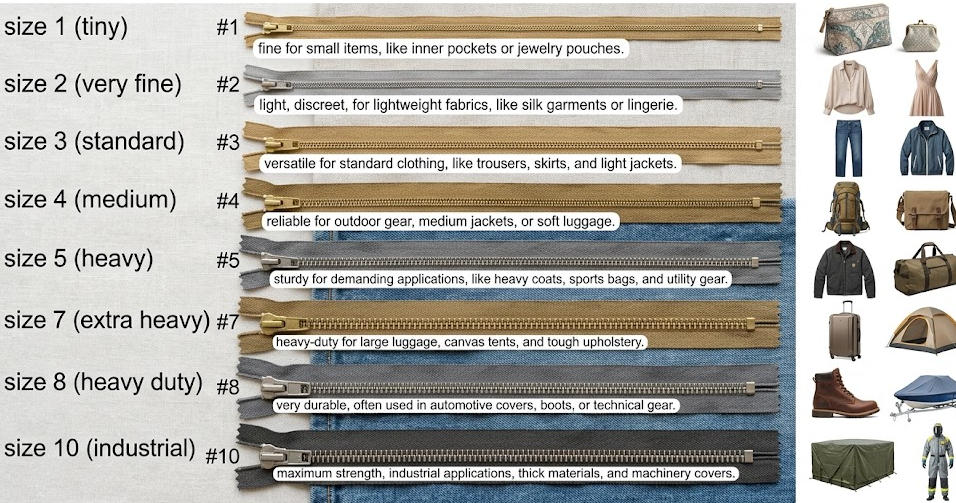
For light garments like shirts, skirts, and dresses, smaller zipper sizes such as #3 are usually the best pick since they keep a discreet look while still working well enough.
For jackets, coats, and jeans, people commonly go with medium zipper sizes like #5 because they give a practical balance between appearance and durability.
Bags and Luggage
Bags, backpacks, and luggage go through opening, closing, and pulling actions again and again. Because of that, a sturdier zipper is recommended, often #5, #8, or #10, depending on how large the item is and how heavy it tends to be.
Bigger travel bags and suitcases typically need heavy-duty zippers with larger teeth so they can survive repeated strain and heavier loads.
Outdoor Equipment
Outdoor items like tents, sleeping bags, and hiking gear need zippers that can handle rough conditions. Bigger sizes, such as #8, #10 are frequently chosen because they give better durability and more resistance to abrasion or scuffing.
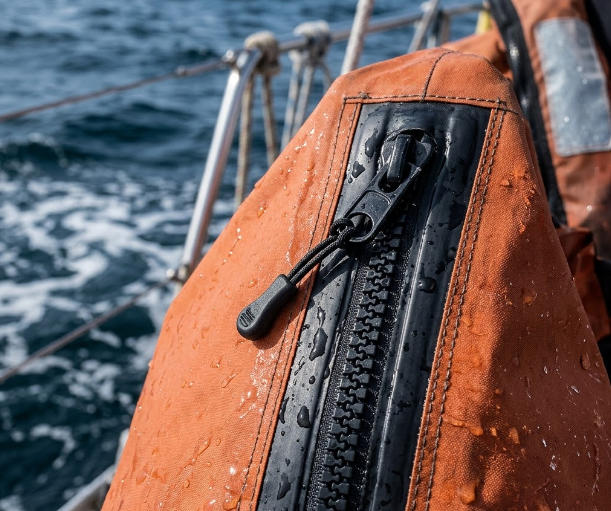
In some outdoor applications, water-resistant or fully waterproof zipper designs may be required too, especially when shielding from moisture matters a lot.
Summary Chart
| Application | Recommended Zipper Sizes | Reason for Selection |
| Lightweight clothing | #2–#3 | Maintains a slim appearance and provides sufficient flexibility |
| Dresses and fashion garments | #3–#4 | Creates a clean look while supporting smooth operation |
| Jackets and coats | #5–#8 | Provides better strength for frequent opening and closing |
| Jeans and workwear | #5–#7 | Handles repeated use and higher pulling forces |
| Handbags and backpacks | #5–#8 | Offers durability while supporting daily use |
| Luggage and travel bags | #8–#10 | Designed for heavy loads and long-term durability |
| Outdoor equipment | #5–#10 | Provides strength and resistance for demanding environments |
| Industrial products | #8–#10 | Suitable for high-strength and heavy-duty applications |
2. Thickness and Product Structure
The fabric or material used in a product has a strong impact on which zipper size to select. Light, thin textiles tend to match smaller zipper sizes more easily, since they keep a natural pliability and help the outer look stay even. If you use an extra-large zipper on delicate materials, the whole piece can end up looking mismatched, and it may reduce overall comfort.
Thicker materials, for instance, leather canvas, upholstery fabrics, and reinforced textiles generally need bigger zippers. With these fabrics, there is more resistance while operating, so a more robust zipper body is needed to keep things moving open and shut without trouble.
Also, the way the whole product is made matters. A zipper on a thick winter jacket, for example, has to pass multiple layers of cloth, insulation materials, and constant motion. Picking the right zipper size helps the zipper fit the product design more naturally, and it boosts long-term dependability.
3. Matching Zipper Size with Zipper Type
Different zipper types have different characteristics, and the ideal size may vary depending on the zipper structure.
| Zipper Type | Common Sizes | Features |
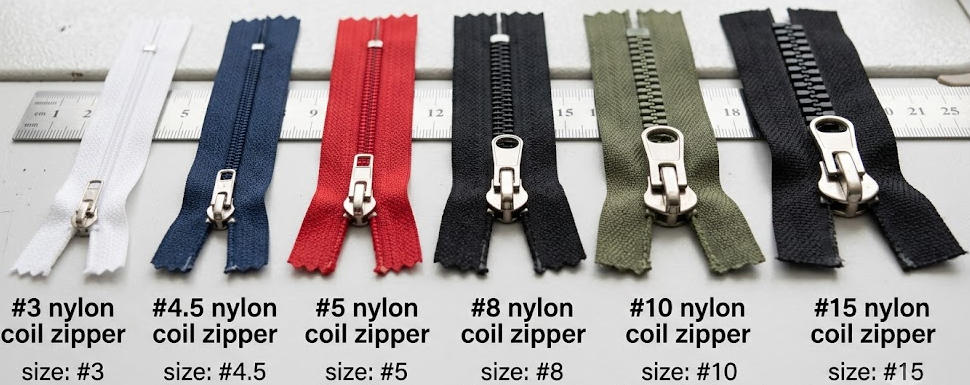
| Nylon Coil Zippers | #2, #3, #4, #5, #7, #8 | Lightweight, flexible, smooth operation, and available in a wide range of sizes |
| Metal Zippers | #3, #5, #7, #8, #10 | Strong teeth structure, premium appearance, excellent durability |
| Plastic Molded Zippers | #3, #5, #7, #8, #10 | Lightweight, corrosion-resistant, durable, and suitable for outdoor environments |
| Invisible Zippers | #2, #3, #4 | Low-profile design, hidden appearance, ideal for aesthetic-focused products |
| Waterproof Zippers | #3, #5, #7, #8 | Provides moisture protection and improved sealing performance |
| Heavy-Duty Zippers | #8, #10, larger sizes | High strength, strong load capacity, and designed for demanding conditions |
| Two-Way Zippers | #5, #8, #10 | Allows opening from both ends and improves flexibility and comfort |
| Separating Zippers | #3, #5, #8, #10 | Designed for complete separation and frequent use |
Selection Guide
| Product Requirement | Recommended Zipper Type and Size |
| Lightweight and flexible design | Nylon coil or invisible zipper, #2–#4 |
| Everyday clothing and accessories | Nylon coil, metal, or plastic molded zipper, #3–#5 |
| Stronger fastening for jackets and bags | Metal or plastic molded zipper, #5–#8 |
| Outdoor and weather-resistant products | Waterproof or plastic molded zipper, #5–#10 |
| Heavy-duty and industrial applications | Heavy-duty metal or plastic molded zipper, #8–#10 |
| Premium appearance and decorative design | Metal zipper, #3–#7 |
4. Strength and Durability Requirements
Always think about the actual workload a zipper will face before choosing one. Items that get used a lot, or carry heavy loads, need stronger zipper construction
A bigger zipper size usually gives more pulling power and better protection against wear. because of that, a larger zipper is often a fit for things like travel bags, work gear, and outdoor supplies. Even so, grabbing the largest zipper you can find is not always the smartest option. If the zipper is too oversized, it may add extra weight, reduce flexibility, or mess up the look and layout of the product overall.
The right zipper size should bring enough strength for what you are making, while still keeping comfort, appearance, and everyday handling in good shape.
5. Proper Slider and Component Compatibility
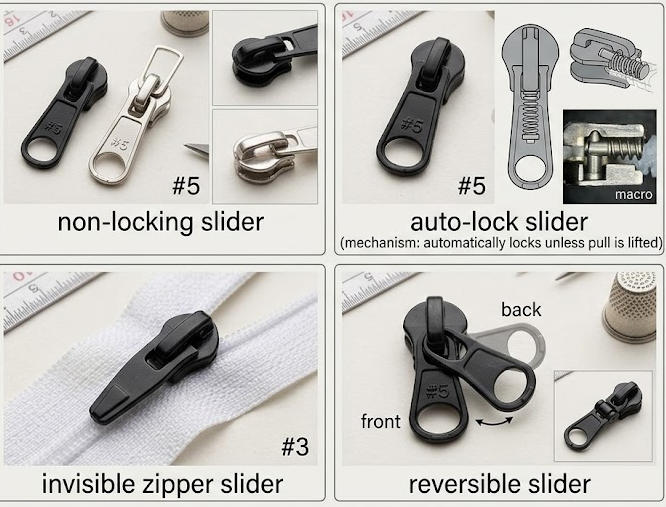
A zipper system is more than only the teeth. The zipper tape, the slider, the puller, and other parts have to cooperate. so choosing the right zipper size also means you need to pick a zipper slider that matches the teeth, and the rest of the components should line up properly too.
Using the wrong slider size can end up causing some problems like awkward movement, zipper separation, or even early wear. For manufacturers, testing the full zipper assembly matters a lot so everything runs smoothly and the results stay dependable.
Making a high-grade zipper is not only about the slider or even just one measured width. It needs careful matching between every part, so the components actually fit together well, and not just because the zipper size alone looks right.
6. Balancing Functionality and Design Appearance
The zipper size also changes how the whole product looks. A smaller slider can give a light, elegant impression, which works well for fashion items and premium designs. A larger zipper tends to look sturdier, more rugged, and it fits outdoor goods, workwear, and heavy-duty bags.
Designers also need to think about how the zipper fits into that whole product picture. The zipper color, material, how much it shows, and the size it has should work well with the fabric and the actual style they want to show. When the zipper is picked well it can end up being more than just a working part; it can also act as a key design detail.
7. Special Performance Requirements
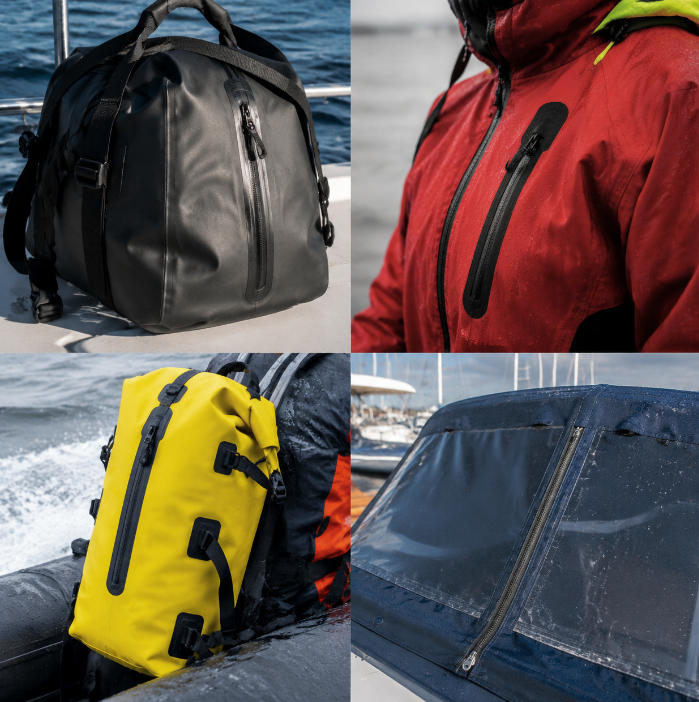
Some uses demand zippers with extra performance traits. If the product is meant for outside use, marine situations, or even industrial settings, then a more specialized zipper approach might be required.
For instance, waterproof zipper types may be necessary when the item gets exposed to rain, or general moisture. Corrosion-resistant zippers are often needed for marine equipment, or for settings that are tough on materials. Industrial products may call for zippers that handle chemicals, very high or low temperatures, or regular repeated cleaning.
In these situations, the zipper size should be chosen alongside the other performance factors, so the finished product can actually meet its operating needs.
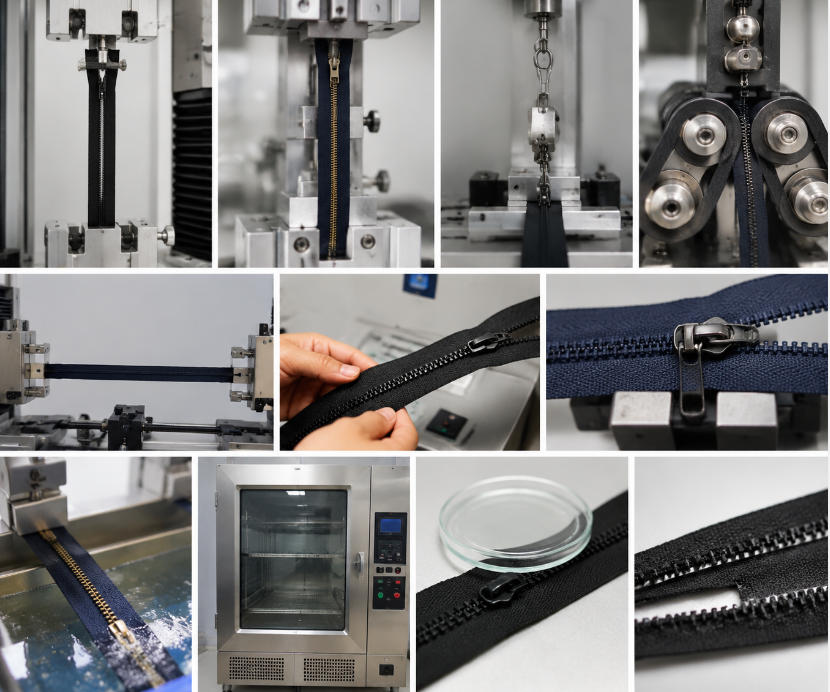
Testing Zipper Performance Before Mass Production
For manufacturers, testing is a necessary step before large-scale production. Even when the zipper size looks right on paper, hands-on trials can uncover problems you did not expect.
Common zipper tests include:
- Opening and closing cycle tests
- Tensile pull strength tests
- Slider movement and smoothness tests
- Repeated laundering durability tests
- Environmental resistance trials
Doing this helps confirm that the chosen zipper size can actually match the product performance expectations.
Final Thoughts
Selecting the right zipper size needs attention to use case, material thickness, zipper style, durability needs, and the design goals that you have in mind. Smaller zippers work well for lightweight pieces and decorative items, whereas bigger zipper configurations are more fitting for heavy-duty work where extra strength and dependability matter.
By choosing the right zipper size and making sure it matches with other zipper components, manufacturers and designers can boost product performance, sharpen the overall look, and lengthen service life. A zipper selected properly is not only a fastening choice but also a key part of building high-quality durable and pleasant-to-use products.