
Coil Zippers vs. Plastic Molded Zippers: How to Make a Choice
Coil zippers and plastic molded zippers are among the most common zipper options. Even though both offer dependable closure, they are not the same, they differ in the materials, the structure, how they perform, and where they work best. Knowing the differences between coil zippers and plastic molded zippers makes it easier for manufacturers, designers, and consumers to select the right zipper type based on durability, flexibility, visual finish, and actual functional needs.
Understanding Coil Zippers
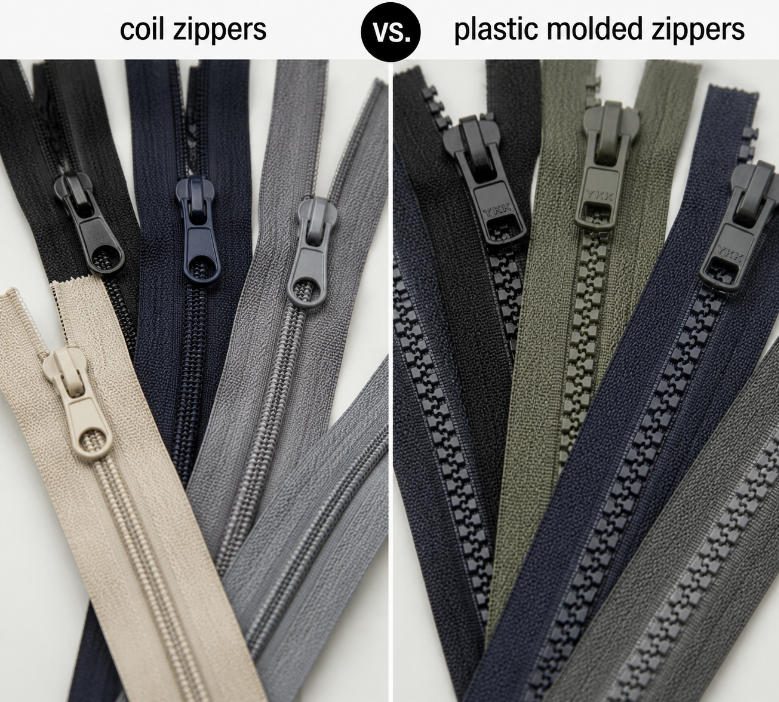
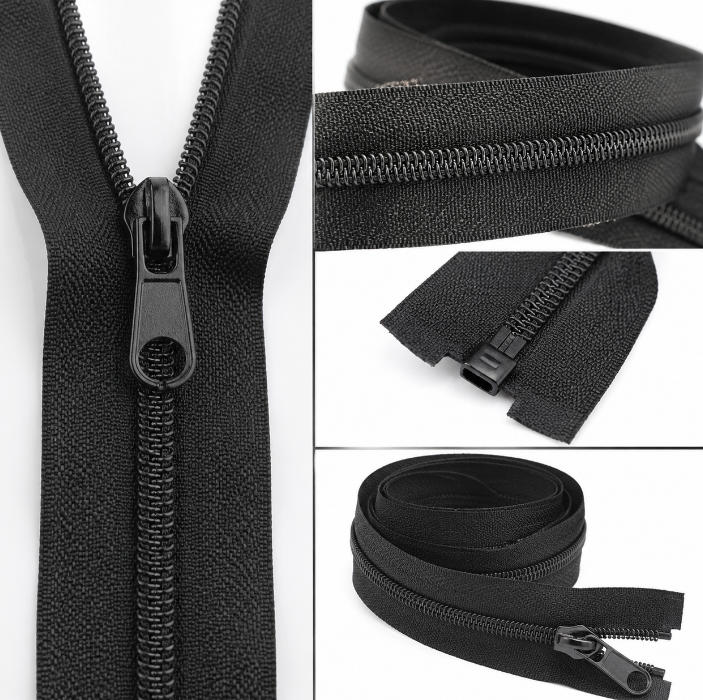
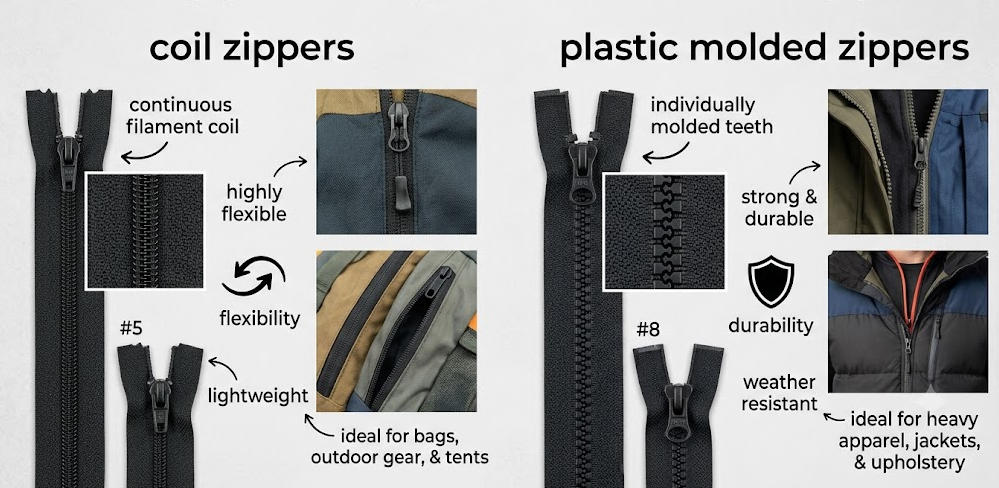
A coil zipper is mostly made from a few core parts: the zipper coil, fabric tapes, the slider, upper and lower stops, and a puller. There’re two types, including nylon coil zippers and polyester coil zippers, and it is shaped into a spiral. In production, the coil is sewn, or sometimes woven, onto the zipper tape so the fastening setup stays stable, and in place.
The manufacturing process involves precise control over coil formation, tape attachment, slider compatibility, and also quality inspection for zipper products. For high-quality coil zippers, you need accurate coil spacing and a strong tape bond so the whole zipper keeps moving smoothly and has a long service life.
Compared with other zipper types, coil zippers are easier to make in different colors and sizes, so they fit products where both look and function matter.
Key Advantages
1. Excellent Flexibility
One of the most important benefits of coil zippers is their strong flexibility. The continuous spiral structure lets the zipper bend, follow curved surfaces, and still work normally. That is why coil zippers are especially suitable for garments, backpacks, handbags, and goods with irregular shapes.
When you compare to rigid zipper types, coil zippers deliver better comfort and adaptive performance in clothing and wearable products, without feeling stiff.
2. Smooth, Quiet Operation
Coil zippers are well known for how smoothly they slide. The flexible coil teeth make less friction between the zipper parts and the slider, so the whole thing opens and closes easily for people.
The softer structure also helps quiet down the operational sound, which matters for things like clothing, luggage, and accessories where a calm user experience is preferred.
3. Lightweight Design
Coil zippers are usually lighter than metal zippers and even several plastic molded zipper designs. That lighter, easier-to-manage construction reduces the total weight of the finished items, so it becomes useful for apparel, travel products, and outdoor gear.
For manufacturers making lightweight jackets, backpacks, and sportswear, coil zippers offer dependable fastening without putting extra weight into the mix.
4. Good Aesthetic Versatility
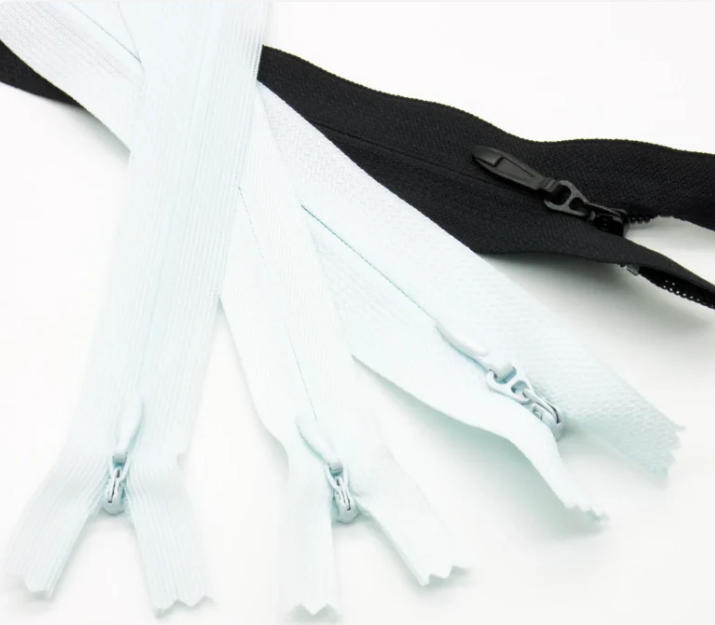
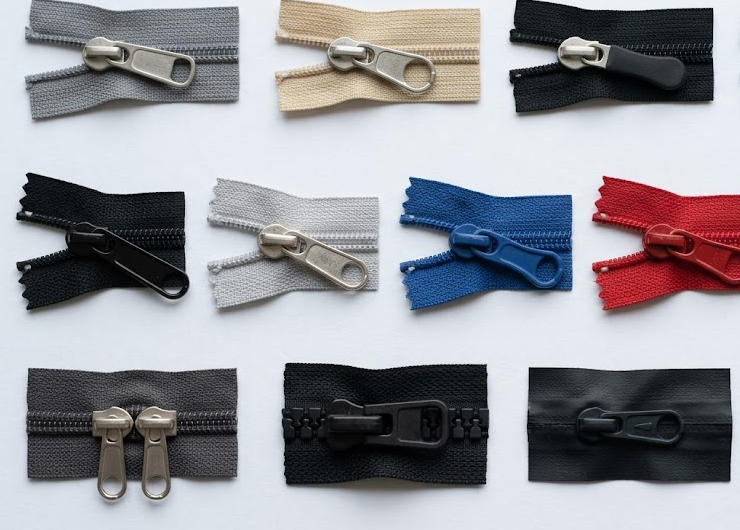
Coil zippers give really good design flexibility, like they just fit in everywhere. They can be made in many different colors, and they can be paired with various textiles and product ideas too. Because the profile is rather slim, they tend to merge into the item more easily than the larger-tooth types.
For fashion pieces, hidden pockets, and decorative use, coil zippers bring both practical benefits and a nice visual presence, so it works for more than one purpose.
5. Corrosion and Chemical Resistance
Since the coil components are usually crafted from synthetic materials, they are naturally resistant to rust, and corrosion, too. That makes them a good option where humidity is common or where there is occasional wet exposure.
In comparison with metal zippers, coil zippers need less upkeep and they are less prone to corrosion-related issues, even when conditions are a bit harsh.
6. Cost-Effective Production
Coil zippers tend to be quite economical to produce, largely because the making process is efficient and synthetic materials are easy to source. That middle ground between performance and expense is why they keep showing up in mass-produced apparel, bags, and everyday consumer goods.
Understanding Plastic Molded Zippers
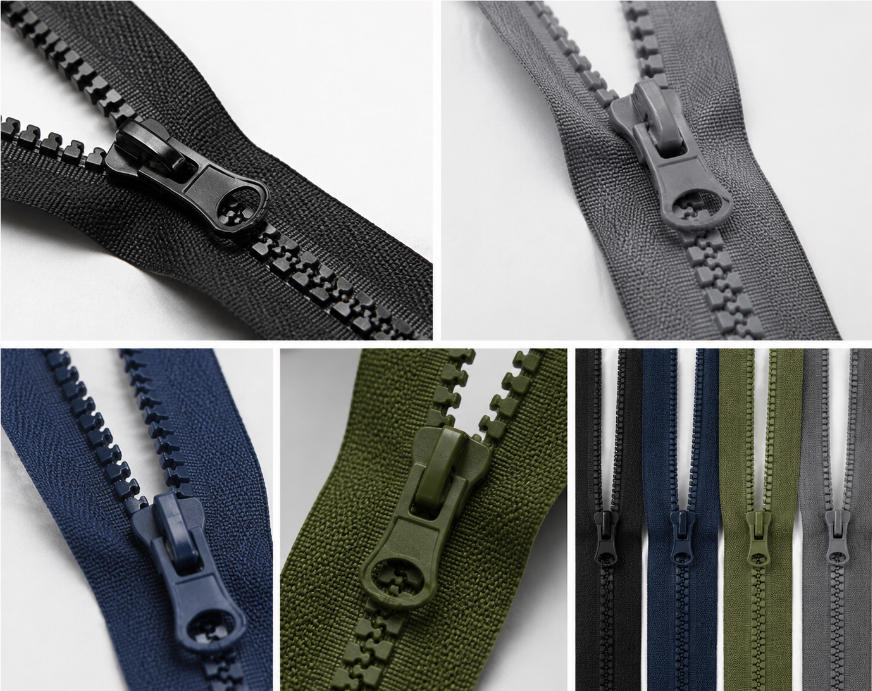
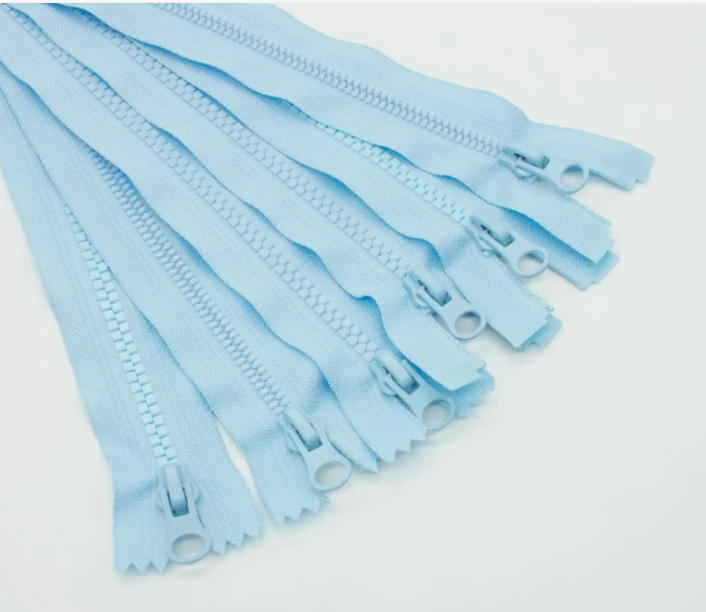
A plastic molded zipper is made from a handful of important parts, molded plastic teeth included, plus zipper tapes, sliders, pullers, and the top and bottom stops. The plastic teeth are produced one by one using precision molding, and then they are fixed onto the zipper tape at regular intervals, as a rule.
In the production, manufacturers keep a close eye on tooth size, shape, spacing and alignment, so the slider can glide smoothly and so the teeth lock together reliably. High-quality molded zippers lean on accurate molding technology, because even minor deviations in tooth measurements can influence how well the zipper works.
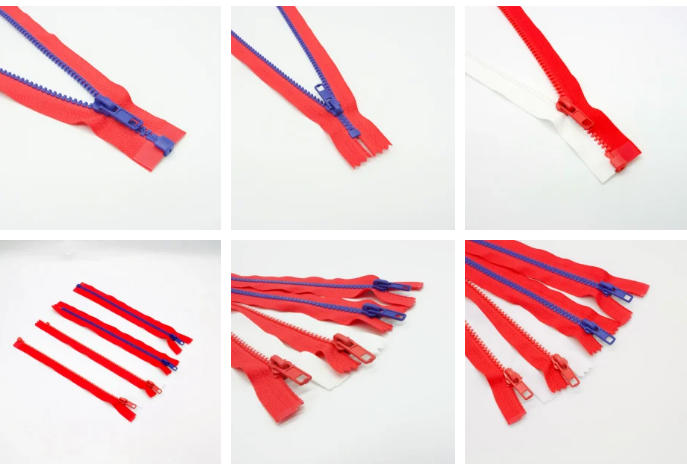
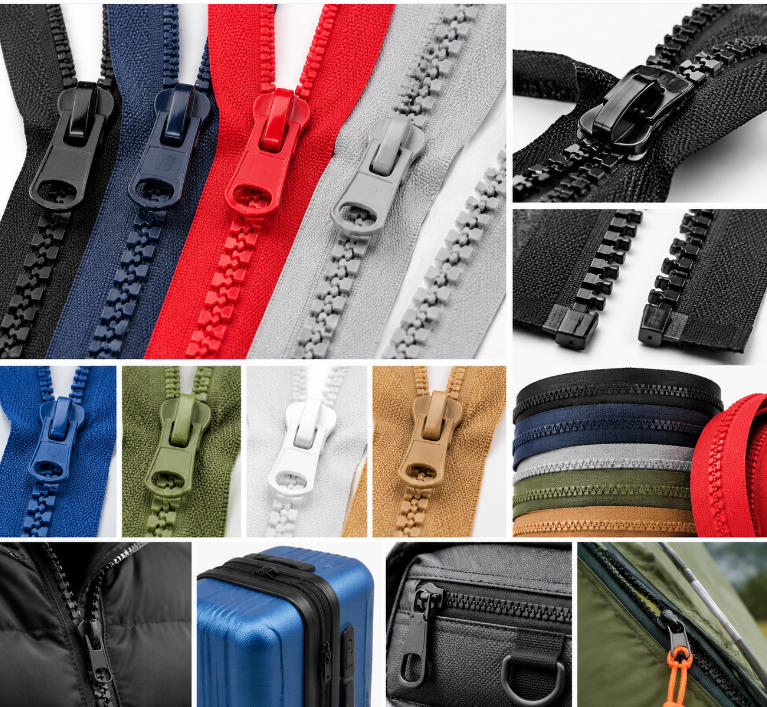
The injection molding method also lets zipper manufacturers create teeth in different colors, differing outlines, and multiple sizes, which gives more creative room for different uses.
Key Advantages
1. High Strength and Durability
One of the main advantages of plastic molded zippers is the way they maintain their mechanical strength. The separate plastic teeth form a tight, interlocking arrangement that can take more pulling force than a lot of lighter zipper styles, and this matters when you are loading and unloading stuff repeatedly.
Because of that durability, plastic molded zippers fit well for products that see constant handling, heavy loads, and tough conditions. They are often picked for backpacks, luggage, outdoor clothes, and work equipment, where zipper issues could reduce overall product performance.
2. Excellent Resistance to Environmental Conditions
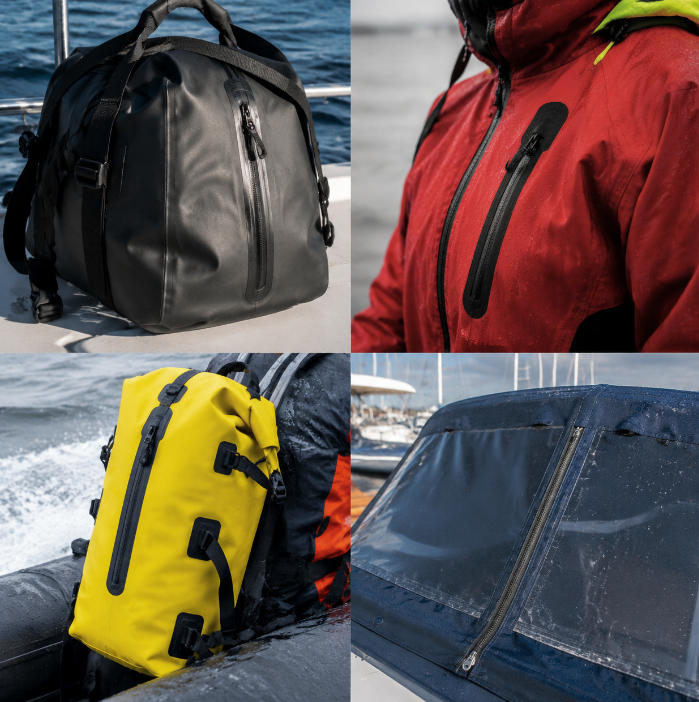
Plastic molded zippers also show good resistance to moisture, corrosion, and many chemicals. Unlike metal zippers, they do not rust in wet or humid settings, so they work well for outdoor use, and marine-related tasks too.
This environmental resistance helps lengthen the useful life of the product in difficult weather, including rain, snow, and high humidity conditions.
3. Strong and Reliable Closure Performance
The larger molded teeth give a more secure link between the two sides of the zipper. When it’s closed, the teeth form a stable setup that helps keep the zipper from slipping open by accident
This solid closure performance is extra important for items that carry heavy loads, like travel bags, backpacks and protective cases
4. Attractive and Distinctive Appearance
Plastic molded zippers show a bold, modern look because the teeth are larger and the structure is more visible. Producers can change the tooth color and finishing options to create different visual vibes
That’s why they’re common in sportswear, outdoor clothing, fashion bags, and lifestyle goods, where the zipper is not only a functional piece, but also a design element
5. Lightweight Compared with Metal Zippers
Even though plastic molded zippers are often stronger than coil zippers, they still tend to be lighter than many metal zipper alternatives. That lighter build helps cut down total product weight, while keeping durability in a good place.
This benefit shows up most in outdoor gear, luggage, and sporting items, where trimming weight really matters.
6. Good Temperature Performance
Many plastic molded zippers, made using higher quality engineering plastics, can hold steady performance through a broad span of temperatures. In cold weather, they usually get less affected than some metal zipper designs. Those metal versions can end up feeling stiff and tough to move, especially when it is chilly. For certain uses, specially chosen materials can also add extra temperature resistance.
Performance Comparison Between Coil Zippers and Plastic Molded Zippers
| Performance Factor | Coil Zippers | Plastic Molded Zippers |
| Tooth Structure | Uses a continuous spiral coil made from nylon or polyester | Uses individual plastic teeth molded from materials such as nylon, POM, or polypropylene |
| Flexibility | Excellent flexibility; easily bends and follows curved surfaces | Moderate flexibility; more rigid due to separate molded teeth |
| Strength | Moderate strength, suitable for everyday and lightweight applications | Higher strength, suitable for heavy-duty and demanding applications |
| Durability | Good durability under normal use conditions | Excellent durability with better resistance to pulling forces |
| Slider Operation | Very smooth, quiet, and easy to operate | Smooth operation but may feel more structured due to larger teeth |
| Weight | Very lightweight, reducing overall product weight | Lightweight but generally heavier than coil zippers |
| Appearance | Slim, discreet, and available in many colors | More prominent, rugged, and sporty appearance |
| Resistance to Moisture | Excellent resistance to rust and moisture; waterproof versions available | Excellent moisture resistance and does not corrode like metal zippers |
| Chemical Resistance | Good resistance to many chemicals due to synthetic materials | Good resistance, especially with engineering plastics |
| Resistance to Bending | Excellent; performs well on flexible and curved products | Lower; better suited for straight or less flexible designs |
| Load-Bearing Capacity | Moderate; suitable for clothing, accessories, and lightweight bags | High; suitable for backpacks, luggage, and industrial products |
| Noise Level During Use | Very quiet due to soft coil structure | Slightly louder due to rigid molded teeth |
| Temperature Resistance | Moderate; performance may decrease under extreme heat | Good, but very high temperatures may affect plastic teeth |
| Maintenance Requirements | Low maintenance; requires basic cleaning and proper use | Low maintenance; strong resistance to environmental conditions |
| Manufacturing Process | Easier production with continuous coil forming technology | Requires precision injection molding and tooth alignment control |
| Customization Options | High customization in colors, coatings, and hidden designs | High customization in tooth colors, shapes, and sizes |
| Best Applications | Clothing, jackets, handbags, footwear, sportswear, lightweight luggage | Outdoor jackets, backpacks, luggage, workwear, protective equipment |
Key Considerations for Choosing Between Coil Zippers and Plastic Molded Zippers
Selecting the right zipper type really depends on several practical things, like how the product will be used, how much strength it needs, how much it bends or flexes, and what kind of weather or chemicals it might face, and so on. The right zipper solution delivers you a good compromise between overall performance, visual style, and a longer service life.
1. Application Requirements and Product Usage
The first thing to think about, when comparing coil zippers versus plastic molded zippers, is the actual application. In real life, different products take different kinds of strain, movement, and environmental exposure, and these effects directly shape what zipper performance should be expected from it.
For example, coil zippers are often used in lightweight, flexible items like jackets, dresses, handbags, footwear, and casual bags. Because they have that softer structure, they can follow curved forms more easily, and still allow smooth, comfortable opening and closing. This is why coil zippers fit well where flexibility and everyday usability matter most.
Plastic molded zippers are often picked when the product needs a tougher fastening, backpacks, luggage, outdoor clothing, sports equipment, and protective gear for example. Each individual molded tooth piece makes a sturdier interlock, so the closure can take more pulling force and remain reliable through repeated use.
Before choosing any zipper type, manufacturers should check how the item will be used, how often the zipper will get opened and shut, and what kind of mechanical strain it has to survive.
2. Strength and Durability Requirements
Strength is probably one of the main comparisons for coil zippers vs plastic molded zippers. A zipper needs to be sturdy enough to manage the expected load, without causing tooth wear, slider failure, or even the tracks pulling apart.
Coil zippers give pretty solid durability for everyday use, but that flexible spiral structure usually means they can take less punishment when heavy pulling happens. So they tend to fit well for products where the needed strength is moderate, and where user comfort matters more than sheer toughness.
Plastic molded zippers typically bring higher strength, since the larger plastic teeth lock in a firmer and more rigid engagement. They work best for heavy-duty items that have to carry weight or face regular stress like travel bags, camping equipment, and workwear.
Picking the right strength level, based on what the product will actually face, helps avoid early breakage and makes the final item more dependable.
3. Flexibility and Movement Requirements
Flexibility is also a big deal, especially when the product uses softer materials or when it needs to bend often.
Coil zippers feel pretty flexible, because that continuous spiral part can quickly conform to curved surfaces. So they work well for clothing, accessories, and those products where the fastener really has to move along with the fabric, in a natural way.
Plastic molded zippers use a more rigid set of teeth. That gives good strength but the flexibility drops a bit. They tend to fit better on items with relatively stable shapes, instead of uses where you need a lot of bending back and forth.
Manufacturers should decide if the zipper must track the curves, or handle fabric motion with stretching action, or instead hold a firm fixed structure while in use.
4. Environmental Conditions and Resistance
The surroundings matter too when picking a zipper. If a product gets used outside, or faces harsh conditions, then it needs a zipper that resists moisture, temperature swings, and other environmental effects.
Both coil zippers and plastic molded zippers give solid resistance to rust, dampness, compared with traditional metal zippers. Coil zippers, usually made from synthetic fibers, work well in muggy areas, and the waterproof coil type can add extra guarding against moisture, too.
Plastic molded zippers are often a great pick for outdoor use, because the molded plastic teeth hold up well against water contact, corrosion, and many common chemicals. You will see them used frequently in rain jackets, outdoor backpacks, and even marine related items.
When products face really harsh conditions, manufacturers should look at specialized coatings, carefully chosen materials, and better zipper construction, to support long-term performance.
5. Appearance and Design Requirements
How a zipper looks can really influence the overall design direction of a product. The decision to use coil or plastic molded zippers should be aligned with the style goals and the intended user experience, at the same time.
Coil zippers have a slim and sort of discreet look. They slip right into fashion products and you can get them in a lot of colors and different finishes. The smooth feel and profile means they are a good match for pieces where the zipper should fade into the overall fabric design instead of drawing attention.
Plastic molded zippers tend to show larger and more noticeable teeth. That stronger look gives them a more sporty, rugged vibe. You see them quite often as a design emphasis on outdoor garments, backpacks, and performance gear.
Designers should pause and think about what they prefer, like do they want the zipper to be a subtle functional part, or more of a visual element that adds to the product appearance.
6. Weight Considerations
Product weight really matters in apparel, travel items, and outdoor equipment industries.
In general, coil zippers weigh less since they use a thin spiral construction. That makes them well-suited for lightweight jackets, athletic wear, and any product where cutting overall weight is a priority.
Plastic molded zippers tend to weigh a bit more, mostly because the teeth are larger, but they still give a solid strength-to-weight ratio when you compare them with metal zipper options
The selection process should keep weight requirements in mind while still meeting durability expectations, so the final product hits the intended performance goals without extra mass that is not needed.
7. Operating Smoothness and User Experience
How smoothly a customer can use the zipper, and how comfortable it feels, really affects satisfaction. If a zipper opens in a steady way and slides without hesitation, the whole product feels better
Coil zippers are valued for smooth, quiet operation. Their flexible coil structure lets the slider move with less resistance, and thats why they show up often in clothing and accessories
Plastic molded zippers also run reliably, though many users feel them as more structured, mainly because of the larger teeth. To keep operation effortless, good manufacturing quality and correct slider matching are essential
When products need to be opened and closed all the time, the zipper operation quality should really be examined, and not just assumed.
8. Manufacturing Cost and Production Requirements
Cost is also a major factor when choosing zipper types. The manufacturer will need to weigh the upfront zipper price with the long term benefit, meaning the durability, and overall performance.
In general, coil zippers are usually cost-effective, and they are easily sourced so they fit well for mass production. This is common in the apparel and accessories industries, where consistency matters.
Plastic molded zippers can require more complex manufacturing steps. That happens because precision molding is needed, and that can add time. Still, the stronger durability can make them a better investment for items that will be used for a long service life.
The best decision depends on what you want most, lowering the production cost, or gaining better performance and reliability.
9. Maintenance and Service Life
A zipper’s expected service life depends on material quality, the actual usage conditions, and how the zipper is maintained over time.
Coil zippers usually need very little upkeep and tend to work well in everyday setups. Regular cleaning helps, and making sure you do not push them with excessive force also matters, even if it feels obvious.
Plastic molded zippers also demand limited maintenance and they’re built for tougher conditions. Because the teeth are robust, they can stay dependable for a long while, especially when products face outdoor exposure and heavy use.
When choosing zipper materials and the overall design, manufacturers should think about how long the product is meant to last and how customers typically handle it.
Summary
- Coil zippers provide excellent flexibility, lightweight performance, and smooth operation, making them ideal for apparel and everyday products.
- Plastic molded zippers deliver higher strength, durability, and environmental resistance, making them suitable for outdoor and heavy-duty applications.
Final Thoughts
Coil zippers and plastic molded zippers each bring their own benefits, and they are meant for different kinds of use. If zipper manufacturers look at environmental exposure, design needs, weight, cost, service life, etc, they can select the more fitting zipper solution, which not only supports smoother product function, but also tends to raise user satisfaction and the perceived product quality.