
How Reverse Zippers Improve Waterproof Clothing Design
Waterproof clothing aims to block rain, snow, wind, and moisture while maintaining comfort and flexibility. Waterproof fabric and coatings matter a lot. Still, a small part like a zipper can change how well the whole garment holds up. Traditional zippers often create vulnerable areas where water and wind can enter. Reverse zippers help effectively fix that. They improve waterproof performance, enhancing durability and fitting better with modern clothing designs.
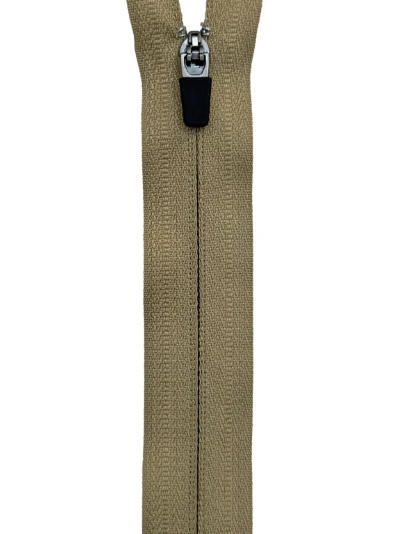
A reverse zipper places the zipper coil or teeth so they sit toward the inside. Because of that, the outside looks smoother. It also cuts down how much the zipper area is hit by the weather. That is why reverse zippers are widely used in waterproof jackets, outdoor clothes, sportswear, and technical clothing.
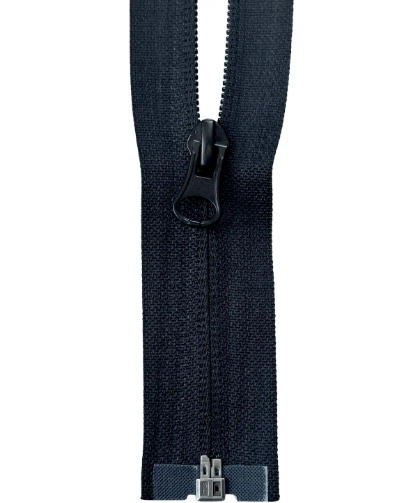
Table of Contents
Understanding Reverse Zippers in Waterproof Clothing
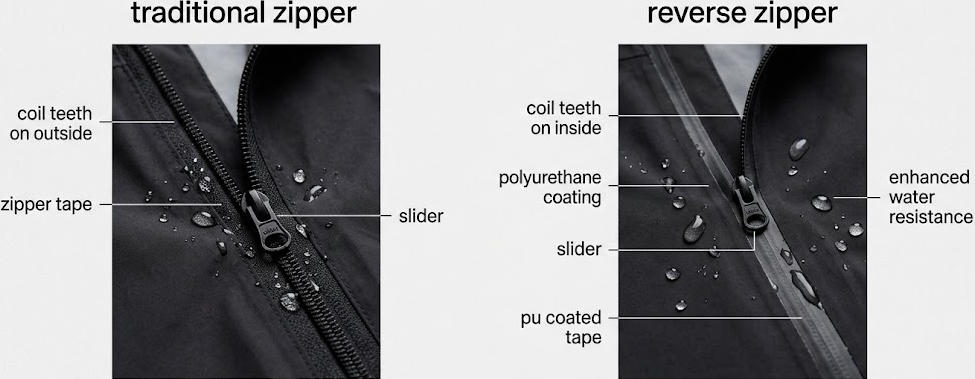
A reverse zipper is designed so the part you normally see on the outside is flipped from the usual layout. With a standard zipper, the coil or teeth face outward. With a reverse zipper, those pieces sit inside the garment instead.
This setup can make the outside look neater. It also lowers the odds of water sliding into the zipper parts. If you pair this design with waterproof fabric, coatings, and a protective zipper flap, you get stronger overall coverage.
Key Advantages of Reverse Zippers for Improving Waterproof Clothing Design
1. Enhanced Waterproof Performance
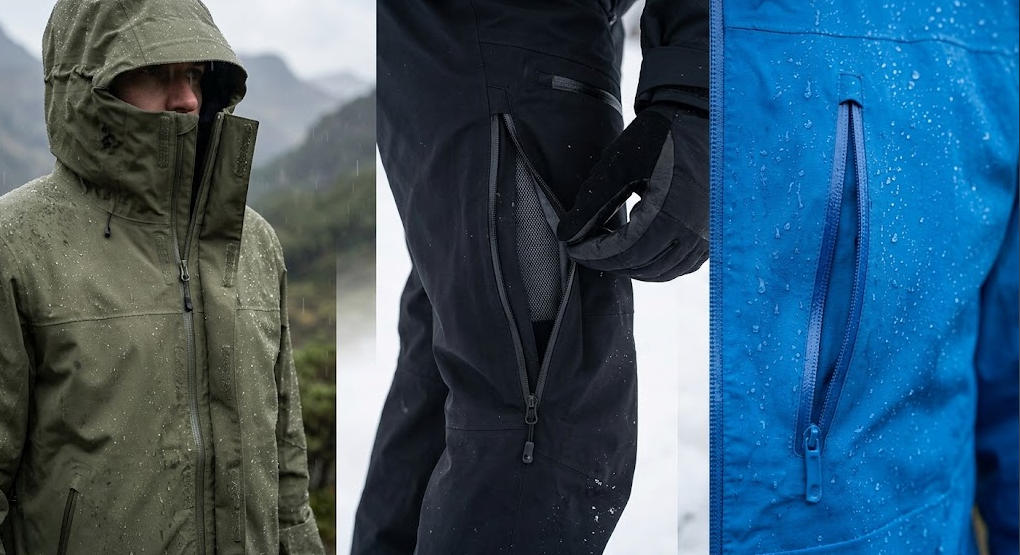
The main reason reverse zippers are used is better waterproofing. Zipper zones often act like weak points. Even tiny spaces near teeth or the coil can let in water. By flipping the zipper structure, less of it faces outward. That means rain, snow, and moisture have less direct access to the zipper area.
With waterproof fabric, treated zipper components, and added flaps, reverse coil zippers form a tighter barrier. That helps garments work better in wet, tough outdoor conditions.
2. Reduced Risk of Water Leakage
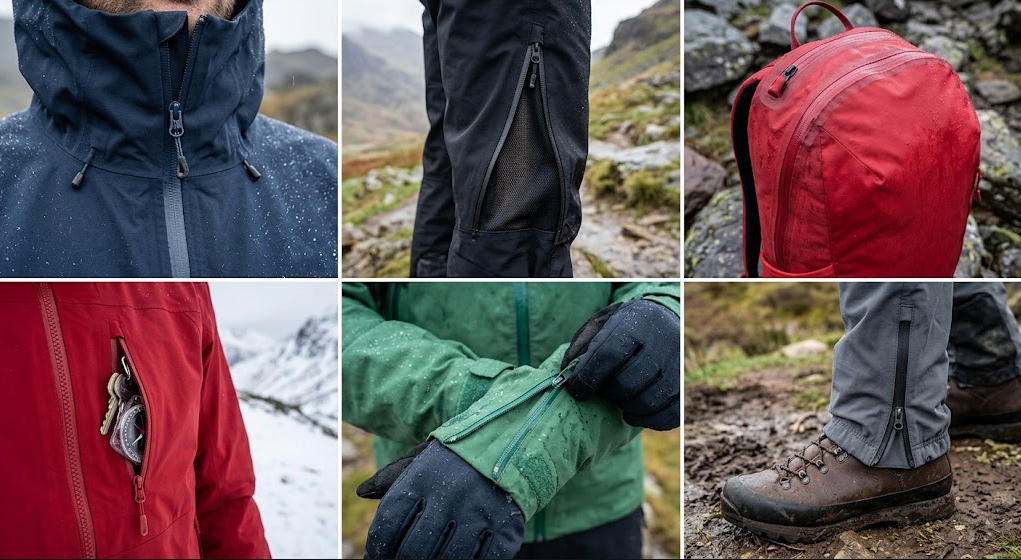
Water leakage commonly occurs around garment openings, especially during heavy rain or prolonged outdoor exposure. Reverse zippers help minimize this risk by creating a more enclosed zipper structure.
| Design Feature | Waterproof Clothing Benefit |
| Hidden zipper coil or teeth | Reduces direct water exposure |
| Smooth outer zipper surface | Prevents water from collecting around the closure |
| Better integration with waterproof layers | Improves overall garment sealing |
| Compatible with zipper covers and coatings | Provides additional moisture protection |
3. Improved Wind Resistance
Cold and windy days are common for waterproof gear. In those cases, stopping air leaks is just as important. Reverse zippers can limit gaps around the zipper line. That reduces the chance of wind pushing through.
Many outdoor jackets, ski pieces, and mountaineering layers use reverse zippers with inner storm flaps or waterproof membranes. This can support better warmth and steadier comfort while you are outside.
4. Cleaner and More Modern Clothing Design
Reverse zippers also help with the visual side of design. They sit low and give a cleaner outline. Many brands use this style in technical and higher-end outdoor clothing.
Design points to note:
- Less visible hardware on the outer fabric
- A more neat and simple look
- Easier fit with newer clothing styles
- More uniform look across waterproof jackets and outdoor items
Reverse zippers are now a common pick for brands that want solid function and a current style.
5. Increased Zipper Durability
Outdoor clothing is exposed to various environmental conditions, including rain, mud, dust, and temperature changes. Reverse zippers help protect zipper components by reducing their exposure to external elements.
| Durability Advantage | Impact |
| Protected zipper components | Reduces damage from moisture and dirt |
| Less exposure to abrasion | Helps extend zipper service life |
| Improved material protection | Supports reliable operation in outdoor environments |
| Better sealing performance | Helps maintain long-term waterproof function |
6. Improved User Comfort
Comfort matters when you design waterproof clothing. Regular zipper setups can feel uneven on the surface or seem stiff. Reverse zippers tend to sit flatter, so the fabric finish feels smoother.
What users gain:
- Less extra thickness near the zipper area
- Easier movement when you are outside
- Lighter overall build
- Works well when you wear layers
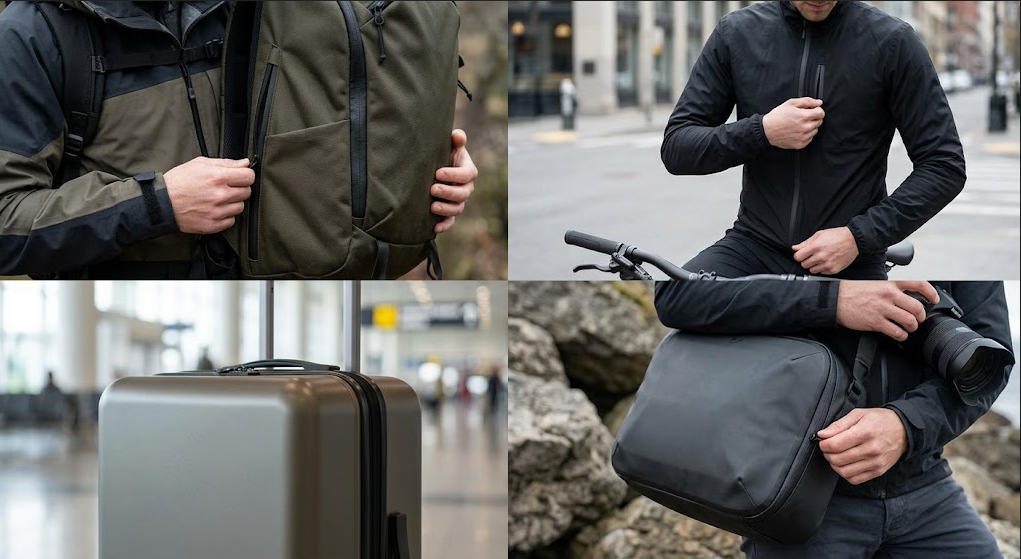
Because of this, reverse zippers fit hiking jackets, cycling outfits, travel wear, and other performance designs.
7. Supports Lightweight Waterproof Clothing Development
Outdoor clothing today often aims to cut weight while still keeping protection. Reverse zippers support this goal. They can lower the need for big zipper covers or extra protective parts.
Brands can pair reverse zippers with newer waterproof fabrics. The result is clothing that is thinner, easier to carry, and still keeps strong weather resistance.
8. Easier Integration with Advanced Materials
Waterproof clothing now uses advanced textiles. This includes laminated fabrics, breathable membranes, and coated materials. Reverse zippers are made to match these materials and act as a fitting closure option.
When the zipper and fabric connect well, the garment keeps:
- Good water-seal results
- Room to move and flex
- Long-term wear strength
- Consistent appearance
Reverse Zippers vs. Traditional Zippers in Waterproof Clothing Design
| Comparison Factor | Reverse Zippers | Traditional Zippers |
| Waterproof Performance | Provides better water resistance by placing zipper coils or teeth on the inside and reducing direct exposure to moisture | More vulnerable to water penetration because zipper components are usually exposed |
| Water Leakage Protection | Helps minimize leakage through zipper areas, especially when combined with waterproof coatings and sealing layers | Often requires storm flaps, zipper covers, or additional waterproof treatments |
| Outer Surface Design | Creates a smooth and clean exterior surface with a modern appearance | Features visible zipper teeth or coils that create a more traditional look |
| Wind Resistance | Helps reduce wind penetration by creating a more enclosed zipper structure | May allow more air entry through exposed zipper sections |
| Protection Against Dirt and Moisture | Keeps zipper components more protected from dust, rain, mud, and outdoor elements | Zipper parts are more exposed to environmental conditions |
| Durability | Reduces wear caused by external exposure and helps extend zipper lifespan | May experience faster wear when exposed to harsh outdoor environments |
| Comfort | Provides a flatter, less bulky surface for improved wearing comfort | Can create a raised or rough surface depending on zipper design |
| Appearance and Style | Offers a sleek, minimalist, and technical look suitable for premium outdoor apparel | Provides a classic and widely used garment appearance |
| Application Range | Commonly used in waterproof jackets, ski wear, hiking clothing, marine apparel, and technical garments | Widely used in casual jackets, everyday clothing, and general outerwear |
| Manufacturing Requirements | Requires precise installation and compatibility with waterproof garment structures | Easier to install and suitable for standard clothing production |
| Maintenance Needs | Less exposed to dirt and moisture, helping maintain smoother operation | May require more cleaning and care due to exposed components |
| Design Flexibility | Supports lightweight, high-performance, and modern waterproof clothing designs | Suitable for basic garment designs with fewer waterproof requirements |
Applications of Reverse Zippers in Waterproof Clothing
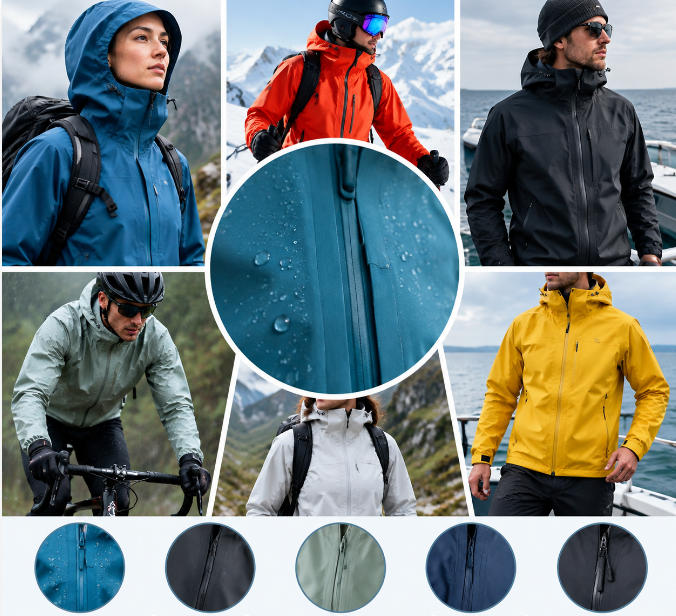
Reverse zippers are widely used in various waterproof and outdoor clothing products.
| Application | How Reverse Zippers Improve Performance | Common Uses |
| Waterproof Jackets | Helps prevent water penetration through zipper areas while maintaining a smooth and sealed design | Rain jackets, outdoor shells, hiking jackets |
| Ski and Snowboarding Wear | Provides better protection against snow, moisture, and cold wind during winter activities | Ski jackets, snowboarding coats, winter sports apparel |
| Hiking and Outdoor Coats | Improves durability by reducing exposure of zipper components to dirt, rain, and abrasion | Trekking jackets, mountaineering clothing, adventure wear |
| Lightweight Rainwear | Offers waterproof protection while maintaining a slim and comfortable garment structure | Packable raincoats, travel jackets, commuter rainwear |
| Tactical and Workwear Clothing | Enhances protection in harsh environments where moisture resistance and durability are required | Military-style clothing, protective work jackets, utility apparel |
| Cycling and Running Jackets | Supports weather protection while providing a lightweight and aerodynamic design | Cycling shells, running rain jackets, sports outerwear |
| Fishing and Marine Clothing | Helps protect against rain, sea spray, and humid conditions during outdoor activities | Fishing jackets, sailing gear, marine outerwear |
| Outdoor Backpacks and Gear | Reduces water entry through zipper openings and protects stored items from moisture | Waterproof bags, equipment covers, travel gear |
| Camping and Adventure Equipment | Improves reliability in changing weather conditions and outdoor environments | Camping jackets, expedition gear, survival clothing |
| Fashion Waterproof Apparel | Provides a clean appearance while maintaining functional water resistance | Urban raincoats, designer waterproof jackets, lifestyle clothing |
Key Considerations When Using Reverse Zippers for Waterproof Clothing
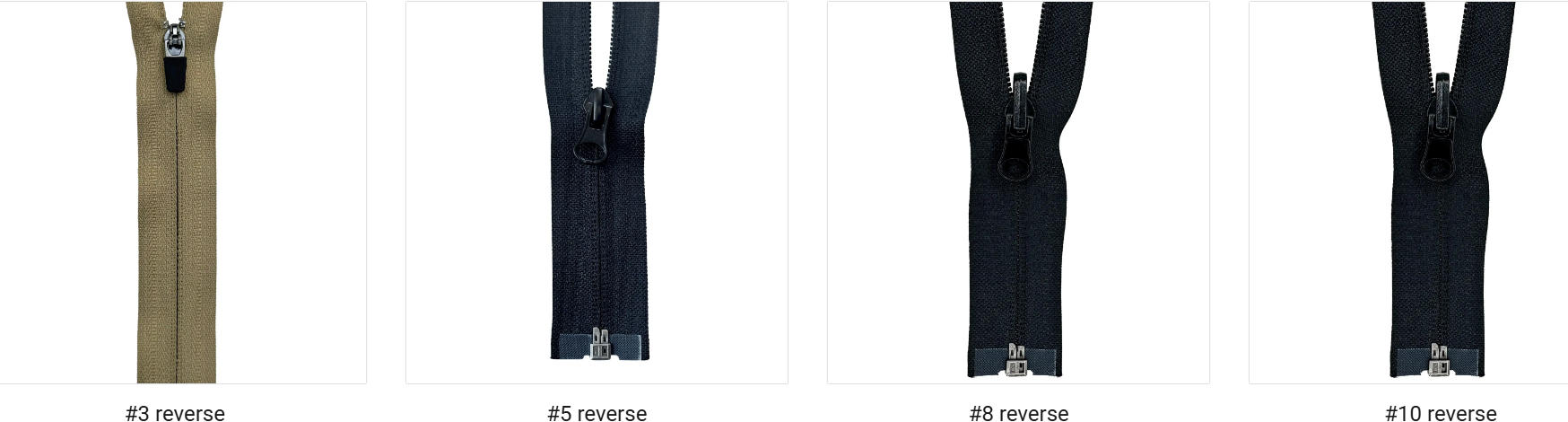
Even with the upsides, manufacturers still need to choose the right reverse coil zipper for each garment. They should check waterproof rating, zipper sizes, zipper material, the working of zipper sliders, fabric fit, and where the garment will be used.
For high-performance waterproof clothing, reverse zippers work best with solid garment build steps. That includes sealed seams, waterproof fabric choices, and careful manufacturing. The well-designed reverse zipper system provided by a professional zipper manufacturer, ensures the entire garment can achieve reliable waterproof protection.
Final Thoughts
Reverse zippers help waterproof clothing work better. They cut down on water contact, improving wind protection, safeguarding the zipper parts, and keeping a cleaner appearance. With both functional and aesthetic value, they fit well into outdoor and performance clothing.
As demand for durable, lightweight, and high-performance waterproof clothing continues to grow, the reverse coil zipper will remain a valuable solution for manufacturers who want better clothing quality and user experience.