
Why Are More Brands Choosing Custom Zippers Instead of Standard Zippers?
When a brand develops a new jacket, bag, pair of trousers, or outdoor product, the zipper is often treated as a small component. In practice, it can have a much greater impact on the finished product than its size suggests.
More brands are now asking zipper suppliers for custom sliders, branded pullers, specific colors, finishes, tapes, or functional designs instead of simply choosing a standard zipper from a catalog. This trend is not limited to luxury brands. Independent designers, growing fashion labels, luggage companies, outdoor brands, and premium workwear manufacturers are also paying more attention to zipper customization.
Standard zippers are still practical. They are usually easier to source, less expensive, and available with shorter lead times. So why would a brand choose customization?
The answer is not just about appearance. It also involves product positioning, user experience, functionality, brand recognition, and long-term product value.
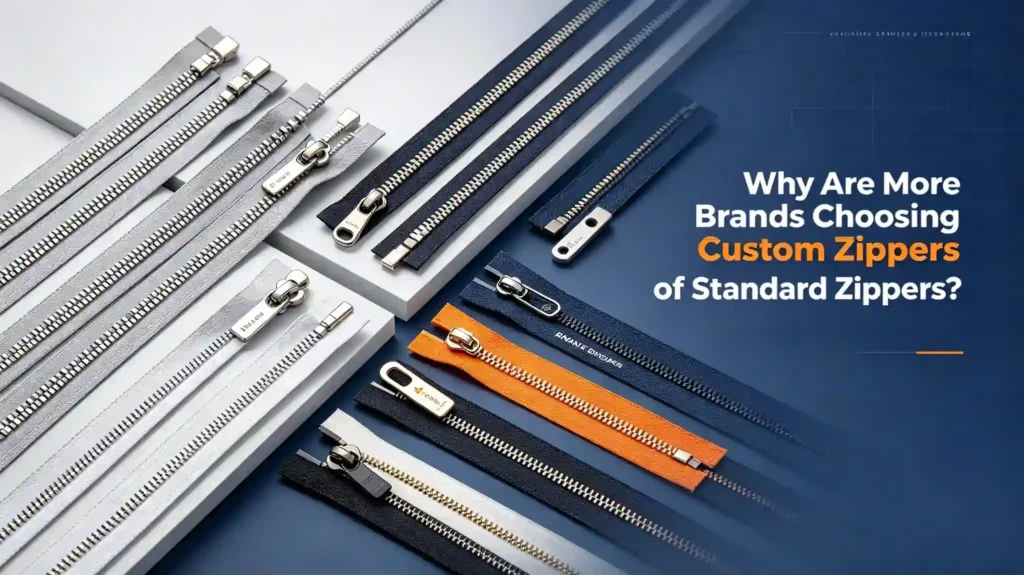
Standard Zippers vs. Custom Zippers: What Is the Difference?
A standard zipper is designed for general use. Brands can select from existing sizes, colors, materials, slider shapes, and finishes, making the purchasing process relatively simple.
A custom zipper starts from the specific requirements of a product or brand. Depending on the supplier, customization may include the slider shape, puller, logo, plating, tape color, teeth, material, size, or functional performance.
This does not mean that every custom zipper requires a completely new design. In many cases, a brand may only need a customized puller or logo while keeping the basic zipper construction unchanged.
That flexibility is important. Customization is no longer something reserved for large international brands with huge production volumes. For many manufacturers, it has become another way to match components more closely with the finished product.
Why Are Brands Choosing Custom Zippers?
1. To Make Their Products More Distinctive
Fashion and consumer goods markets are crowded. Two jackets may use similar fabrics, colors, and silhouettes, but small details can make the finished products look very different.
A standard zipper may work perfectly well, but it can also look familiar because the same component is used across many products.
A customized slider or puller gives the brand another opportunity to create a recognizable detail. A logo, unique shape, special finish, or brand-specific color can make the zipper part of the product design rather than simply a functional component.
This can be particularly useful for independent brands that do not have the advertising budgets of established companies. A recognizable product detail can help reinforce the brand every time the customer uses the item.
2. To Improve the Overall Look and Feel
A zipper is one of the components customers physically interact with. They pull it, open it, close it, and often notice how smoothly it moves.
The weight and finish of a metal slider, the feel of the puller, the consistency of the plating, and the coordination between the zipper and the fabric can all influence how the product feels in use.
This is why zipper selection should not be based only on price.
A well-matched zipper can complement the fabric and construction of a garment or bag. For example, a lightweight technical jacket may need a different zipper solution from a structured leather bag. A minimal fashion design may call for a clean matte finish, while a workwear product may require a more robust construction.
The details are small, but customers experience them directly.
3. To Match the Product Design More Precisely
One of the biggest limitations of standard zippers is that brands have to work within existing options.
Suppose a designer has developed a jacket in a specific shade of green. If the available zipper tape is only available in several common colors, the zipper may not fully match the original design.
Customization gives manufacturers more control over these details.
Depending on the project, brands may customize tape colors, slider finishes, puller shapes, sizes, and other components. Functional requirements can also influence the choice. Outdoor products, for example, may require water-resistant zipper solutions, while lightweight apparel may prioritize lower weight and flexibility.
The purpose is not to customize everything simply because customization is available. It is to make the zipper fit the actual product.
4. To Strengthen Brand Recognition
Branding does not have to stop at labels, packaging, or printed logos.
A customized zipper pull can carry a logo, symbol, letter, or other recognizable brand element. Because customers interact with the puller frequently, this can create repeated exposure to the brand during normal product use.
This can be especially useful for smaller fashion labels and emerging brands. Instead of adding another prominent logo to the outside of a product, a brand can incorporate its identity into a functional component.
For products such as bags, backpacks, jackets, and travel goods, where zippers are used repeatedly, this detail can become part of the product’s visual identity.
5. To Increase the Difficulty of Direct Imitation
Custom components can also provide a degree of product differentiation from a sourcing and brand-protection perspective.
A standard zipper is widely available, which means competitors or counterfeit manufacturers can potentially source similar components. A proprietary slider shape, custom puller, special finish, or branded component is more difficult to reproduce exactly.
It should not be treated as a complete anti-counterfeiting system. A custom zipper alone cannot prevent copying. However, it can add another layer of product-specific identification and make an imitation less straightforward.
For brands investing heavily in product development, these small details can be worth considering.
6. The Long-Term Cost May Be More Reasonable Than It Looks
The unit price of a custom zipper may be higher than that of a standard product. That is a real consideration, particularly for small production runs.
But unit price is not the only cost involved in choosing a zipper.
A zipper that does not match the product properly can contribute to quality complaints, production adjustments, returns, or customer dissatisfaction. For brands that depend heavily on product reviews and repeat purchases, these indirect costs can matter.
This does not mean that custom zippers are automatically more economical. The right choice depends on order volume, product positioning, technical requirements, and the difference in cost between standard and customized options.
For a product where the zipper is highly visible or frequently used, however, customization may provide enough additional value to justify the investment.
Which Brands Can Benefit From Custom Zippers?
Custom zippers can make sense across a wide range of product categories.
Apparel brands may customize zippers for jackets, coats, trousers, hoodies, and other garments to match fabrics, colors, and design details.
Bags and leather goods brands often have more opportunities to use customized pullers and sliders because zippers are highly visible on backpacks, handbags, luggage, wallets, and travel products.
Outdoor and functional brands may place greater emphasis on performance, including water resistance, durability, weight, and ease of operation.
Independent and emerging designers can use customized zipper details to establish a recognizable product identity without relying heavily on large external branding.
Growing brands may also consider customization when they want to move away from generic components and create a more consistent product range.
The most suitable level of customization depends on the product. A brand does not necessarily need a completely new zipper system. Sometimes a customized puller or finish is enough to achieve the desired result.
Is Custom Zipper Production Really Difficult?
There are still some common misconceptions about zipper customization.
One is that customization always requires a very large minimum order. In reality, MOQ varies between suppliers and depends heavily on the type of customization. A new metal mold, special plating, or unusual construction may require different production conditions from a simple color or puller customization.
Another misconception is that a custom zipper will automatically cost twice as much as a standard zipper. The actual difference depends on materials, tooling, order volume, finishing processes, and technical requirements.
There is also the assumption that sampling must take a long time. Professional zipper manufacturers can often provide design assistance and samples before mass production, allowing brands to check the appearance, dimensions, operation, and compatibility with the final product.
For brands considering customization, the most useful approach is to discuss the requirements with the zipper manufacturer early in the product development process. This makes it easier to understand MOQ, tooling, sampling, production time, and certification requirements before the design is finalized.
For products where material safety is important, brands should also check the applicable standards for accessories. For example, OEKO-TEX® STANDARD 100 covers textile products as well as accessory materials, and its scope specifically includes zippers and other fasteners.
Customization Is Becoming Part of Product Development
The shift toward custom zippers does not mean standard zippers are becoming obsolete. Standard products remain a practical choice for many applications, especially when price, availability, and short lead times are the main priorities.
The difference is that brands now have more reasons to look beyond those basic considerations.
A zipper can contribute to product appearance, tactile experience, functionality, branding, and differentiation. For a growing brand, these details can help a product feel more intentional without requiring a complete redesign.
Custom zippers are therefore no longer limited to large or luxury brands. For apparel, bags, outdoor products, and other consumer goods, they can be a practical option when a standard zipper does not fully meet the product’s design or functional requirements.If you are developing a new product, it may be worth discussing zipper customization at the design stage rather than treating the zipper as the last component to be selected. A small change to the puller, finish, color, or construction could make the final product more consistent with your brand.