
Airtight Zippers vs. Waterproof Zippers: What are the Key Differences
Zippers are used to keep items safe from outside weather. In fields like outdoor gear, protective clothing, marine items, medical equipment and other industrial uses, ordinary zippers may not provide sufficient protection against air, water, dust, and moisture. For tighter sealing, there are two common choices: airtight zippers and waterproof zippers. Each one targets leakage in a different way.
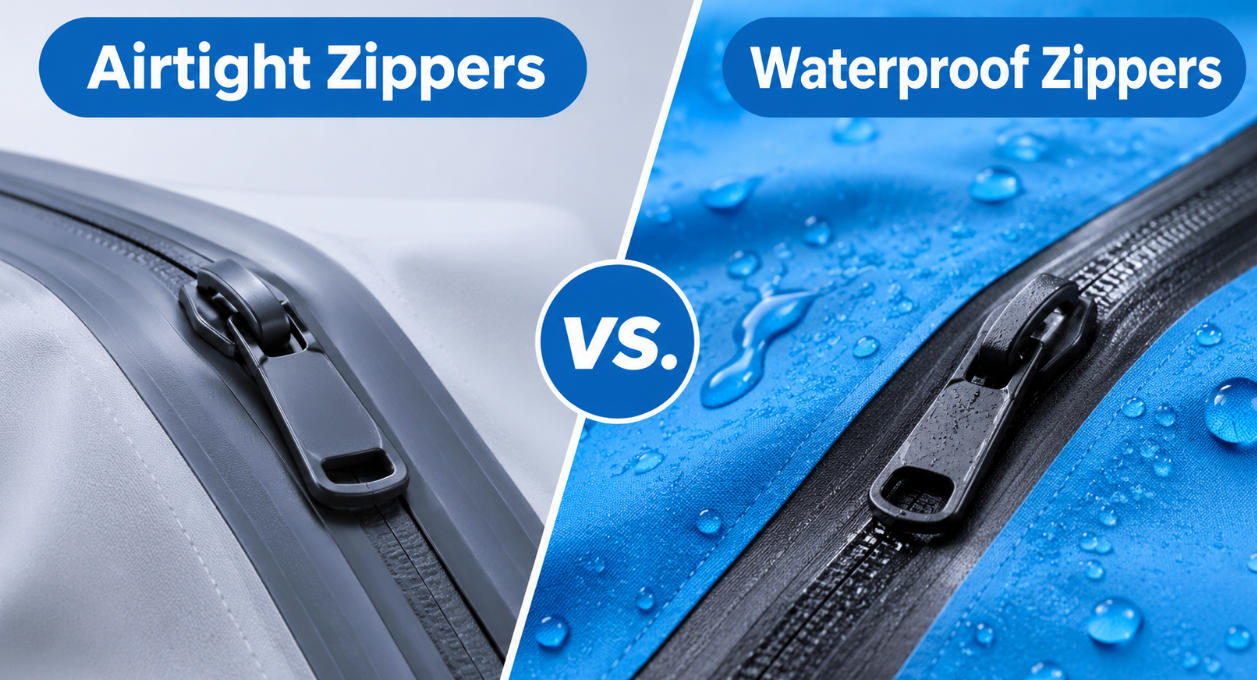
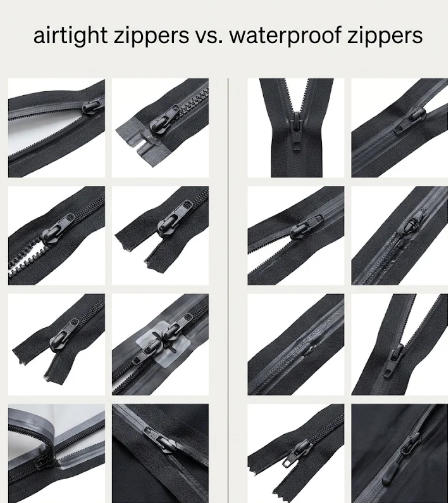
Even if they look alike at first glance, airtight and waterproof zippers serve different purposes and have different sealing capabilities. Airtight zippers aim to stop air and gas from moving through the closed zipper. Waterproof zippers mainly work to keep water out of the zipper seam area. If manufacturers understand their differences, it is easier to pick the right zipper for the job.
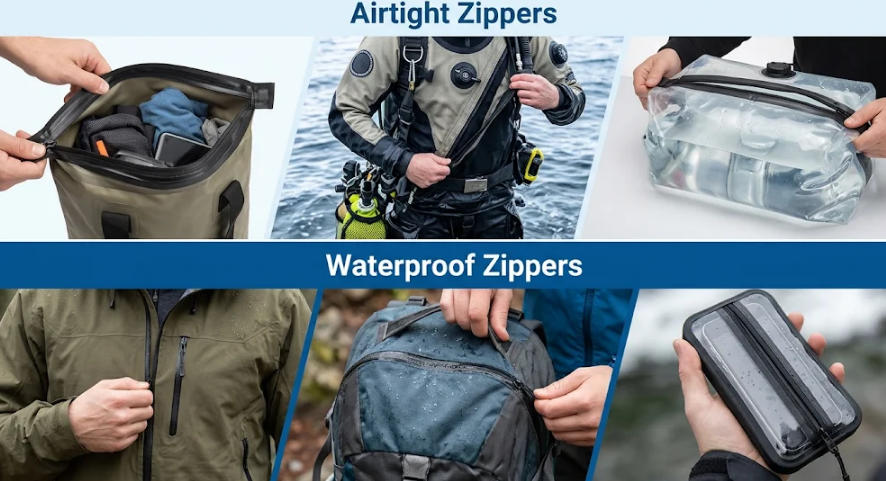
Table of Contents
An Overview of Airtight Zippers
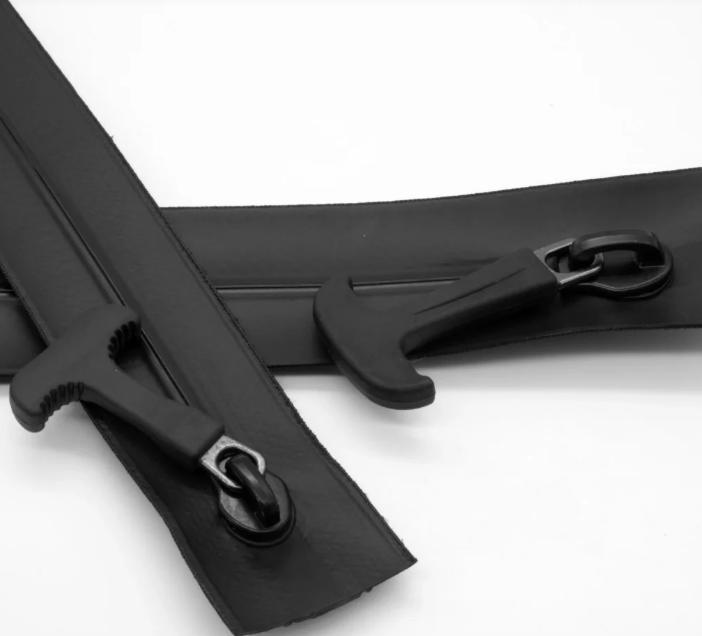
Airtight zippers are designed to form a closure that limits air escape. Many designs use sealing parts made to press together when closed. You may see interlocking shapes, compression seals, or extra sealing layers. The aim is simple: keep the closure tight during use.
Compared with regular zippers, airtight ones are chosen when air control matters. Some styles can also help with dust and water, but that depends on the build. Materials and layout play a role.
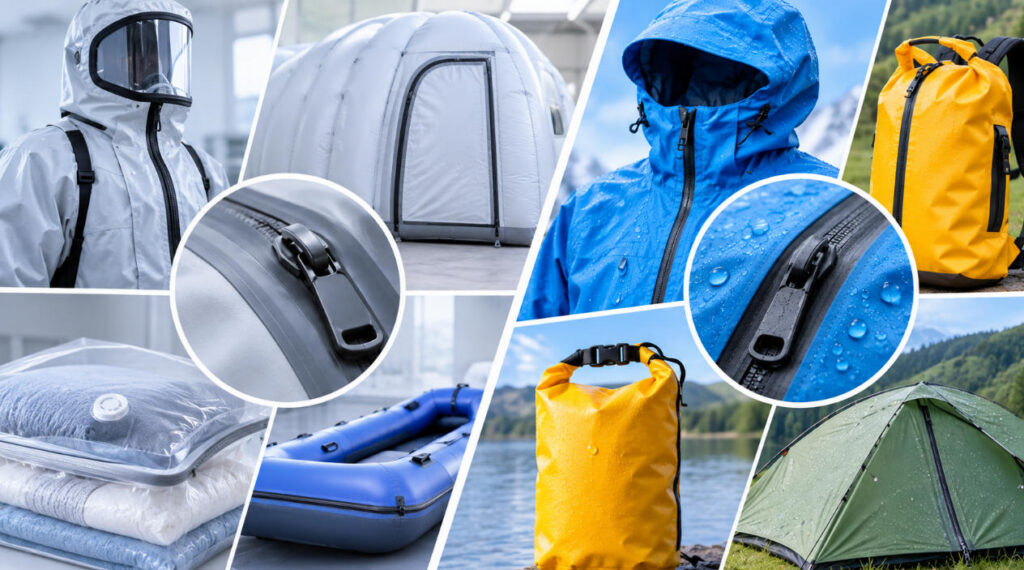
You often find airtight zippers on inflatable products, protective suits, sealed storage systems, and gear that needs stable internal pressure or isolation from the outside air.
How well they seal can change based on several details. These include the zipper material, the tooth or profile shape, the sealing parts used, how well the unit is made, and how it is installed on the product.
An Overview of Waterproof Zippers
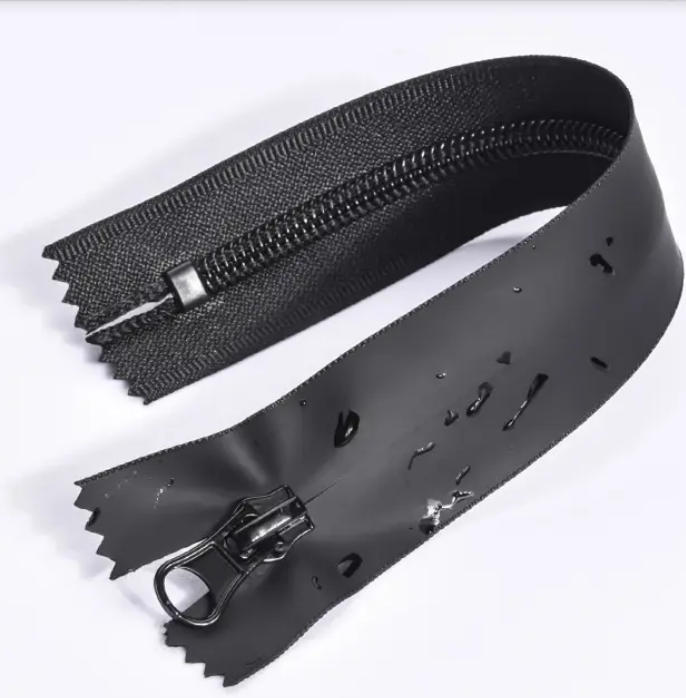
Waterproof zippers focus on one main task: stopping water from getting through the zipper closure. Many use coatings that resist water. Some designs add films or layered barriers. Others rely on interlocking parts that make it harder for water to slip inside.
These zippers may use nylon, polyester, plastic, or polyurethane coating systems. Some also use TPU or PU films as a second layer to cover the zipper chain and improve protection.
In general, waterproof zippers are not made to block air flow. They are meant to handle wet exposure. Results can shift with the zipper design, the coating quality, the closure setup, and the conditions used during testing.
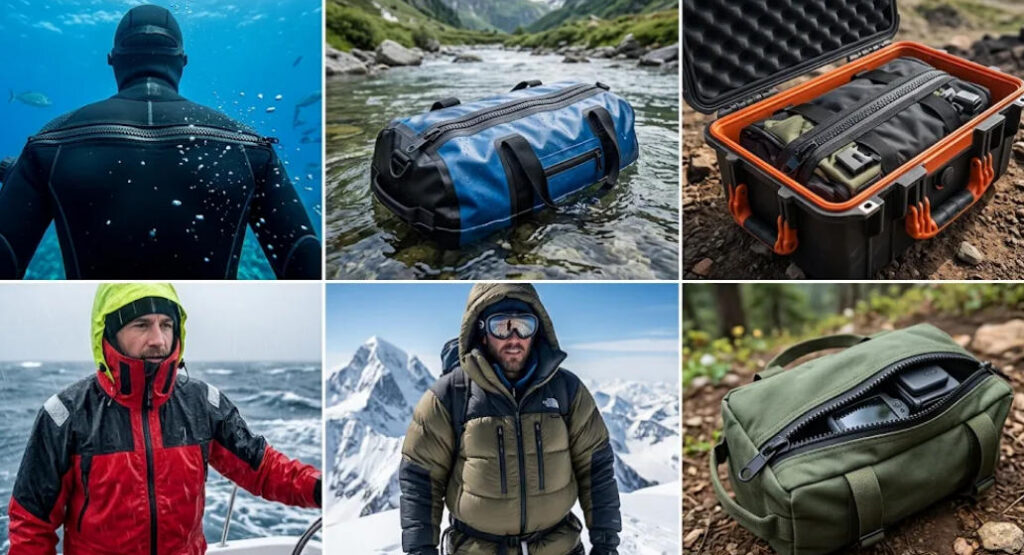
Waterproof zippers show up in outdoor jackets, backpacks, waterproof bags, tents, diving gear, and marine product lines.
Key Differences Between Airtight Zippers and Waterproof Zippers
1. Primary Functions
The most fundamental difference between airtight zippers and waterproof zippers is their primary function.
Airtight Zippers
Airtight zippers are built to cut down on air leakage when the zipper is closed. You will see them in items that need stable internal pressure or must stay sealed from outside air.
To make that seal work, the zipper uses parts that fit together tightly. Some designs add compression seals or other sealing pieces. When everything lines up, the closed zipper acts like a barrier that helps stop air from slipping through.
Waterproof Zippers
Waterproof zippers focus on stopping water from getting through the closure. Many use coatings, laminated layers, or special zipper shapes that limit water entry.
These zippers are not made to stop airflow in every case. The main job is to guard contents from rain, splashes, wet weather, and similar exposure.
2. Sealing Structures
The sealing structure has a big effect on how a zipper behaves in real conditions.
For airtight zippers, designers usually aim to reduce the small gaps around the locking parts. Depending on the design, they may use rubber-like seal materials, compression systems, or shaped profiles made for tight contact.
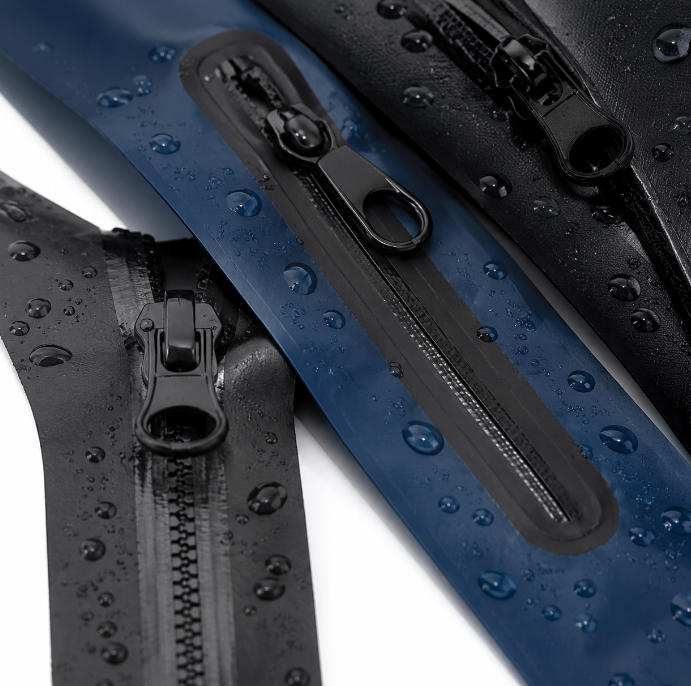
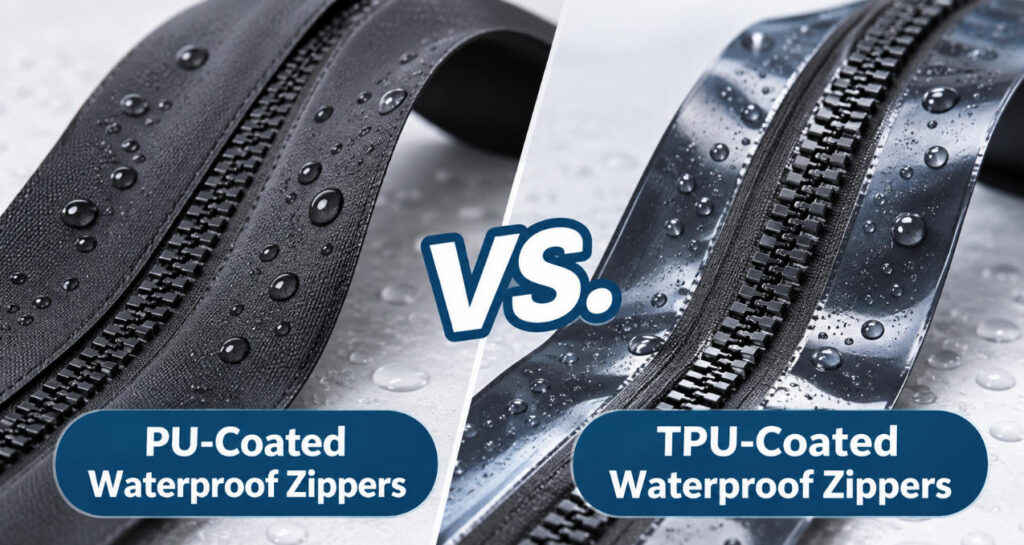
For waterproof zippers, you often see protective layers placed over the zipper chain. PU and TPU coatings are used often in waterproof zippers because they form a flexible barrier that resists water. Some builds also use a reverse-coil style. That can give a smoother outside look and help with water control.
The following table summarizes their structural differences.
| Comparison Factor | Airtight Zippers | Waterproof Zippers |
| Main Structure | Specialized sealing profiles and compression components | Coated zipper tape, laminated films, or protective structures |
| Sealing Mechanism | Tight profile engagement and compression sealing | Water-resistant surface barriers and zipper construction |
| Sealing Area | Designed to minimize air leakage throughout the closure | Designed to prevent water penetration through the zipper |
| Additional Components | May include specialized gaskets or sealing elements | May include PU or TPU protective films |
| Design Requirements | High precision and consistent sealing contact | Consistent coating coverage and waterproof construction |
| Closure Requirements | Correct engagement of sealing components | Complete closure and intact protective layers |
3. Material Selection
The choice of material affects how the zipper feels, how well it bends, and how long it lasts.
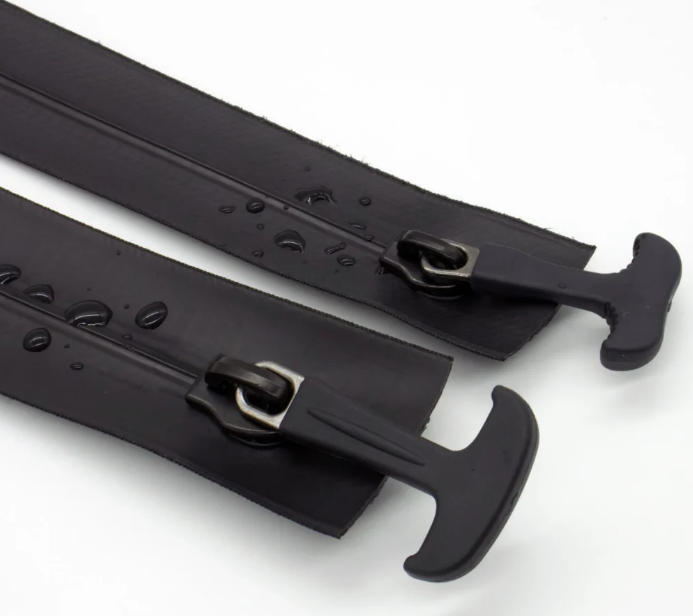
Airtight zippers tend to rely on materials that stretch in a controlled way. They also need good resistance to compression and stable dimensions. TPU, rubber-based materials, and certain engineering plastics may be used. The choice depends on the sealing design.
Waterproof zippers often pair nylon or polyester with a zipper chain made from plastic. Then PU or TPU coatings are added. This setup helps form a water-blocking layer while still staying flexible enough for daily use.
| Material Factor | Airtight Zippers | Waterproof Zippers |
| Common Materials | TPU, rubber-based materials, specialized plastics | Nylon, polyester, plastic, and TPU |
| Material Priority | Sealing capability and dimensional stability | Water resistance and coating durability |
| Flexibility | Must maintain reliable sealing during movement | Must remain flexible during opening and closing |
| Durability Requirements | Resistance to deformation and sealing wear | Resistance to abrasion, peeling, and coating damage |
| Customization | Sealing profile, elasticity, and material hardness | Coating type, color, thickness, and zipper tape |
When choosing materials, manufacturers should consider the finished product’s working environment, expected service life, and compatibility with the surrounding fabric or components.
4. Air and Water Resistance
Airtight and waterproof zippers are made for different goals. Because of that, the tests are not the same.
Airtight zippers are checked by how well they limit air leakage when pressure changes. Depending on the use, companies may run air-leakage tests, pressure-hold tests, or other sealing checks.
Waterproof zippers are judged on water penetration resistance. Typical methods include water-spray tests, hydrostatic pressure tests, and immersion tests when the product design calls for it.
| Performance Factor | Airtight Zippers | Waterproof Zippers |
| Air Leakage | Designed to minimize or prevent air leakage | Not necessarily designed to prevent air leakage |
| Water Penetration | Depends on sealing design and testing | Designed to resist water penetration |
| Pressure Resistance | May require specific air-pressure performance | Depends on water-pressure requirements |
| Moisture Protection | Depends on overall sealing construction | Primary performance objective |
| Testing Methods | Air-leakage and pressure-retention tests | Water-spray and hydrostatic pressure tests |
| Performance Standard | Application-specific airtightness requirements | Application-specific waterproof requirements |
It is important to understand that waterproof performance does not automatically indicate airtight performance. Similarly, an airtight zipper should not be assumed to provide complete waterproof protection unless it has been tested for the relevant water exposure conditions.
5. Manufacturing Processes
The manufacturing processes for airtight and waterproof zippers also differ because their performance requirements are not the same.
Airtight Zipper Manufacturing
Making an airtight zipper needs tight control of key parts. This includes the shape of the seal, the material makeup, and how each part lines up.
Teams have to make sure the sealing parts come together the same way every time the zipper closes. Depending on the design, they may use extrusion, molding, profile work, and then careful assembly.
Checks during production usually look at how close the profile is to the target shape, how steady the seal is, how well the materials hold up, and how the zipper performs in terms of air leakage.
Waterproof Zipper Manufacturing
Waterproof zipper production often starts like normal zipper making. Then extra waterproof steps are added.
For instance, makers may put PU or TPU film on the zipper tape. They can do this with coating, lamination, or heat bonding. Other steps can include surface prep, a reverse coil setup, and protective finishing.
Inspection usually targets how even the film or coating is, how well it sticks, how water-resistant it is, how smoothly the zipper works, and how it handles bending and scuffing over time.
6. Applications
Airtight zippers and waterproof zippers are suitable for different industries and product categories. Their applications depend on the level of protection required.
| Industry | Airtight Zipper Applications | Waterproof Zipper Applications |
| Outdoor Equipment | Sealed equipment compartments and specialized storage systems | Waterproof backpacks, tents, and outdoor covers |
| Protective Clothing | Gas-protective suits and specialized protective garments | Raincoats and waterproof workwear |
| Marine Industry | Sealed equipment enclosures and specialized marine systems | Marine bags, boat covers, and waterproof clothing |
| Diving Equipment | Dry suits and specialized sealed equipment | Diving bags and water-resistant accessories |
| Inflatable Products | Inflatable structures and air-retaining compartments | Water-resistant inflatable accessories |
| Medical Industry | Specialized sealed protective enclosures | Waterproof medical storage bags |
| Industrial Equipment | Pressure-controlled enclosures and sealed systems | Industrial protective covers and equipment bags |
| Luggage Industry | Specialized airtight storage products | Waterproof travel bags and outdoor luggage |
7. Advantages and Limitations
Both zipper types offer specialized advantages, but each has limitations that manufacturers should consider before selecting a product.
| Comparison Factor | Airtight Zippers | Waterproof Zippers |
| Main Advantage | Excellent air-sealing capability when properly designed and tested | Effective protection against water penetration |
| Product Protection | Helps maintain controlled internal environments | Protects contents from rain, splashes, and moisture |
| Design Flexibility | Requires specialized sealing structures | Available in various sizes, colors, coatings, and constructions |
| Manufacturing Cost | Generally higher due to specialized engineering | Varies according to coating and construction |
| Installation | Requires precise alignment and sealing | Requires correct installation and protection of coated areas |
| Maintenance | Sealing surfaces require careful inspection | Coatings and laminated layers require regular inspection |
| Main Limitation | More demanding manufacturing and maintenance requirements | Does not necessarily prevent air leakage or withstand immersion |
Airtight zippers may be more expensive because they require specialized designs and tighter manufacturing tolerances. Waterproof zippers are generally more versatile for common consumer products, but their protective coatings can deteriorate through abrasion, repeated folding, or improper handling.
8. Customization Options
Customization is important for zipper manufacturers developing products with specific functional, structural, and appearance requirements.
Airtight zipper customization generally focuses on the sealing structure and performance. Waterproof zipper customization places greater emphasis on protective coatings and water-resistant materials.
| Customization Factor | Airtight Zippers | Waterproof Zippers |
| Zipper Size | Customized dimensions and sealing profiles | #3, #5, #8, #10, and other available sizes |
| Zipper Length | Customized according to product dimensions | Customized according to product dimensions |
| Material | TPU, rubber-based materials, and specialized plastics | Nylon, polyester, plastic, and TPU |
| Color | Customized according to product requirements | Customized zipper tape, coating, and film colors |
| Sealing Design | Compression seals and specialized interlocking structures | Waterproof coatings and laminated protective films |
| Slider Type | Designed to match the specialized sealing structure | Standard or customized slider configurations |
| Surface Treatment | Specialized sealing and wear-resistant treatments | PU or TPU coating and other protective finishes |
| Testing Requirements | Air-leakage and pressure-related testing | Water-resistance and hydrostatic pressure testing |
For custom zipper manufacturing, it is important to communicate the product’s intended use, environmental conditions, dimensions, and required performance before production begins.
Summary Comparison Table of Airtight Zippers and Waterproof Zippers
| Comparison Factor | Airtight Zippers | Waterproof Zippers |
| Primary Function | Prevent or minimize air leakage | Prevent water penetration |
| Main Purpose | Maintain a sealed internal environment | Protect contents from water and moisture |
| Sealing Structure | Specialized sealing profiles and compression components | Waterproof coatings, laminated films, and protective layers |
| Sealing Mechanism | Tight interlocking and compression sealing | Water-resistant barriers and protective zipper construction |
| Air Resistance | Designed for high airtightness | Not necessarily airtight |
| Water Resistance | Depends on the sealing design and testing | Specifically designed for water resistance |
| Common Materials | TPU, rubber-based materials, and specialized plastics | Nylon, polyester, plastic, PU, and TPU |
| Material Requirements | Good elasticity, compression resistance, and dimensional stability | Water resistance, flexibility, and coating durability |
| Manufacturing Process | Specialized profile extrusion, molding, and precision assembly | Zipper production, coating, lamination, and heat bonding |
| Quality Control | Air leakage, pressure retention, and sealing consistency | Water penetration, coating adhesion, and hydrostatic pressure |
| Durability Requirements | Resistance to deformation and sealing wear | Resistance to abrasion, peeling, and coating damage |
| Manufacturing Cost | Generally higher due to specialized sealing requirements | Depends on coating materials and construction |
| Customization Options | Sealing profiles, compression structures, dimensions, and materials | Zipper size, coating, color, film thickness, and slider type |
| Maintenance | Requires regular inspection of sealing surfaces | Requires inspection of coatings and laminated layers |
How to Choose Between Airtight Zippers and Waterproof Zippers
Selecting the right zipper requires a clear understanding of the finished product’s functional requirements.
Identify the Required Protection Level
First, ask if you need to stop air leaks or stop water getting in. If you must keep internal pressure or block air exchange, an airtight zipper is usually the better choice. If your main concern is rain, splashes, or general wet conditions, a waterproof zipper can be enough.
Consider the Operating Environment
The place where the zipper will live affects what it has to resist. Outdoor items may only face rain and spray. Diving gear or sealed industrial boxes may need stronger sealing in tougher conditions.
Before choosing, check water pressure, temperature swings, humidity, sun exposure, and physical stress.
Evaluate Material Compatibility
The zipper parts should fit well with the fabric or material in the finished product. TPU, PU, nylon, polyester, and other plastics each behave differently. This includes how flexible they are, how long they last, how they handle chemicals, and how well they seal.
Using compatible materials can help the product last longer and lower the odds of seal problems.
Check Testing and Quality Requirements
Testing matters for these special zippers. Waterproof models may need tests for water resistance or hydrostatic pressure. Airtight models may need tests for air leakage and pressure retention.
Zipper manufacturers need to set test rules that match how the finished product will be used. Using only broad zipper descriptions can miss what matters.
Summary
| Selection Requirement | Recommended Zipper |
| Preventing air leakage | Airtight Zippers |
| Maintaining internal air pressure | Airtight Zippers |
| Protecting products from rain | Waterproof Zippers |
| Preventing water splashes | Waterproof Zippers |
| Manufacturing waterproof backpacks | Waterproof Zippers |
| Producing specialized protective suits | Airtight Zippers, depending on protection requirements |
| Manufacturing inflatable equipment | Airtight Zippers |
| Producing outdoor jackets and tents | Waterproof Zippers |
| Requiring both air and water protection | Specially engineered and tested sealing solutions |
- Airtight zippers are designed to minimize air leakage and support controlled internal environments, making them suitable for inflatable products, protective suits, and specialized industrial equipment.
- Waterproof zippers primarily prevent water penetration and are widely used in outdoor clothing, backpacks, tents, marine products, and waterproof luggage.
Final Thoughts
Airtight zippers and waterproof zippers differ in their main job, sealing structures, material selection, performance requirements, manufacturing processes, and applications.
For product manufacturers, selecting the right zipper is not just about comparing product descriptions. It is essential to evaluate the actual operating environment, required protection level, material compatibility, and testing standards.
When businesses work with a skilled zipper manufacturer, they can develop customized zipper solutions that balance sealing performance, durability, functionality, and production costs.