
Metal Zipper Finishes: Types, Selection and Applications
Metal zippers show up on jackets, bags, shoes, luggage, denim, leather items, and more. In these uses, people want two things at once: strength and a good look. Beyond the zipper body itself, the finish matters a lot. Here, finish means the surface work or color applied to the teeth, sliders, stops, and other parts of metal zippers. This step shapes the final look, adds surface protection, and affects the style of the full product.
Different metal zipper finishes can create different visual effects, from classic antique tones to modern polished surfaces. When brands pick a finish, they can better align the zipper with fabric choice, leather type, hardware needs, and their own design plan.
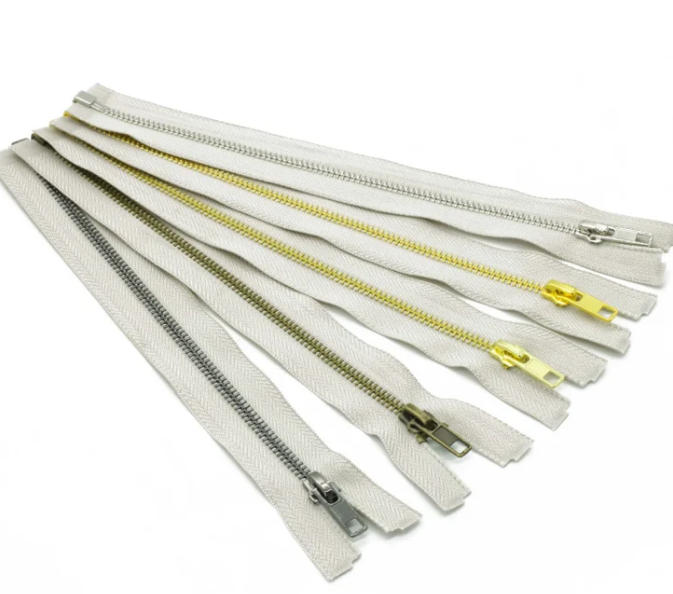
Table of Contents
Common Types of Metal Zipper Finishes
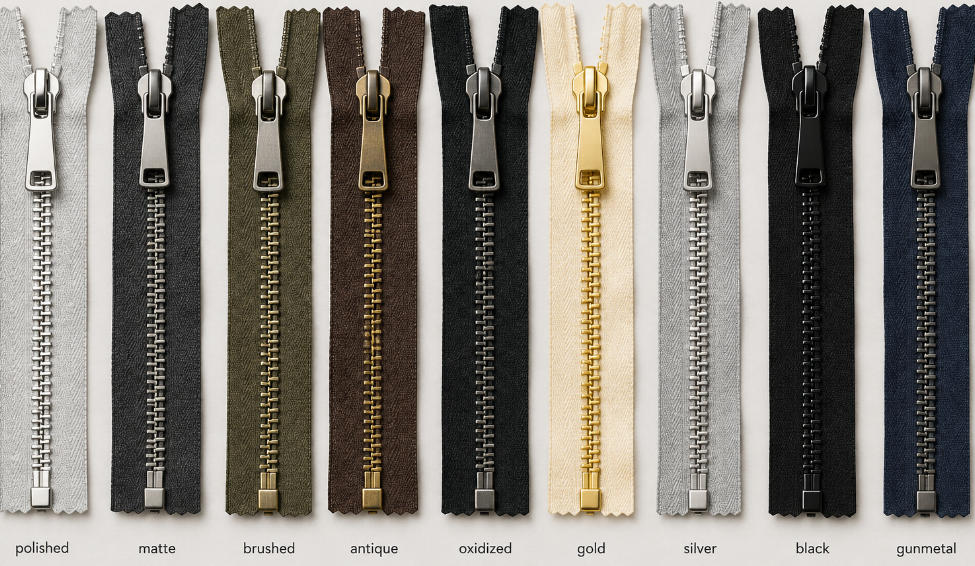
| Metal Zipper Finish | Appearance | Key Characteristics |
| Polished Finish | Bright and shiny | Smooth, reflective, premium appearance |
| Matte Finish | Soft and low-gloss | Modern, subtle, and understated |
| Brushed Finish | Fine directional texture | Less reflective with an industrial look |
| Antique Finish | Aged and vintage | Creates a traditional, worn-in appearance |
| Oxidized Finish | Dark or aged metallic | Provides a distinctive, rugged appearance |
| Gold Finish | Gold-colored and decorative | Adds a luxurious and fashionable appearance |
| Silver Finish | Bright or soft silver | Versatile and easy to coordinate with other hardware |
| Black Finish | Black or dark metallic | Modern, strong, and understated |
| Gunmetal Finish | Dark gray metallic | Contemporary and rugged appearance |
Key Factors to Consider for Choosing a Metal Zipper Finish
Choosing a metal zipper finish is not only about choosing a color swatch. If you look at the details below, the zipper is more likely to work well and also fit the product design in a natural way.
1. Product Material
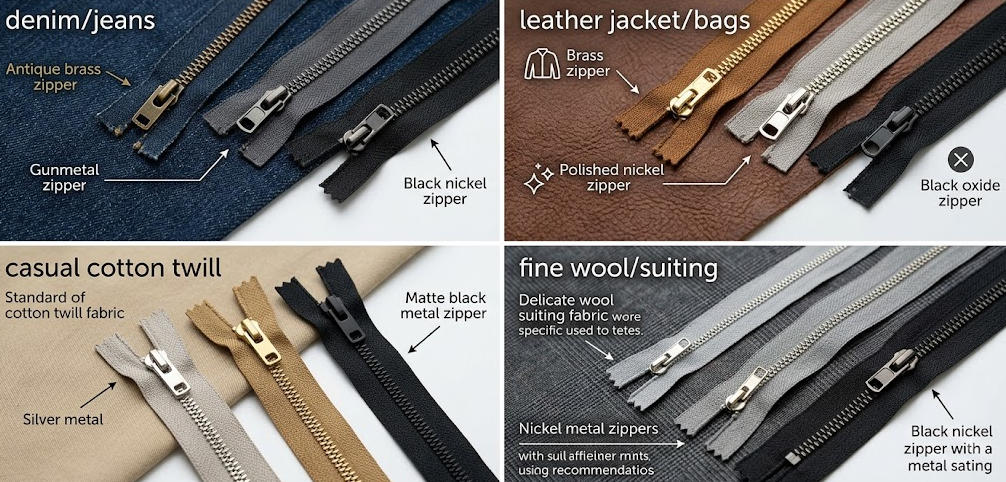
Start with what the product is made of. The base material can shift how the metal hardware reads to the eye. When the metal is paired with different textiles or leathers, the zipper can look very different.
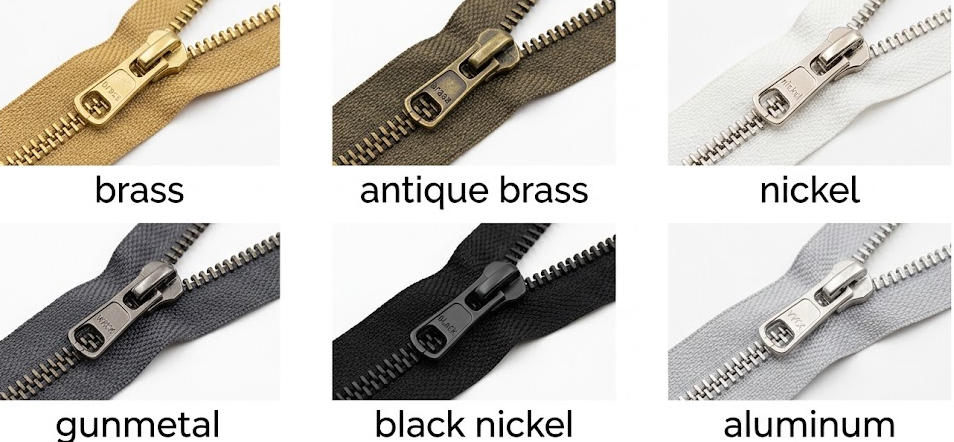
For instance, antique or oxidized finishes often suit denim and leather. They tend to give a tougher, older vibe. Gold and polished silver finishes can work better on handbags and fashion items where the hardware is meant to be noticed.
Also, the zipper finish should match the feel and color of the product material. It should not create an obvious clash that pulls attention away.
2. Overall Product Design
Next, think about the overall design direction. If the product aims for a bright, clean look, a polished zipper finish can fit. If the product wants a calmer, more modern look, a matte or brushed finish can fit better.
For styles that lean vintage, antique or oxidized finishes may fit the theme. For modern sportswear or technical goods, darker options such as black or gunmetal, plus matte finishes, can feel more practical.
When the zipper is treated as part of the full design, the result often looks more even and planned.
3. Color Matching
Color matching becomes more critical when the zipper is easy to see. The metal zipper finish should line up with the fabric, and also with other parts like buttons, buckles, rivets, logos, and any related hardware.
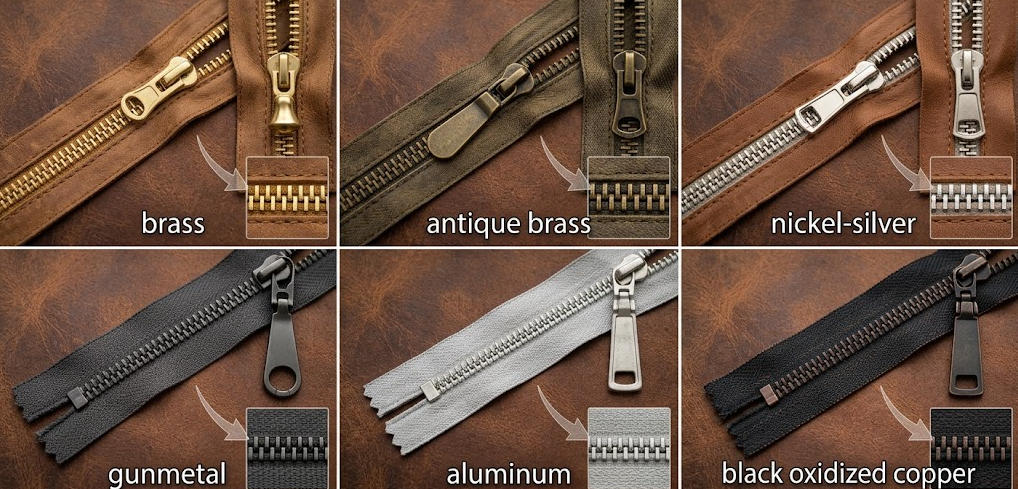
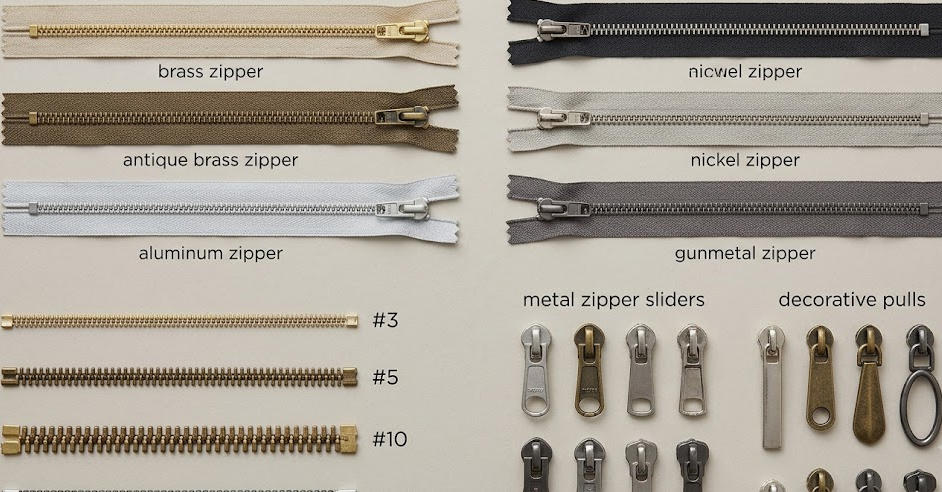
People often choose silver, gold, black, gunmetal, brass, or antique tones. Even so, the same color can still look different. Gloss and the kind of surface work both change the final impression.
Test with real zipper samples on the final product material. The lighting around the item and nearby colors can shift how the finish appears.
4. Gloss Level
Gloss level is a key detail. Polished metal reflects more light, so it can make the zipper stand out. Matte metal reflects less light, so it usually looks softer and less bold.
High sheen coatings can work well on luxury clothing and decorative items. Lower sheen or brushed textures often fit outdoor gear, everyday clothing, luggage, and industrial looks.
Choosing the right level of shine helps a maker manage how much the zipper stands out on the finished item.
5. Durability and Wear Resistance
A zipper surface should match how often and how hard it will be used. Zippers on jackets, bags, luggage, and shoes can face rubbing each day. They may also bend during use, hit other metal parts, and get handled a lot.
How the finishing step is done can affect how the surface keeps its look over time. For heavy use, it helps to check surface strength, color stability, resistance to rust, and how well it holds up against repeated rubbing.
A good-looking finish is not enough if it loses its look in the real use conditions.
6. Usage Environment
Where the product is worn or stored matters for finish choice. Outdoor goods may see rain, mud, hot and cold swings, and constant handling. Fashion pieces are often more focused on keeping a steady appearance.
For tougher settings, the manufacturer should talk with the zipper supplier about what the surface must handle, then pick a finish based on those conditions.
7. Compatibility with Other Hardware
Most metal zippers do not show up alone. Many products also use snaps, buckles, eyelets, rivets, hooks, rings, or metal badges.
If the metals look far too different, the overall look can feel off. For instance, a gold zipper with silver buckles can look planned and bold. But if it was not meant to be that way, it may reduce how well the pieces match.
It often helps to match the coatings on the zipper and the other hardware, or at least align them closely.
8. Brand and Market Positioning
Zipper finishes can affect how a brand looks. Luxury lines may choose refined gold, silver, glossy styles, or custom looks. Outdoor and workwear brands may lean toward black, gunmetal, brushed, or dull surfaces.
Brands with several lines should also check whether the chosen finish can be made the same way each time. This matters across different runs and product types.
Clear finish specs can help keep the look steady across a whole product range.
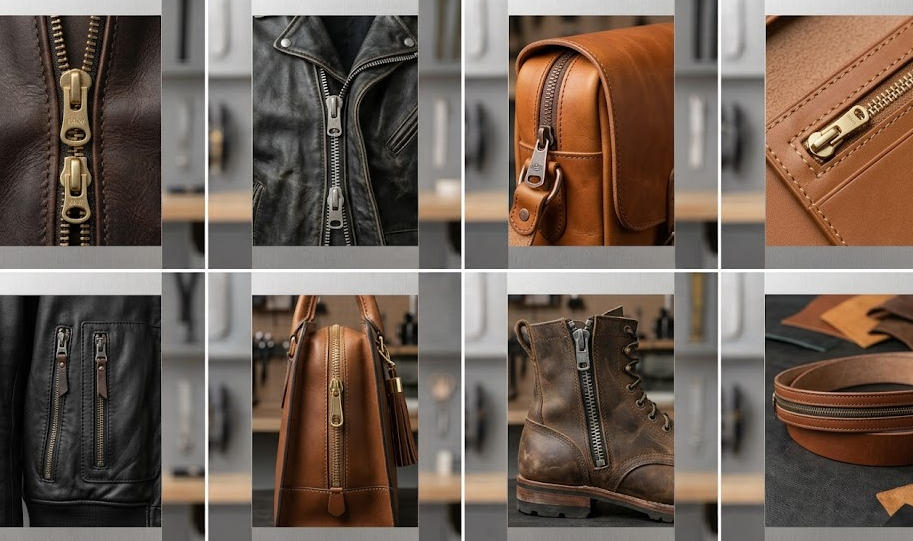
9. Production Consistency
For large-volume production, maintaining consistent zipper finishes is essential. Differences in color, gloss, surface texture, or plating appearance between batches can become noticeable when zippers are installed on the same product line.
Before mass production, zipper manufacturers can approve a sample or reference standard that defines the required finish. Production inspections can then compare subsequent batches against the approved standard.
This is particularly important for brands that place repeat orders or use the same zipper finish across multiple collections.
10. Cost and Order Requirements
Finishing work can change both cost and production needs. Basic finishes are usually easier to get. Special colors, made to order surface looks, and one off finishes can take extra time. They may also come with minimum order amounts.
The supplier should be reviewed on more than price. The right look depends on order size, the production timeline, customization scope, and the planned budget.
For bigger projects, it helps to confirm the cost and order details with the supplier before production begins. Doing this can cut the risk of late changes, delays, or added expenses.
11. Sample Testing Before Mass Production
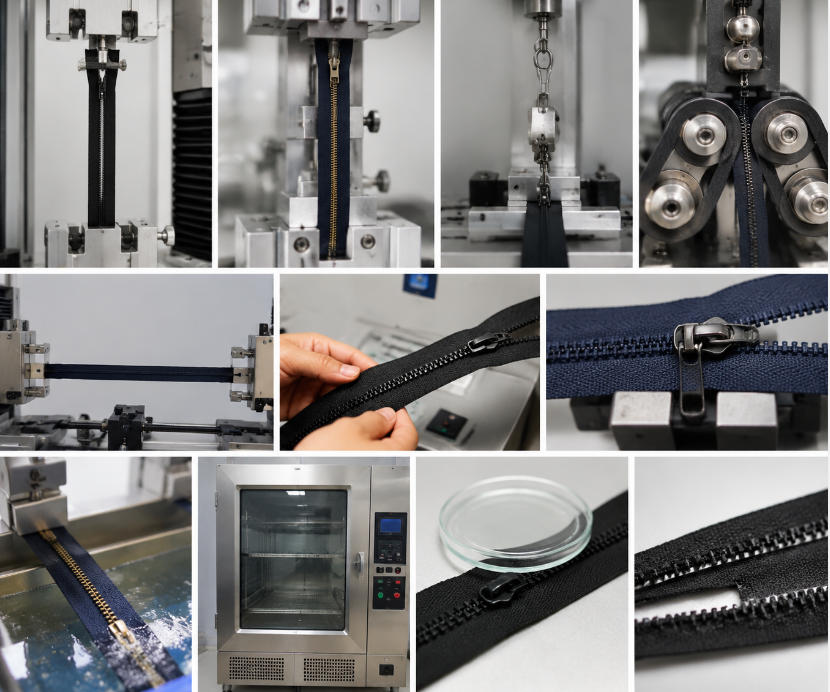
A sample should be reviewed before a large order is approved. The sample can be judged for color match, gloss level, and surface feel. It can also be tested for how well it works with the product material. The overall visual effect should be checked too.
If the zipper will see heavy use, testing should go beyond appearance. Durability checks and related tests can be done based on the intended use.
It is best to test the zipper with the real finished fabric or leather. Checking the metal finish alone is less dependable.
Different Applications of Metal Zipper Finishes
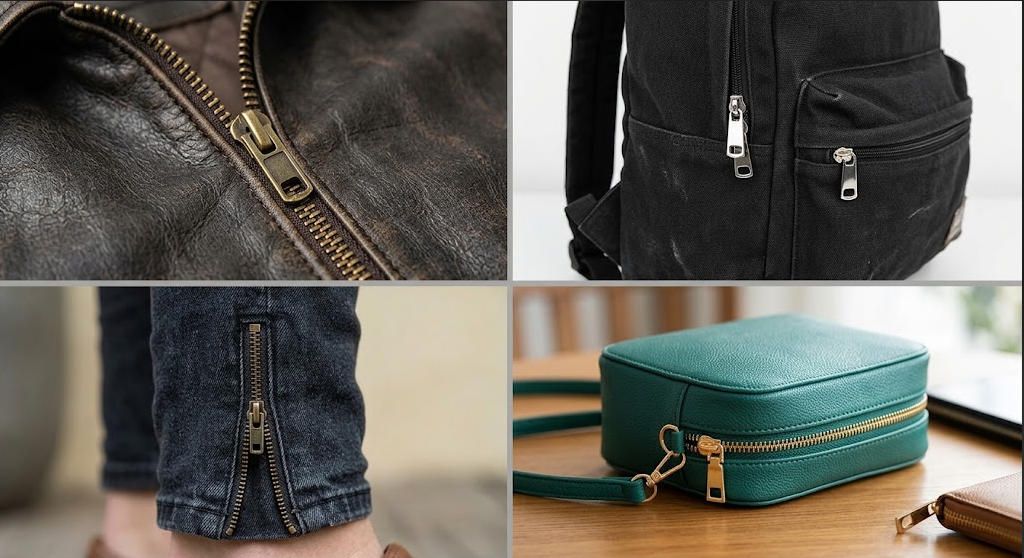
| Application | Recommended Metal Zipper Finishes | Appearance & Style | Key Considerations |
| Denim | Antique, brass, oxidized, silver | Vintage, rugged, casual | Should complement denim color and provide good wear resistance |
| Leather Jackets | Antique, black, gunmetal | Rugged, premium, masculine | Finish should coordinate with leather and withstand frequent use |
| Handbags | Gold, silver, polished, antique | Elegant, decorative, luxurious | Color consistency and premium appearance are important |
| Outdoor Bags | Matte, black, brushed, gunmetal | Functional, modern, understated | Low-gloss finishes can create a practical outdoor aesthetic |
| Luggage | Silver, black, matte, brushed | Modern and durable | Consider frequent friction, handling, and overall hardware coordination |
| Footwear | Antique, black, gold, silver | Fashionable, rugged, or elegant | Finish should match shoe material and other metal accessories |
| Fashion Garments | Gold, silver, polished, matte | Stylish and eye-catching | Finish should complement fabric color and overall garment design |
| Workwear | Matte, black, brushed | Simple, functional, industrial | Durability and resistance to repeated use are key considerations |
| Backpacks | Black, gunmetal, matte, silver | Modern, sporty, practical | Finish should coordinate with fabric, buckles, and other hardware |
| Vintage Products | Antique, oxidized, aged brass | Classic and distressed | Surface variation can help achieve an authentic vintage appearance |
How the Finish Affects Metal Zipper Quality
The finish is not only for a good appearance. A suitable surface treatment can improve how the zipper looks and how it works. Even so, finish results can differ. The outcome can change due to the metal base, how the surface is prepared, and the finishing method. Coating or plating quality can also matter. Handling after finishing can affect the final result too.
For items that face friction often or face tough settings, check durability and color stability too. For large orders, keep the same finish level across batches. This helps the final products stay consistent.
Custom Finishes for Metal Zippers
Some manufacturers need custom metal zipper finishes. The goal is to fit a specific product look or a hardware system. Custom work can include color shade, gloss level, and surface texture. It can also include aged or vintage styles.
Before mass production, it helps to confirm samples in the real lighting and on the real material setup. A zipper can look fine on a sample card. It may look different once it is placed on dark fabric, leather, denim, or coated materials.
Before large-volume orders, clear specs should be set. These should cover color consistency, surface appearance, tooth shape, slider behavior, and other key quality points.
Summary
Metal zipper finishes let manufacturers combine function, strength, and appearances in many ways. There are polished, matte, brushed, antique, oxidized, gold, silver, and black options. Each finish gives a slightly different surface feel. It can also fit different product needs.
Selecting a finish is not just about style. The manufacturer should think about product material, design direction, how the zipper will be used, color matching, durability and production consistency. A right choice lets the meta zipper fit the product better and can raise the feel of overall quality.