
How Small-Batch Custom Fabric Printing Helps Fashion Brands Launch Faster
Launching a new fashion collection is not always a design problem. For many brands, the bigger challenge comes later: finding a printing method that can deliver the right fabric, in the right quantity, without adding weeks of waiting time or leaving the brand with excess stock.
This is where small-batch custom fabric printing can make a practical difference. Instead of committing to a large production run before knowing whether a design will sell, brands can start with a smaller quantity, test the market, collect customer feedback, and scale the successful designs later.
Digital textile printing has also made this approach more accessible. Recent research on digital textile printing highlights its potential for on-demand and localised production, particularly because it can reduce the risks associated with mass production.
For independent designers, D2C labels, and brands developing limited collections, the advantage is straightforward: less time tied up in production and more freedom to respond to the market.
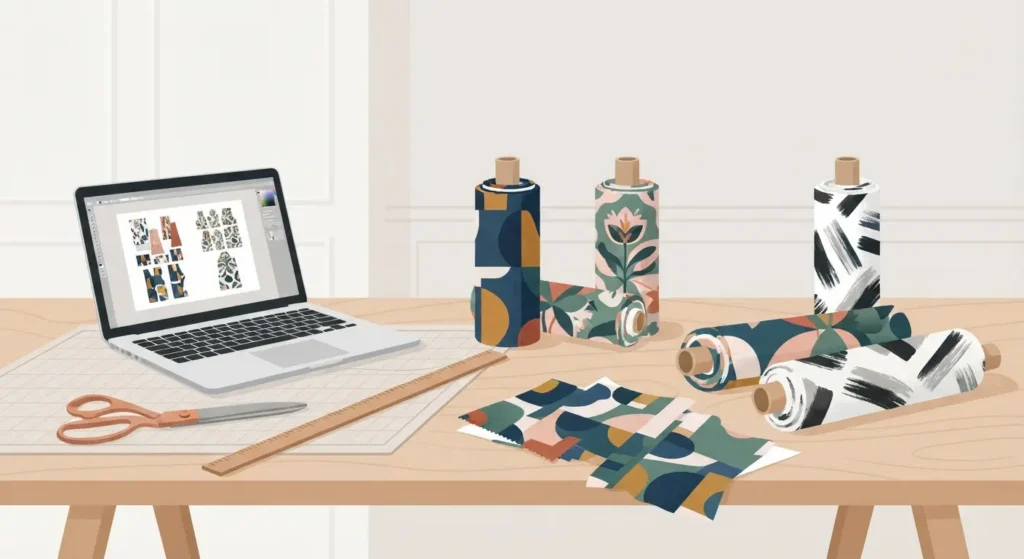
What Is Small-Batch Custom Fabric Printing?
Small-batch custom fabric printing refers to producing custom-printed fabric in relatively small quantities rather than committing to a large bulk order.
The exact minimum order quantity depends on the supplier, fabric, printing method, and production setup. Some suppliers may accept orders of around 100–300 yards, while others can work with even smaller quantities.
This is particularly suitable for digital printing because the process does not require the same screen preparation used in traditional screen or rotary printing. A design can be prepared digitally and sent directly to the printing system, making it easier to produce different patterns or colourways without setting up a new screen for each design.
Traditional printing can still make sense for large, repeat orders where production volume justifies the setup cost. However, for a new fashion brand that needs to test several designs, the economics can be different.
The main differences usually come down to four areas:
- MOQ: Small-batch digital printing generally offers more flexibility.
- Setup: Digital printing avoids the need for traditional screen preparation.
- Design flexibility: Detailed artwork, gradients, photographs, and multiple colours can be easier to handle.
- Production planning: Brands can produce closer to actual demand instead of forecasting everything months in advance.
This does not mean digital printing is automatically the cheapest option. The better question is whether the total production cost makes sense after considering inventory, sampling, storage, and the risk of unsold products.
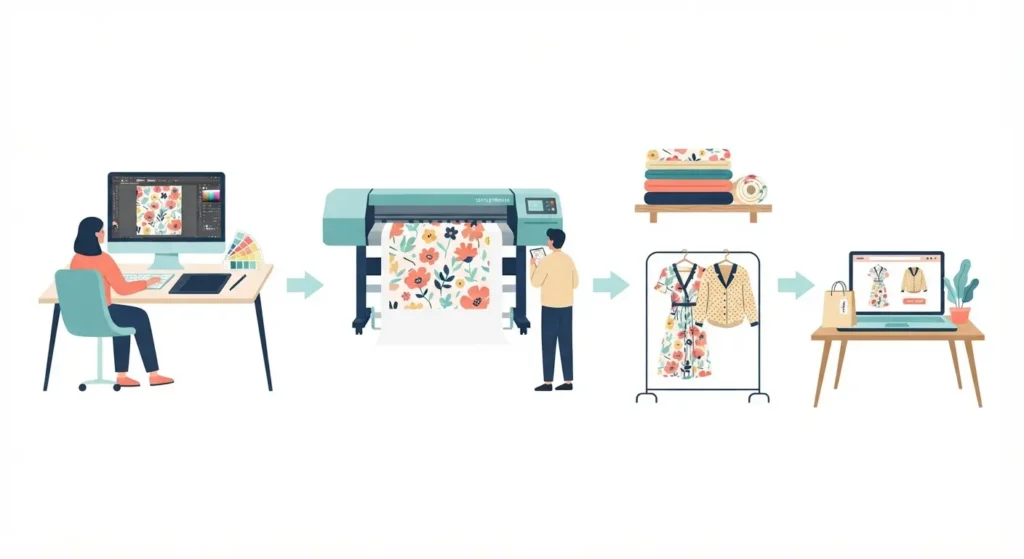
How Small-Batch Printing Speeds Up the Launch Process
1. Shorten the Time From Design to Market
Fashion trends can change quickly. A pattern that looks promising during the design stage may lose relevance by the time a large production order is completed.
Small-batch printing gives brands more room to work in shorter production cycles.
For example, a designer developing a new capsule collection might prepare three different prints. Instead of ordering enough fabric for all three designs immediately, the brand can print smaller quantities, make the garments, and use early sales to determine which design deserves a larger production run.
The process can look like this:
Design → Digital sample → Fabric approval → Small production run → Market launch → Sales feedback → Larger order
This approach can also make limited drops and seasonal collections easier to manage. When a brand does not need to commit to a large quantity at the beginning, it can react to customer interest instead of relying entirely on forecasts.
Actual lead times vary by supplier and order specifications, so brands should always confirm production and shipping schedules before setting a launch date.
2. Reduce Inventory and Financial Risk
One of the biggest concerns for a growing fashion brand is inventory.
Ordering too much fabric can tie up cash in stock that may take months to sell. Ordering too little can create another problem: the brand may run out just as demand starts to grow.
Small-batch production offers a middle ground.
A brand can start with enough fabric for an initial run rather than producing a large volume based only on predicted demand. If the collection performs well, the next order can be based on actual sales data.
This is particularly useful for independent designers and D2C brands with limited working capital.
It also changes how brands think about unsuccessful designs. A print that does not perform well becomes a smaller financial setback when only a limited quantity was produced.
Digital printing is increasingly discussed in this context because on-demand and localised production can help address overproduction and the risks associated with mass manufacturing.
3. Test Designs Before Committing to a Large Order
A new print may look excellent on a computer screen but behave differently once it is printed onto fabric.
Colours can change. Fine details may appear differently. The scale of the pattern may not work well on the finished garment. Even the fabric itself can change how the design looks and feels.
Small-batch printing allows brands to test these details before scaling up.
A practical approach is to create a sample or small production run first, then evaluate:
- Colour accuracy
- Pattern scale and placement
- Fabric hand feel
- Print definition
- Colour fastness
- Garment construction
- Customer response
For D2C brands, this can be combined with pre-orders, limited drops, or small online launches. Instead of asking, “Will customers like this design?”, the brand can gather actual purchasing data.
That information becomes useful when planning the next production run.
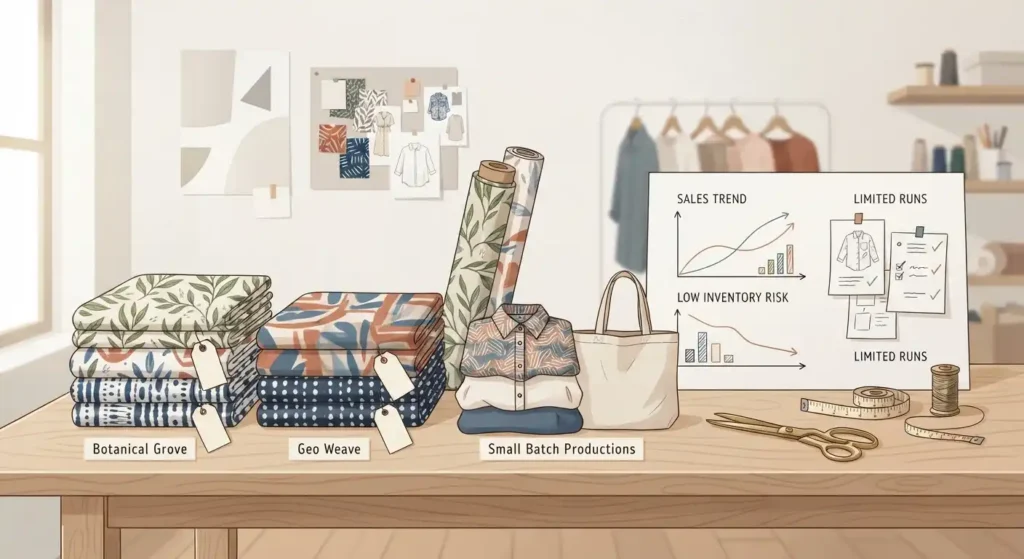
4. Create More Design Options
Small-batch printing also gives designers more freedom to experiment.
A collection does not necessarily have to use one main print. A brand might develop several colourways, seasonal patterns, or limited-edition designs without committing the same quantity to every option.
Digital printing is particularly useful for artwork containing detailed graphics, gradients, illustrations, or many colours.
This can be valuable for independent designers whose collections depend heavily on original artwork. Rather than adapting the design to fit a traditional printing process, the designer has more flexibility to work from the original digital artwork.
The result is not simply more designs. It can also make the collection feel more distinctive.
5. Support More Responsible Production
Small-batch production can support sustainability, but it should not be presented as automatically sustainable.
Producing less fabric can reduce the risk of excess inventory, but the environmental impact still depends on the fabric, inks, machinery, energy use, finishing process, transportation, and what happens to unsold products.
Digital textile printing is being studied as one option for more localised and resource-efficient production, although researchers also point out that environmental performance depends on the complete production system rather than the printing method alone.
For brands looking to strengthen their material sourcing, certifications can also provide useful verification. For example, OEKO-TEX STANDARD 100 tests textile products for harmful substances, with requirements based on the intended use of the product.
If recycled materials are being used, brands may also consider standards such as the Global Recycled Standard (GRS) and verify that the relevant material and supply-chain claims are actually covered by certification.
The important point is to make specific, verifiable sustainability claims rather than simply describing small-batch printing as “eco-friendly.”
Three Situations Where Small-Batch Printing Works Well
Independent Designer Launching a First Collection
A designer preparing a first 50–100-piece capsule collection may not have enough sales history to justify a large fabric order.
A smaller print run allows the designer to produce the initial collection, check the finished garments, and learn which styles customers prefer before investing more money.
D2C Brand Testing a New Pattern
An established online brand may already have customers but still be unsure whether a new print will sell.
Instead of replacing a successful design immediately or committing to a large new order, the brand can launch a smaller batch and monitor sales, customer feedback, and repeat demand.
If the design performs well, the supplier can then produce additional fabric.
Limited Edition or Collaboration
Small-batch printing also fits limited collaborations, artist collections, and seasonal drops.
These projects often depend on exclusivity. Producing exactly what is needed can be more appropriate than holding large quantities of fabric for a collection that is intentionally limited.
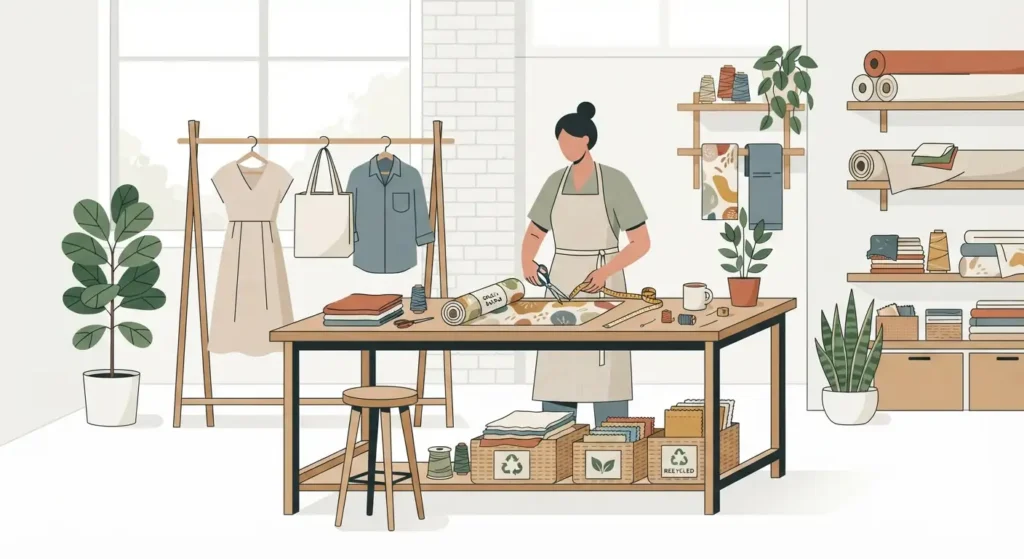
How to Make Small-Batch Printing Work Smoothly
Choosing a low-MOQ supplier is only the first step. Good preparation can prevent many production problems later.
Start With the Fabric
Do not choose the printing process before deciding what the fabric needs to do.
Cotton, polyester, linen, viscose, and blended fabrics can require different printing approaches. Ask the supplier which printing method is recommended for your specific fabric rather than assuming one process works for everything.
Prepare the Artwork Correctly
Provide the original artwork in the format requested by the printer. Confirm the required resolution, colour profile, repeat size, and file format before production.
It is also worth checking the pattern at actual size. A design that looks balanced on a laptop may appear too large or too small once printed on a garment.
Request a Sample
A digital file cannot replace a physical fabric sample.
Before approving production, check the printed fabric under normal lighting and, where relevant, test washing and colour fastness. If the fabric will be used for clothing, evaluate the hand feel and appearance after finishing as well.
Confirm the Production Details
Before placing the order, ask the supplier to confirm:
- Minimum order quantity
- Fabric composition and weight
- Printing method
- Sample cost and process
- Production lead time
- Colour and print standards
- Colour fastness requirements
- Packaging and shipping
- Reorder process
A supplier that answers these questions clearly is generally easier to work with than one that only provides a price.
Common Misunderstandings About Small-Batch Printing
“Small batches are always more expensive.”
The price per yard can be higher than a large-volume order. However, the relevant calculation should include the cost of unsold inventory, storage, cash tied up in stock, and potential markdowns.
“Digital printing means lower quality.”
Not necessarily. Print quality depends on the equipment, fabric, inks, artwork, and production controls. A sample should be evaluated before making assumptions about the final result.
“Small MOQ means the delivery date is unpredictable.”
Low MOQ does not automatically mean poor scheduling. A professional supplier should still provide a clear sampling and production timeline. Brands should confirm the timeline in writing and leave enough time for garment manufacturing and shipping.
Is Small-Batch Fabric Printing Right for Your Brand?
Small-batch custom fabric printing is not a replacement for every traditional textile production method. Large-volume orders can still be more economical when demand is predictable and designs are already proven.
For fashion brands launching new products, however, the flexibility can be valuable.
A smaller first order allows you to test designs, control inventory, respond to customer demand, and make production decisions based on real results. Digital printing adds further flexibility when a collection requires detailed artwork or multiple design variations.
The best approach is to treat small-batch printing as part of a wider production strategy: choose the right fabric, approve physical samples, confirm technical requirements, and work with a supplier that can support both small initial orders and larger repeat production.When these pieces are planned together, brands can move from design to market with fewer unnecessary commitments—and make the next production decision with much better information