
What is Color Fastness Test in Custom Fabric Printing?
Color fastness measures how well a printed or dyed fabric holds its color when exposed to everyday conditions like washing, sunlight, sweat, or friction. For anyone sourcing custom fabric printing, understanding these standards isn’t optional technical trivia. It’s the difference between a product that performs as promised and one that generates returns, chargebacks, and damaged relationships with retail partners.
This blog explains the testing standards that matter most, what the rating scale actually means in practical terms, why digital printing specifically tends to run into color inconsistency, and what to ask your supplier before placing a large order.
What is Color Fastness Standards
Two organizations set the benchmarks that the textile industry relies on.
- The International Organization for Standardization publishes the ISO 105 series, which covers nearly every type of colorfastness testing and is used globally.
- The American Association of Textile Chemists and Colorists maintains a parallel set of test methods, widely referenced across North America and often required by US retailers and apparel brands.
There’s no universal rule for which one to use. In practice, it depends on your target market and what your retail partner’s compliance team asks for on the test report.
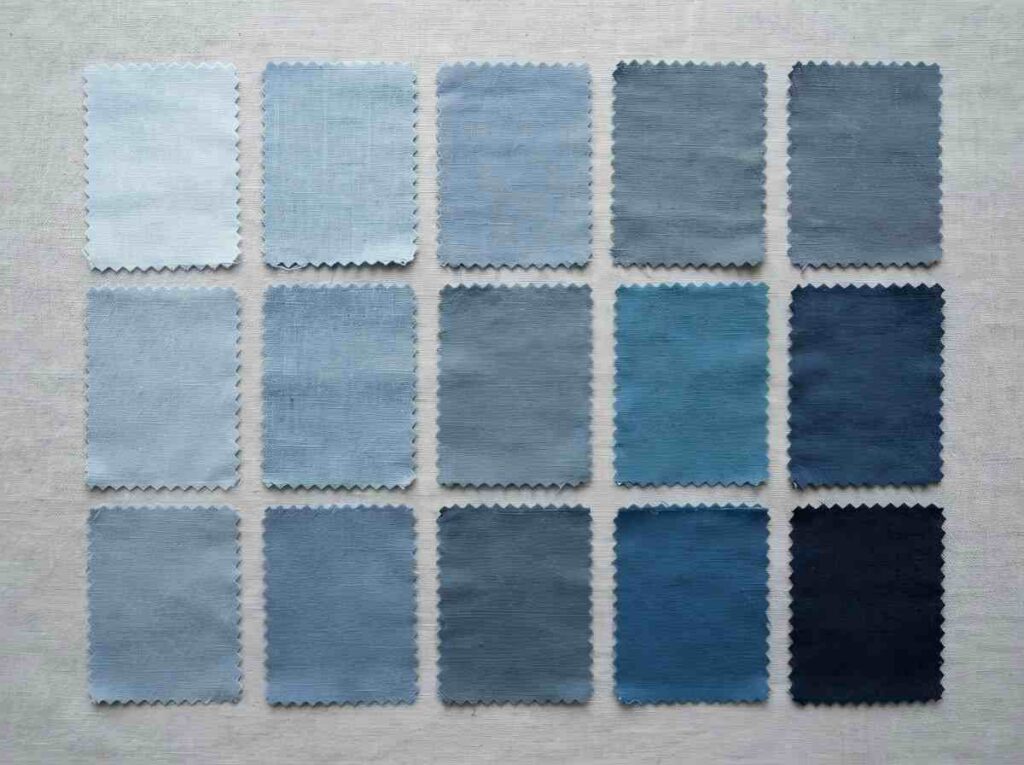
Colorfastness Rating System
Regardless of which specific test is run, results are reported on a 1 to 5 scale:
- Grade 5 means minimal to no color change or transfer. This is the target for most commercial applications.
- Grade 3 to 4 indicates moderate fading or staining, which may be acceptable for lower-cost goods but often falls short of retail requirements.
- Grade 1 to 2 signals poor performance, meaning visible fading or bleeding under normal use.
Most established retailers set a minimum acceptable grade, often 4 or higher, as part of their vendor compliance requirements. It’s worth confirming that number with your buyer before production starts rather than finding out during inspection.
The Main Methods of Color Fastness Tests
There isn’t a single test that covers every scenario a printed fabric might face. Instead, testing is broken into categories based on the type of exposure the fabric needs to withstand.
Colorfastness to Washing
This test simulates how a fabric holds up through repeated laundering, evaluated under ISO 105-C06. It’s relevant for nearly every apparel and home textile product, since washing is the most common stress a printed fabric will face over its lifetime. Products are typically evaluated after both a single wash cycle and multiple cycles, since color loss tends to compound over time.
Colorfastness to Light
Fabrics exposed to sunlight or artificial lighting, such as outdoor furniture covers, curtains, or activewear, are tested against ISO 105-B01 and B02, or the AATCC equivalent AATCC 16.3. These tests measure fading against a set of reference materials after controlled light exposure, and they matter a great deal for any product marketed as outdoor-use or UV-resistant.
Colorfastness to Rubbing (Crocking)
This test checks whether color transfers from the printed surface onto another material through simple friction, evaluated under ISO 105-X12. It’s tested both dry and wet, since a fabric can pass one and fail the other. This is especially relevant for bags, upholstery, and any product that will rub against skin or other fabric during normal use.
Colorfastness to Perspiration
Apparel and accessories that contact skin directly need to hold color even when exposed to sweat. ISO 105-E04 and AATCC 15 both test this using a simulated perspiration solution, checking for both color change on the fabric and staining on adjacent materials.
Colorfastness to Seawater
Relevant mainly for swimwear and marine textiles, this test under ISO 105-E02 immerses samples in a saline solution to check for fading after prolonged saltwater exposure.
Colorfastness to Chlorinated Water
Also aimed at swimwear and pool-adjacent products, this test under ISO 105-E03 checks how fabric holds up against chlorine exposure at concentrations typical of swimming pools.
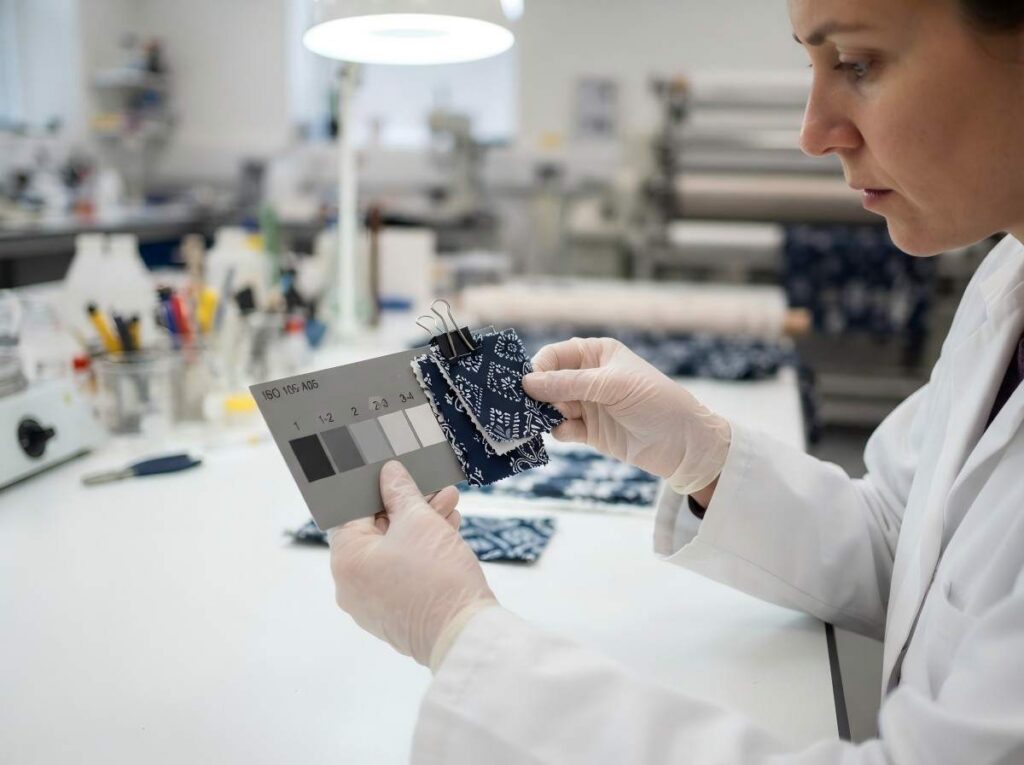
Not every product needs all six tests. A canvas tote bag has little use for chlorinated water testing, while swimwear fabric absolutely should be checked against it. Luxzipper always recommends matching the test to your product’s actual end use.
Why Digital Fabric Printing Is More Prone to Color Inconsistency
Digital printing offers advantages that traditional methods can’t match, including sharper detail and faster turnaround on smaller runs. But it also introduces its own set of variables that can affect color consistency if they aren’t managed carefully.
- Equipment calibration drift. Printers need regular color calibration, and even small drift between calibration cycles can produce a batch that looks slightly different from the last one, even when using the exact same file and settings.
- Ink batch variation. Dye and pigment inks can vary marginally between production batches, particularly with custom or brand-specific color matching. A supplier without tight quality control on ink sourcing may see this show up as inconsistency across large orders.
- Fabric substrate differences. Nylon, polyester, and blended fabrics absorb ink differently. The same file printed on two different base materials will rarely produce an identical result, which is why substrate selection needs to happen before color matching, not after.
- Gap between sample and bulk production. A small sample run and a full production run don’t always behave the same way, especially if they’re printed on different machines or under different environmental conditions like humidity. This is one of the most common reasons a color that looked perfect on the sample doesn’t quite match once bulk production starts.
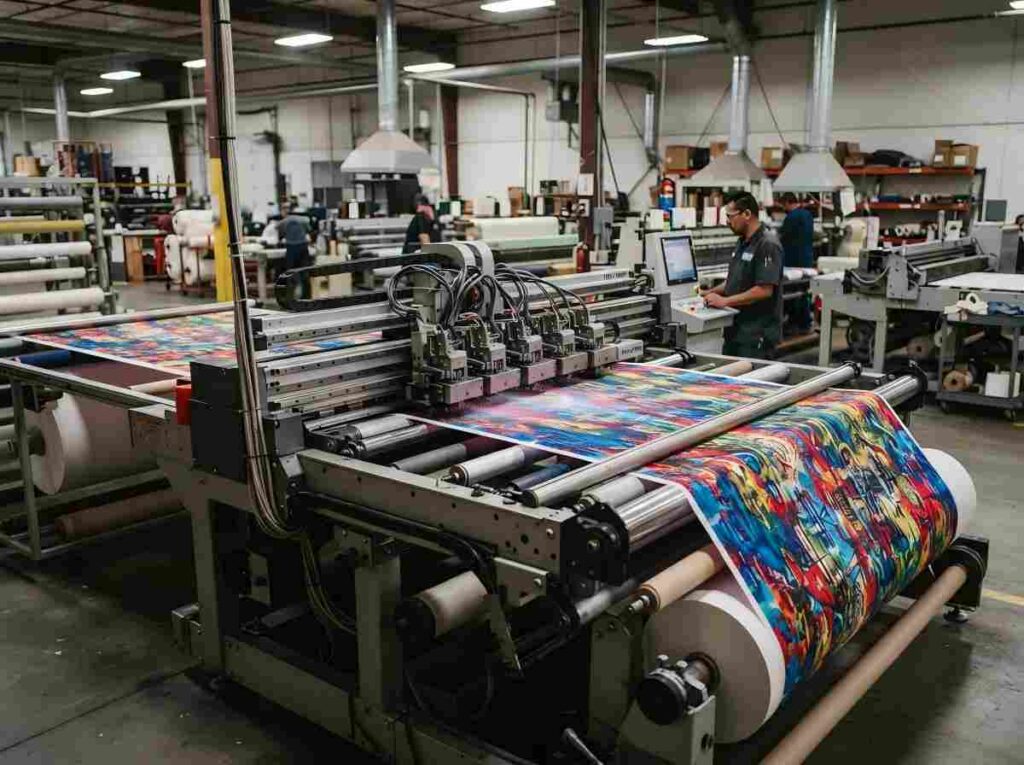
What to Ask Your Supplier Before a Bulk Custom Fabric Printing Order
A few practical steps at the sourcing stage go a long way toward preventing color-related disputes later:
- Request a color fastness test report for the relevant tests based on your product’s end use, ideally from a third-party lab rather than an internal one.
- Confirm the minimum grade your retailer or market requires, and make sure the supplier tests against that threshold rather than a generic benchmark.
- Ask about their color management process, including how they calibrate equipment and how they control ink batch consistency across large orders.
- Set up a sealed sample or reference sample that both sides sign off on before bulk production begins, so there’s an agreed reference point if a dispute comes up later.
- Clarify substrate details in advance, since fabric type has a direct effect on both color accuracy and which fastness tests are actually relevant.
Our own fabric printing process works the same way — we calibrate color and get a reference sample approved before bulk production starts, so problems get caught early instead of after the fact. We’re also upfront about minimum order quantities and lead times, so there’s nothing you’re figuring out mid-production.
The best time to think about color fastness is while you’re still choosing a supplier and fabric, not right before shipment. Bring it up early and you’ll avoid most of the color disputes that end up costing far more than the testing ever would.