
How to Choose the Right Nylon Zipper for A Specific Application
Nylon zippers are pretty common in clothing, bags, luggage, outdoor gear, footwear, automotive products, and even a lot of industrial applications, mainly because they stay lightweight yet flexible, and they don’t corrode as easily. Still, selecting the right nylon zipper for a specific application requires looking at several details, because a zipper that feels just right for a light garment may turn out wrong for heavy-duty luggage or rough outdoor equipment.
When the nylon zipper is chosen correctly, it can really lift product performance, stretch service life, and make the whole user experience better. And if manufacturers look closely at the application needs, the zipper structure, the material properties, and the actual environmental conditions, then the most suitable zipper option becomes easier to match across different products.
Understanding the Structure and Characteristics of Nylon Zippers
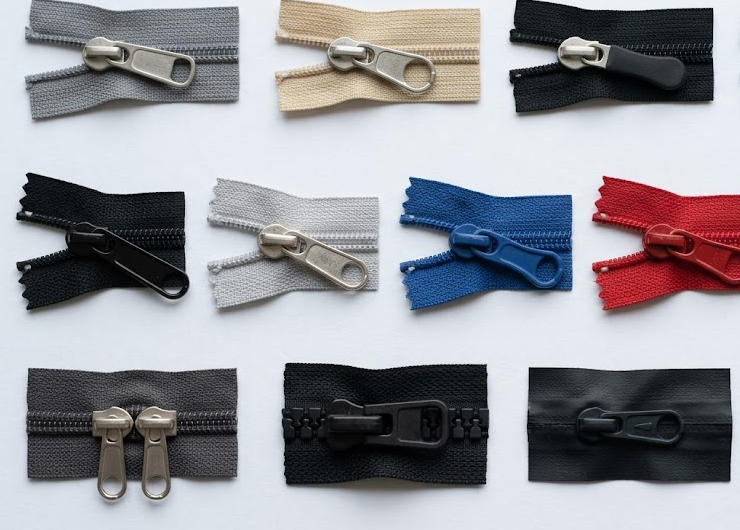
Before choosing a nylon zipper, it helps to know what’s inside and what it actually does. A nylon zipper typically includes nylon coil teeth, zipper tape, a slider, a puller, and stops. Every part adds something, so the overall durability and day-to-day performance are influenced by all of them, not just one section.
One big advantage of nylon zippers is how flexible they are. Compared with metal zippers, nylon coil zippers can bend more easily and follow curved surfaces, so they fit well for garments, soft bags, and products with more complex forms. They also come in at a lower weight, and they resist rust, so they tend to work well in damp, humid, and outdoor places where conditions aren’t friendly.
Also, nylon zippers are not all identical. Some have different coil sizes, different tape strengths, and slider structures that vary a lot. So selecting the right type depends on what the end product really needs in terms of strength, movement, and operating conditions.
Important Factors to Consider for Choosing the Suitable Nylon Zipper for Specific Application
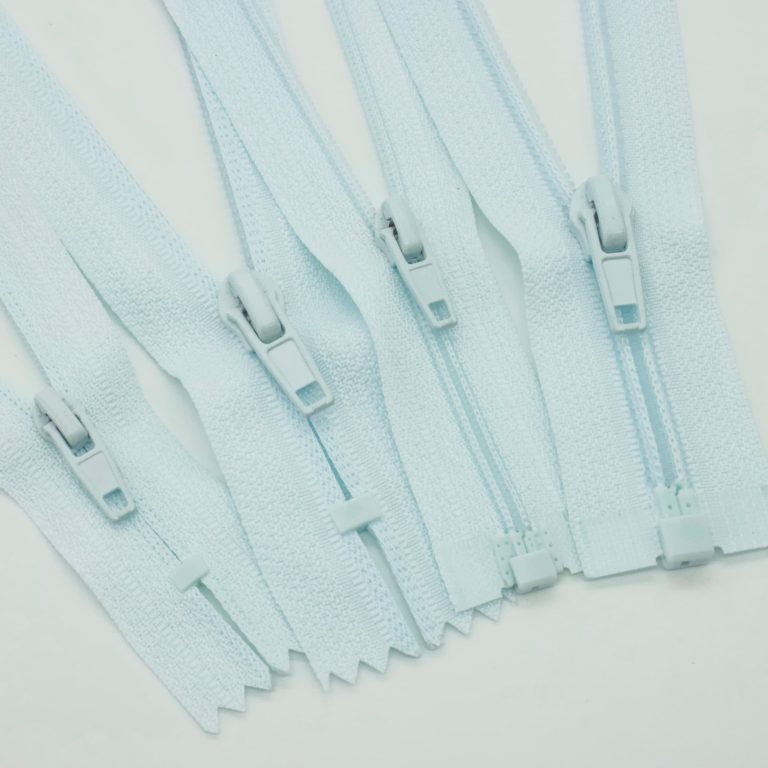
To select the most suitable nylon zipper, manufacturers and designers have to look at the application environment, zipper size, strength, material quality, etc. The next few key factors can help guide the zipper selection process for a specific application, even if the details feel slightly different between products.
1. Application Requirements
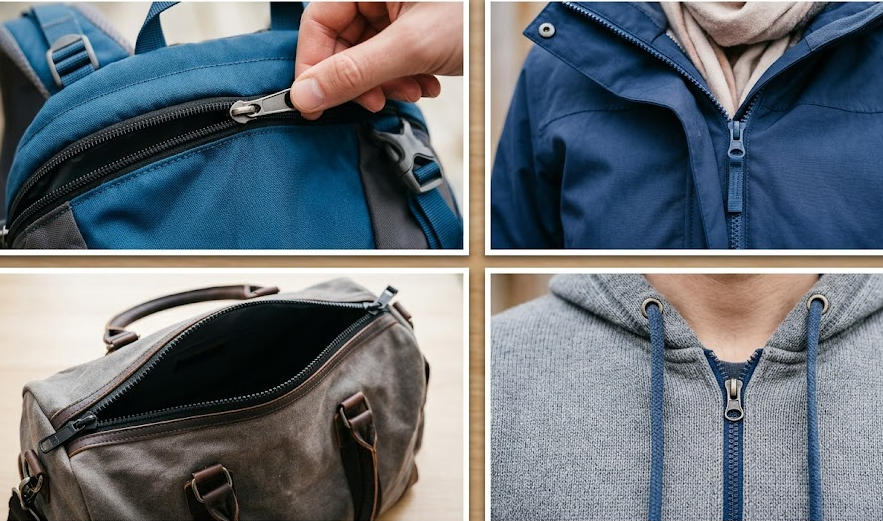
The first step in choosing a nylon zipper is identifying the intended application. Different products require different levels of strength, flexibility, and durability.
| Application Area | Common Products | Main Requirements | Recommended Nylon Zipper Features |
| Apparel and Fashion | Jackets, coats, dresses, sportswear, uniforms | Comfort, flexibility, smooth operation, attractive appearance | Lightweight nylon coils, smooth sliders, soft zipper tapes, customized colors |
| Outdoor Clothing | Hiking jackets, raincoats, skiing wear, protective clothing | Durability, weather resistance, secure fastening | Waterproof nylon zippers, reinforced tapes, durable sliders |
| Backpacks and Handbags | School bags, travel bags, fashion bags | Balanced strength, frequent operation, aesthetic design | Medium-strength nylon coils, reliable sliders, reinforced stitching |
| Luggage and Travel Bags | Suitcases, duffel bags, large storage bags | High load capacity, long service life, strong fastening | Heavy-duty nylon zippers, large coils, strong sliders |
| Camping Equipment | Tents, sleeping bags, camping storage bags | Flexibility, moisture resistance, reliable operation | Weather-resistant nylon zippers, smooth-running sliders, durable tapes |
| Footwear and Accessories | Boots, wallets, cosmetic bags, small cases | Compact design, convenience, lightweight performance | Small-size nylon zippers, smooth sliders, flexible structures |
| Automotive Products | Seat covers, interior covers, storage compartments | Durability, clean appearance, easy maintenance | High-quality nylon coils, corrosion-resistant sliders |
| Marine Products | Boat covers, waterproof bags, marine equipment covers | Corrosion resistance, moisture protection, reliability | Water-resistant nylon zippers, protective coatings, heavy-duty designs |
| Industrial Applications | Tool bags, protective covers, equipment cases | High strength, abrasion resistance, long service life | Heavy-duty nylon zippers, reinforced tapes, industrial-grade sliders |
| Medical and Laboratory Products | Equipment covers, protective cases, storage bags | Clean operation, reliability, easy maintenance | Smooth nylon zippers, durable materials, corrosion-resistant components |
2. Correct Zipper Size
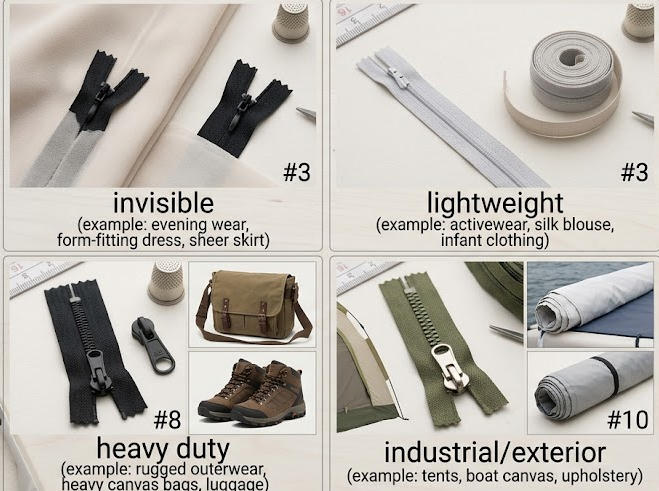
Nylon zipper sizes are commonly identified by numbers that refer to the approximate width of the zipper chain when it is closed. Zipper size matters a lot for both strength and overall performance. In practice, nylon zippers come in multiple sizes, and generally, the bigger sizes provide higher load-bearing capacity.
| Nylon Zipper Size | Approximate Coil Width (Closed Zipper) | Common Applications | Main Characteristics |
| #2 Nylon Zipper | About 2 mm | Lightweight clothing, small accessories, wallets, cosmetic bags, baby products | Very lightweight, flexible, suitable for delicate products with low load requirements |
| #3 Nylon Zipper | About 3 mm | Dresses, skirts, shirts, thin jackets, small bags | Smooth operation, compact design, good balance between appearance and strength |
| #4 Nylon Zipper | About 4 mm | Fashion garments, sportswear, backpacks, medium-sized bags | Provides improved durability while maintaining flexibility and a clean appearance |
| #5 Nylon Zipper | About 5 mm | Jackets, hoodies, handbags, school bags, everyday luggage | One of the most commonly used sizes; offers a good balance of strength, durability, and flexibility |
| #7 Nylon Zipper | About 7 mm | Outdoor jackets, travel bags, backpacks, equipment bags | Higher strength and load capacity for products requiring frequent use |
| #8 Nylon Zipper | About 8 mm | Large backpacks, camping equipment, heavy bags | Designed for stronger applications with increased pulling force resistance |
| #10 Nylon Zipper | About 10 mm | Suitcases, heavy-duty luggage, outdoor gear, industrial bags | Heavy-duty performance, maximum durability, suitable for demanding applications |
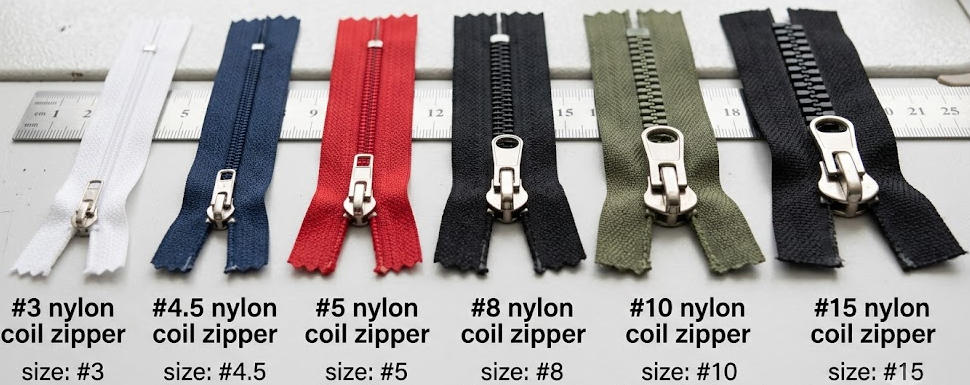
Choosing the correct size should consider not only zipper width but also product weight, usage frequency, environmental conditions, and required durability.
3. Strength and Load Requirements
How strong the nylon zipper needs to be depends on the kind of stress it will face during everyday use. Items that carry heavy loads or that are opened and closed frequently usually benefit from a more reinforced zipper setup.
For example, a small cosmetic bag might only need a lightweight zipper, because it sees minimal force, everyday use, and a lot less pulling overall. Meanwhile, a travel suitcase that gets packed with heavy items needs a heavy-duty nylon zipper, able to handle continuous pulling pressure without failing.
The strength of a zipper depends on several parts, such as coil thickness, tape strength, slider quality, and the stitching approach. When you pick a zipper with enough load capacity, the result is usually dependable performance through the whole service life of the product, not just at the start.
4. Environmental Conditions
The environment where the product will be used is another key factor in choosing a nylon zipper. Different surroundings can change how the zipper behaves over time and how long it lasts.
For outdoor use, nylon zippers often have to withstand rain, humidity, dust, and temperature swings. Water-resistant nylon zippers, with protective coatings, are frequently used on tents, rain jackets, and other camping supplies.
For marine applications, corrosion resistance is especially important because products are exposed to saltwater and high humidity. Nylon zippers are naturally resistant to rust, so they work well for boat covers, waterproof bags, and other marine accessories.
In industrial applications, people often need specialized zippers that can endure chemicals, abrasion, or extreme working environments.
5. Right Slider Type
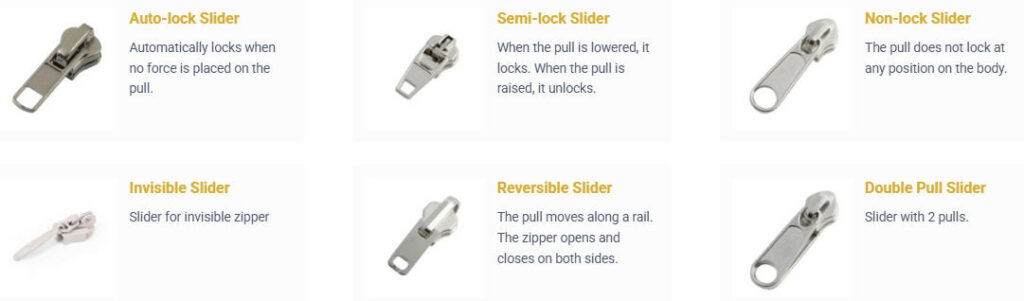
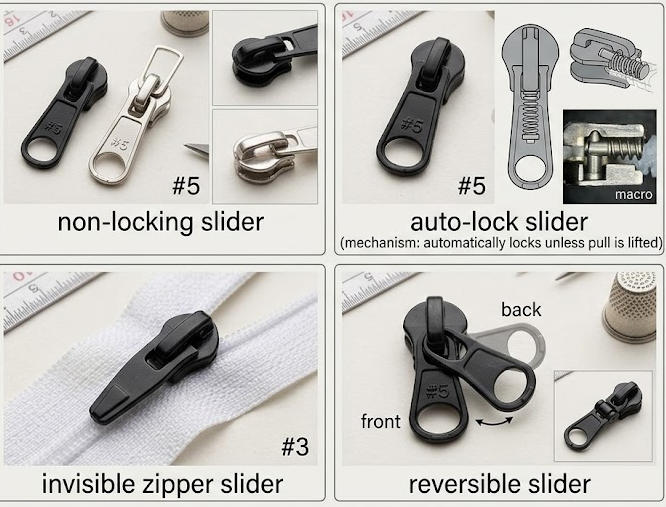
The slider plays an important role in the operation and reliability of a nylon zipper. A high-quality zipper slider ensures smooth movement and secure fastening.
| Type of Nylon Zipper Slider | Structure and Features | Common Applications | Advantages |
| Auto-Lock Slider | Equipped with a locking mechanism that holds the slider in position when the puller is released | Jackets, pants, sportswear, outdoor clothing, backpacks | Prevents accidental opening, improves security, provides reliable fastening |
| Non-Lock Slider | Allows the slider to move freely without a locking mechanism | Bags, luggage, cushions, storage products, decorative applications | Simple structure, smooth operation, quick opening and closing |
| Single Pull Slider | Uses one puller on one side of the slider | Clothing, handbags, small accessories | Lightweight, easy to operate, suitable for standard zipper applications |
| Double Pull Slider | Features pullers on both sides, allowing operation from either direction | Suitcases, travel bags, sleeping bags, large outdoor equipment | Provides flexible access and convenient operation from multiple sides |
| Reversible Slider | Designed to operate from either side of the zipper | Reversible jackets, outdoor clothing, specialty garments | Improves versatility and allows two-way product designs |
| Two-Way Slider | Uses two sliders on the same zipper chain that can move independently | Long coats, luggage, sleeping bags, tents | Allows opening from the top, bottom, or both directions for greater flexibility |
| Water-Resistant Slider | Designed with enhanced sealing features or compatible with waterproof zipper systems | Rain jackets, marine products, outdoor equipment | Helps improve protection against moisture and harsh weather conditions |
| Heavy-Duty Slider | Built with stronger materials and reinforced structures | Luggage, industrial bags, tool cases, protective covers | Provides higher durability and better resistance to mechanical stress |
| Decorative Slider | Designed with customized shapes, finishes, or puller designs | Fashion clothing, handbags, premium accessories | Enhances product appearance and supports brand customization |
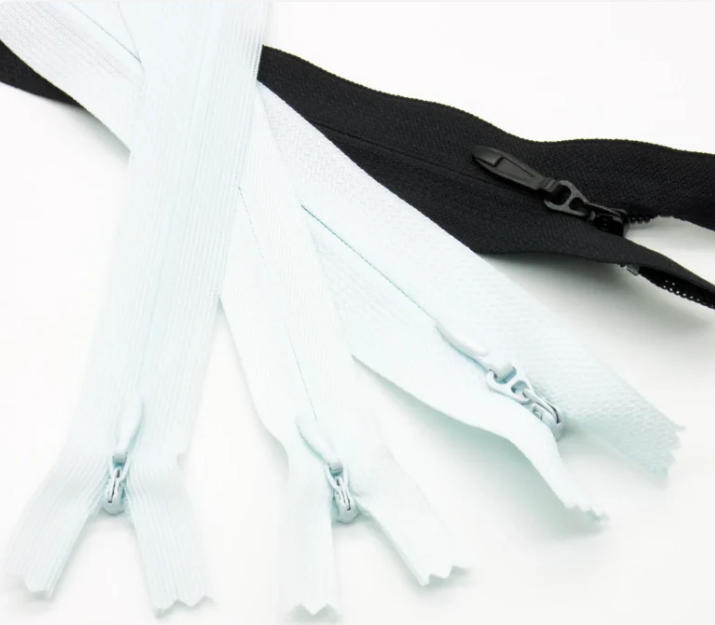
| Invisible Zipper Slider | Designed to minimize visible zipper components when closed | Dresses, skirts, cushions, home textiles | Creates a clean appearance and improves product aesthetics |
6. Material Quality
The material quality of the nylon really impacts zipper performance. If the nylon coils are high quality, they tend to give better wear resistance and smoother movement, plus they last longer
Also, the zipper tape should have enough strength to keep a firm connection with the product fabric. If the tapes are weak, the zipper can separate even when the coil and slider are strong
For high-performance uses, zipper manufacturers should choose products made using reliable materials and backed by strict quality control
7. Match Flexibility with Product Design
One of the biggest perks of nylon zippers is how flexible they are. This trait makes them a good pick for items where you need bending, or even more curved design decisions, and still have the zipper cooperate instead of fighting back.
Stuff like clothing, sports gear, and soft bags often does well with flexible nylon zippers because the zipper can follow the shape of the item, without messing up comfort or making the look feel off.
That said, if you go too far with flexibility, it might not work for uses where you really need top structural strength. So the zipper’s flexibility has to be balanced against how strong the whole product needs to be, in practice, not only in theory.
8. Appearance and Customization Needs
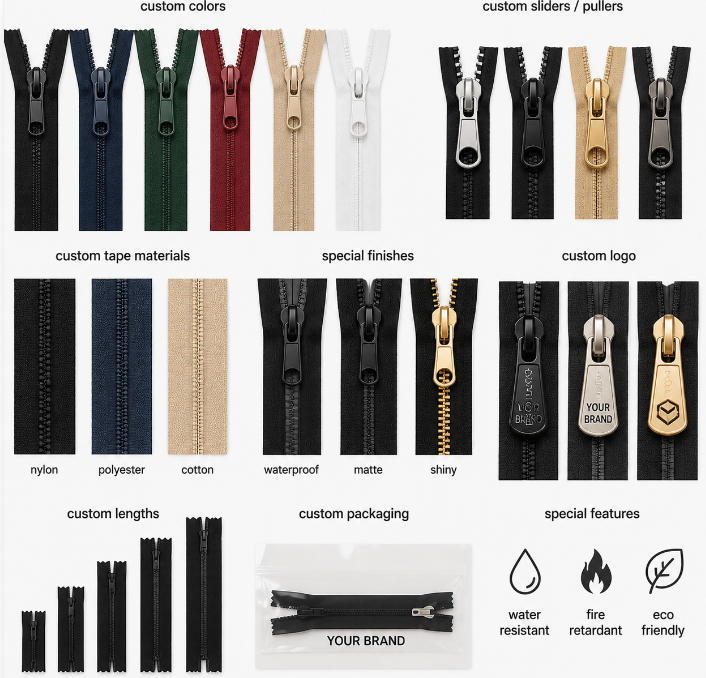
When it comes to consumer products, appearance matters more than people think during zipper selection. The zipper should match the product’s overall appearance and also support the brand image.
Nylon zippers can be found in many colors, finishes, and styles. Custom zipper manufacturers can provide the various options of zipper tape colors, the puller and slider components, and even small decorative details to fit the intended product design.
Fashion products, premium luggage, and outdoor equipment often end up using customized nylon zippers to make the appearance feel more polished while still keeping dependable performance there, even in everyday wear.
9. Balance Cost and Performance
Cost also ends up affecting which zipper people choose. Still, if you pick the absolute lowest-price option, durability can drop, and then replacement expenses may rise later.
A higher-quality nylon zipper might cost more upfront, but it tends to deliver steadier reliability, smoother movement, and a longer service life overall. For items where buyers care about satisfaction plus durability, putting money into the right zipper quality level can end up being better long-term value.
Summary
- Lightweight applications such as clothing and accessories require flexible and attractive zippers,
- Luggage, outdoor equipment, and industrial products demand stronger and more durable nylon zipper solutions.
Future Trends in Nylon Zipper Development for Different Applications
Looking ahead, nylon zipper development will likely emphasize stronger durability, more sustainable materials, added functionality, and deeper customization. This is because different industries keep changing, and the demand for tailored solutions keeps growing.
In apparel and fashion, manufacturers are working on lighter, smoother, more elegant nylon zippers with improved designs and eco-friendly materials, even if a lot of the details are moving quickly and people notice it mostly in daily use. For outdoor gear and luggage, the coming nylon zipper trend will lean toward extra strength, better water blocking performance, abrasion resistance, and overall reliability during harsh situations where conditions change fast.
Since buyers keep pushing for more sustainable options, recycled nylon inputs and low-impact manufacturing methods are likely to show up more often. Newer coating approaches should also boost protection against dampness, chemicals, and temperature swings, which means nylon zippers will keep getting adopted in industrial use, automotive builds, and marine products.
Smart manufacturing and automated inspection tech will also aid with zipper consistency, and that helps overall performance. In the future, you may see tailored nylon zippers using specialized materials, shades, and functions, which give more use-case aligned solutions. That means better results for clothing, bags, outdoor gear, and even industrial items.
Final Thoughts
Choosing the right nylon zipper for a Specific application means doing a thorough review of what the product needs, the zipper size, strength, material quality, the environmental conditions, and your design preferences. If manufacturers match zipper traits to real application needs, they can raise product performance, reliability, and customer satisfaction.