
What Are Carabiners Used For? A Guide to Common Applications
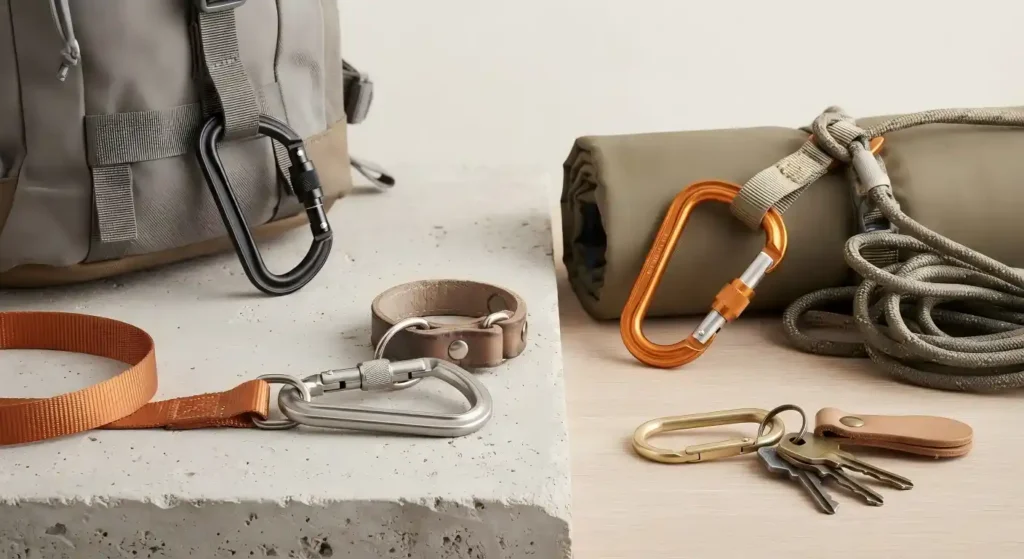
Carabiners are small metal clips with a spring-loaded gate, making it easy to attach and remove items. They are best known for climbing, but today they are used in many other products, including bags, backpacks, pet accessories, outdoor gear, keychains, and fashion items.
However, similar-looking carabiners can serve very different purposes. A carabiner used on a backpack, for example, may look almost the same as one designed for climbing, but they are not necessarily made to handle the same loads or meet the same requirements. The right choice depends on how the hardware will be used.
So, what are carabiners actually used for? In simple terms, they can be used either for secure load-bearing connections or for everyday attachment and convenience. Understanding the difference is important when selecting carabiner hardware for a specific product.
What Are Carabiners Commonly Used For?
Carabiners were first developed for climbing and other activities where equipment needs to be connected securely. As their simple spring-loaded gate proved useful beyond climbing, carabiners gradually became common in a much wider range of products.
Although these products may use similar-looking carabiners, the requirements are not the same. A climbing carabiner needs to handle safety-critical loads, while a carabiner used on a bag or keychain may only need to provide a convenient and durable attachment point.
Climbing and Safety Equipment
Climbing is one of the most common applications for carabiners. Climbers use them to connect ropes, harnesses, protection devices, and other equipment during activities such as belaying, anchoring, and rappelling.
Because these connections can involve significant loads, climbing carabiners are built to meet specific strength and safety requirements. Their shape and gate design can also vary depending on how they are used. For example, some designs are better suited to belaying, while others are used for anchoring or connecting equipment.
It is important to keep this in mind when choosing carabiner hardware: a carabiner is not automatically suitable for climbing just because it looks like one.
A decorative clip on a bag or keychain may have a similar shape, but it is not designed to support a person. Carabiners used for climbing, rescue, or fall protection should be specifically designed, tested, and certified for the intended application.
The International Climbing and Mountaineering Federation (UIAA) also provides industry standards and safety references for climbing equipment.
Bags and Backpacks
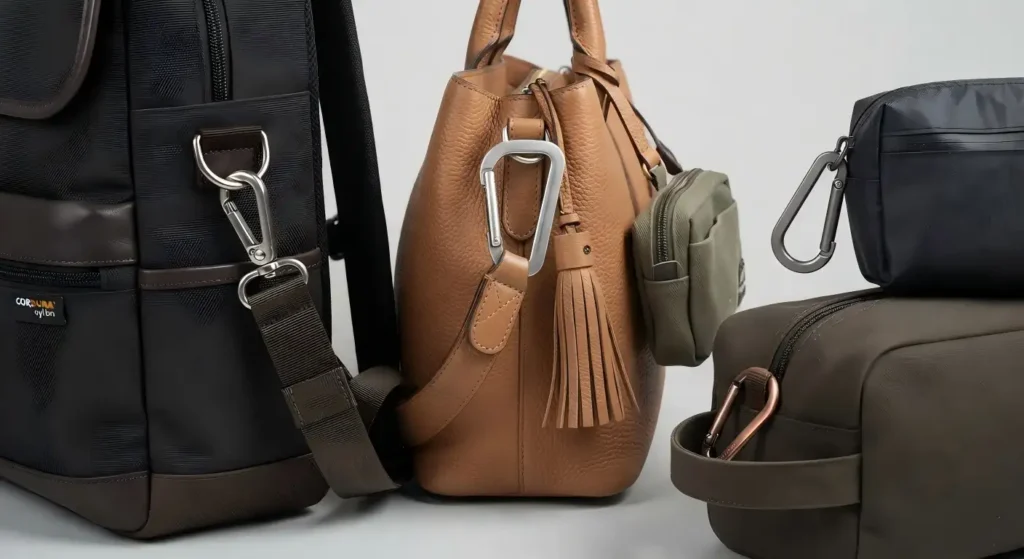
Outside climbing, carabiner-style hardware is widely used on bags and backpacks. In most cases, it is there to make everyday items easier to attach and carry, rather than to handle safety-critical loads.
For example, a backpack may use a carabiner to hold a water bottle, pouch, key set, small accessory, or removable strap. Common applications include:
- Attaching accessories to the outside of a bag
- Connecting removable straps or components
- Hanging small personal items
- Adding extra attachment points
- Connecting internal accessories
For bag manufacturers, carabiners can also be selected to match the look of the finished product. Different sizes, shapes, finishes, and colors can be used to coordinate with other hardware on the bag.
On fashion bags and lifestyle products, this makes the carabiner more than just a functional part. Its finish and overall design can also affect the appearance of the product.
Outdoor and Camping Gear
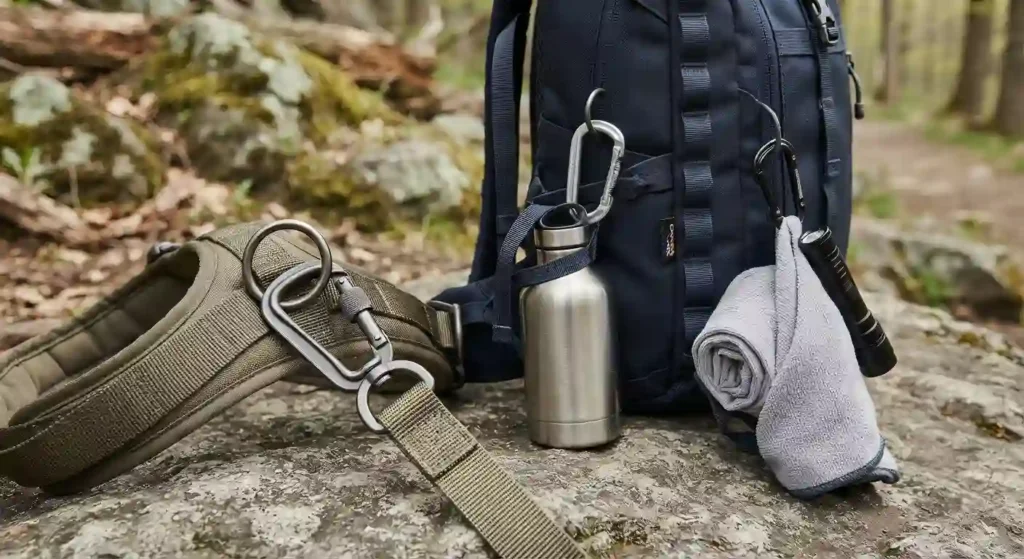
Carabiners are also common in outdoor products, especially when small items need to be attached, organized, or kept within easy reach.
For example, accessory carabiners can be used to attach items to a backpack, organize cords, connect lightweight gear, or temporarily secure equipment while camping or hiking.
They are especially convenient for items that need to be taken on and off regularly. Rather than fixing an accessory permanently, a carabiner provides a connection that can be opened and closed whenever needed.
The type of carabiner still matters. A clip used for a small camping accessory does not have the same requirements as hardware designed to support a climber. When selecting carabiners for outdoor products, manufacturers should consider the expected load and choose hardware that matches the intended use.
Pet Products
Pet products are another common application for carabiner-style hardware. Dog leashes, harnesses, collars, pet bags, and other accessories may use metal clips to connect different parts of the product.
Because these products are handled regularly, the clip needs to be easy to operate and durable enough for repeated use. Depending on the product, manufacturers may look at factors such as:
- Smooth opening and closing
- Appropriate size and weight
- Resistance to wear and corrosion
- A secure connection during normal use
- A finish that suits the overall product design
The right size also depends on the application. A small clip may work well for a lightweight pet accessory, while a dog leash may require a larger, more robust design. Choosing the right hardware is therefore more about matching the clip to the product and expected use than simply selecting the largest option.
Keychains and Promotional Products
Small carabiners are widely used for keychains, promotional items, and branded accessories. Their compact size makes them easy to carry and convenient for attaching keys or other small items. The spring-loaded gate also allows items to be added or removed without taking apart the connection.
In promotional products, the carabiner can be part of the product’s overall branding. Manufacturers can choose different sizes, colors, surface finishes, and logo treatments to match a company’s visual identity or the design of the promotional item.
These applications usually focus on everyday convenience and appearance rather than high load capacity. Lightweight accessory carabiners are often a practical choice when the product needs to be compact, easy to carry, and cost-effective, without the strength requirements of climbing hardware.
Fashion and Lifestyle Products
Carabiners are also used in a range of fashion and lifestyle products, including handbags, wallets, apparel accessories, small pouches, and tech accessories. Depending on the product, the carabiner can provide a practical attachment point while also becoming part of the overall design.
Manufacturers can choose from different shapes, finishes, and colors to suit the style of the product. A plain metal finish may work well with a simple, industrial look, while a colored or customized finish can be matched to a specific collection or product line.
This makes carabiners a useful option for products where the hardware is meant to be seen. The clip does not have to be purely functional; its size, shape, and finish can also contribute to the final appearance of the product.
Why Are Carabiners Used in So Many Products?
Carabiners work well in many products because they are simple to operate, easy to reuse, and available in a wide range of designs.
Easy Attachment and Detachment
The spring-loaded gate makes it quick to attach or remove an item. This is especially useful for accessories that need to be taken on and off regularly.
Compact and Functional Design
A carabiner provides a convenient connection point without taking up much space. This makes it suitable for bags, pet accessories, keychains, and other products where a compact design is preferred.
Reusable Connection
A carabiner can be opened and closed repeatedly, unlike a fixed attachment. This is useful when accessories or components need to be removed, replaced, or repositioned.
Flexible Appearance
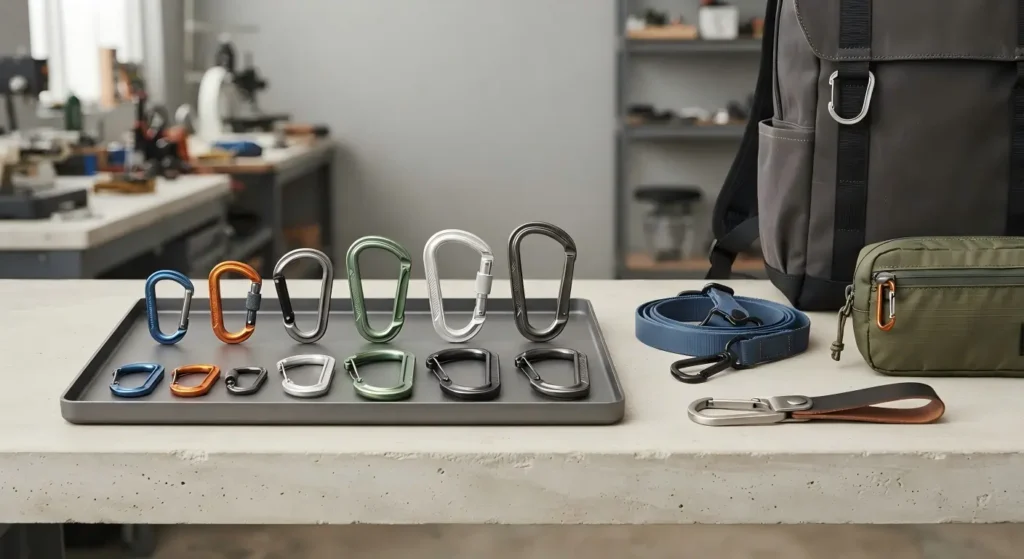
Carabiners are available in different sizes, shapes, materials, colors, and surface finishes. Manufacturers can select the hardware based not only on its function but also on how well it fits the overall product design.
These practical features have helped carabiners become common in products well beyond their original use in climbing.
Are All Carabiners Suitable for the Same Use?
No. A climbing carabiner and an accessory carabiner may look similar, but they are designed for different applications.
Climbing and safety-rated carabiners are made for situations where strength and reliable performance are critical. They are designed, tested, and certified according to the requirements that apply to their intended use.
Accessory carabiners, on the other hand, are commonly used on bags, keychains, pet products, promotional items, and similar products. For these applications, factors such as size, weight, appearance, corrosion resistance, and ease of attachment may be more relevant.
An accessory carabiner should not be used for climbing, fall protection, rescue work, or other life-safety applications unless it has been specifically designed, tested, and certified for that purpose.
For manufacturers developing a new product, the starting point should be the intended use. Consider the load, operating conditions, and safety requirements first, then select a carabiner that is designed for those conditions.
Custom Carabiners for Different Applications
Because carabiners are used in many different products, standard hardware may not always match a manufacturer’s requirements. The size, shape, material, finish, color, and branding may need to be adjusted to suit the product.
For bags, pet products, outdoor accessories, and lifestyle goods, these details can affect both how the hardware works and how the finished product looks.
Luxzipper provides custom metal hardware for manufacturers that need carabiners and other components made for specific applications. Depending on the project, customization can include the hardware design, surface finish, branding, dimensions, and production requirements.
When selecting a carabiner, the application should come first. A handbag may need a lightweight clip with a particular finish, while a pet leash may require a more robust connection. A promotional keychain, meanwhile, may place more emphasis on size, appearance, and cost.Carabiners are no longer limited to climbing equipment. They are now used across bags, outdoor gear, pet products, keychains, fashion accessories, and many other consumer products where a convenient and reusable connection is needed.