
Clothes or Jacket Zipper Broken? How to Fix the 5 Most Common Problems
A broken zipper can turn a perfectly good jacket, windbreaker, or down coat into something you cannot use properly. Sometimes the slider simply gets stuck. In other cases, the teeth separate, the pull comes off, or the zipper tape starts to tear away from the fabric.
Before replacing the entire zipper, it is worth identifying what has actually gone wrong. Some problems can be fixed in a few minutes, while others are better handled by replacing the zipper or taking the garment to a professional.
This guide covers five common zipper problems and explains when repair makes sense and when replacement is the better choice.
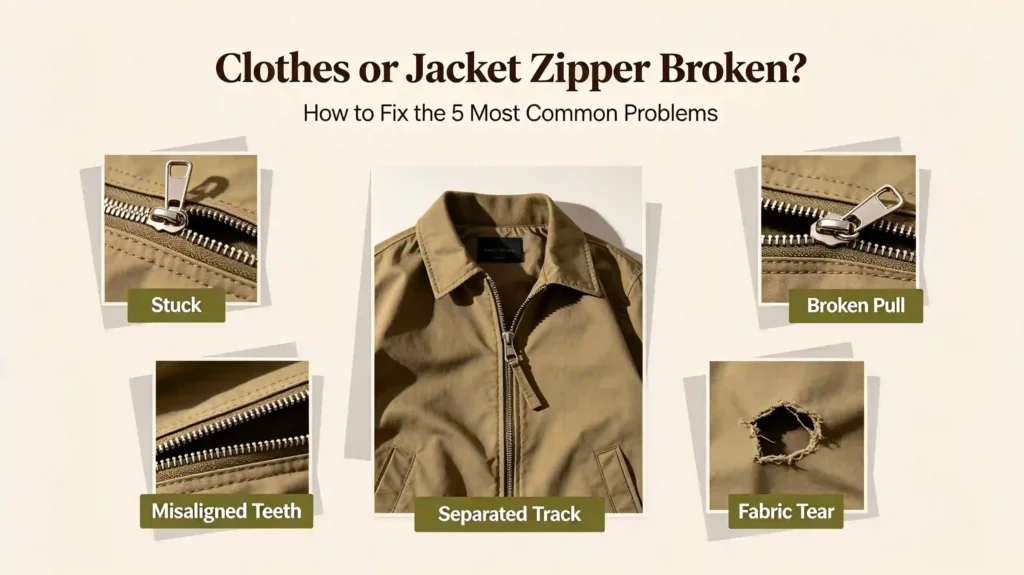
Table of Contents
Quick Check: What Is Wrong With Your Zipper?
Before trying to fix it, look closely at the zipper and identify the problem:
- The zipper is stuck and will not move. The slider catches on the fabric or feels unusually tight.
- The zipper teeth are misaligned or keep separating. The zipper closes but opens again behind the slider.
- The slider has come off or is damaged. The pull tab may still be attached, but the slider no longer works properly.
- The zipper tape is loose, torn, or coming away from the fabric. The teeth themselves may still be fine.
- The whole zipper is old, rusty, or difficult to use. It may work occasionally but no longer closes smoothly or securely.
Once you know which problem you have, the repair is usually much easier to decide.
1. The Zipper Is Stuck and Will Not Move
A stuck zipper does not necessarily mean the zipper is broken. Fabric caught inside the slider is one of the most common causes, especially with lightweight jackets and padded coats.
Start by stopping before pulling harder. Check both sides of the slider for trapped fabric or loose threads. Gently pull the fabric away while moving the slider back in small movements.
If there is no fabric caught, a small amount of zipper lubricant can help. A zipper-specific lubricant is preferable, but a small amount of candle wax or graphite can sometimes reduce friction on suitable metal zippers. Apply only a little and work the slider back and forth slowly.
If the slider still refuses to move, or the teeth are visibly bent, forcing it may cause permanent damage. At that point, repair is less likely to be successful.
2. The Zipper Teeth Are Misaligned or Keep Separating
If the zipper closes but immediately separates again, the problem may be with the slider rather than the teeth. A worn or slightly loose slider may no longer bring both rows of teeth together properly.
First, open the zipper and inspect the teeth. If several teeth are bent or missing, do not try to force them back into place. For a minor alignment problem, you can carefully straighten a slightly bent tooth with small pliers.
A loose slider can sometimes be adjusted by gently squeezing its sides with pliers. Make very small adjustments and test the zipper after each one. Applying too much pressure can make the slider too tight or damage it.
If the zipper continues to separate after adjustment, or several teeth are missing, replacing the slider or the complete zipper is usually more reliable.
3. The Zipper Slider Has Come Off or Is Damaged
A missing or damaged slider is often one of the easier zipper problems to repair, provided the zipper teeth and tape are still in good condition.
When replacing the slider, the new one must match the original zipper. Check the zipper type, tooth size, and construction before buying a replacement. A slider that looks similar may still be the wrong size and fail to engage the teeth correctly.
To install a new slider, the top zipper stop usually needs to be removed first. The new slider can then be positioned onto the zipper tape and tested before installing a replacement stop.
This is relatively straightforward on some jackets, but it can be tricky on waterproof, concealed, or heavy-duty zippers. If the zipper is attached to an expensive down jacket or technical outerwear, professional repair may be safer than damaging the garment while removing the original stop.
If both the slider and teeth are badly worn, replacing the entire zipper may make more sense than replacing individual parts.
4. The Zipper Tape Is Loose or Torn
Sometimes the teeth and slider are still working, but the fabric tape holding the zipper to the garment has started to separate. This often happens after repeated pulling, washing, or heavy use.
If only a small section of stitching has come loose, you can usually sew it back into place with a strong polyester thread. Keep the stitches close to the original seam and make sure they do not interfere with the slider.
A small tear in the zipper tape is more difficult. Sewing over severely damaged tape may only provide a temporary fix because the surrounding material can continue to tear.
If the tape is badly ripped, the zipper has separated from a large section of the jacket, or the garment needs to withstand frequent outdoor use, professional repair or complete zipper replacement is a better option.
After a temporary repair, avoid putting excessive tension on the zipper. The repaired section may not be as strong as the original construction.
5. The Zipper Is Old, Rusty, or No Longer Works Properly
An old zipper can develop several problems at once. The teeth may become rough, the slider may loosen, and metal components may show signs of rust or corrosion.
For minor surface rust, cleaning and drying the zipper carefully may improve its movement. A suitable lubricant can also help reduce friction. However, this is generally a short-term solution.
If the teeth are heavily corroded, repeatedly separating, missing, or no longer engaging correctly, replacing the zipper is usually more practical than continuing to repair it.
When choosing a replacement, pay attention to more than just the length. Consider the tooth type, zipper size, material, slider style, and whether the garment requires a waterproof or heavy-duty zipper. For outerwear, the zipper also needs to suit the weight and construction of the fabric.
How to Keep Your Zipper Working Longer
Regular maintenance can prevent many zipper problems. Keep the zipper reasonably clean and remove dirt, sand, and loose threads before they build up around the teeth.
Avoid pulling a zipper sideways or forcing it when the garment is under tension. On jackets and coats, make sure the two sides are properly aligned before pulling the slider.
Different zipper materials also need slightly different care. Metal zippers are durable but can corrode if exposed to moisture. Plastic and molded-tooth zippers are lighter and generally resistant to rust, but their teeth can still break if excessive force is applied. Coil zippers are flexible and common in lightweight clothing, but damaged coils are usually difficult to repair individually.
Should You Repair or Replace the Zipper?
Whether you should repair or replace a zipper depends mainly on the extent of the damage. A stuck slider, minor misalignment, or a loose slider can often be fixed without replacing the whole zipper. But when the zipper tape is badly torn, several teeth are missing, or the zipper has become heavily worn, replacement is usually the better choice.
For an expensive jacket or technical outdoor garment, professional repair may be worth considering. Trying to replace the zipper yourself can cause further damage if the construction is complicated or the replacement part does not match properly.
Regular repairs can keep a zipper working for a while, but they cannot make a poor-quality zipper last indefinitely. The material, tooth precision, and slider construction all affect how smoothly the zipper works and how long it will last. For manufacturers, choosing the right zipper at the product design stage can prevent many of these problems later.If you manufacture clothing, bags, outdoor gear, or other products that use zippers, you may also need to consider the zipper size, material, tooth type, and slider design for different applications. Contact us if you need help selecting a suitable zipper for your product.