
How to Choose the Right Zipper Manufacturer
Selecting the right zipper manufacturer is a call that can kind of steer the durability, function and overall quality of what you end up selling. Even though zippers look like a small bit in the mix, they are actually pretty crucial in apparel, luggage, outdoor gear, and industrial items. If a zipper is made carelessly, it can mess up the whole product, but if it’s made well, it can boost user comfort, and it helps your brand standing in a noticeable way.
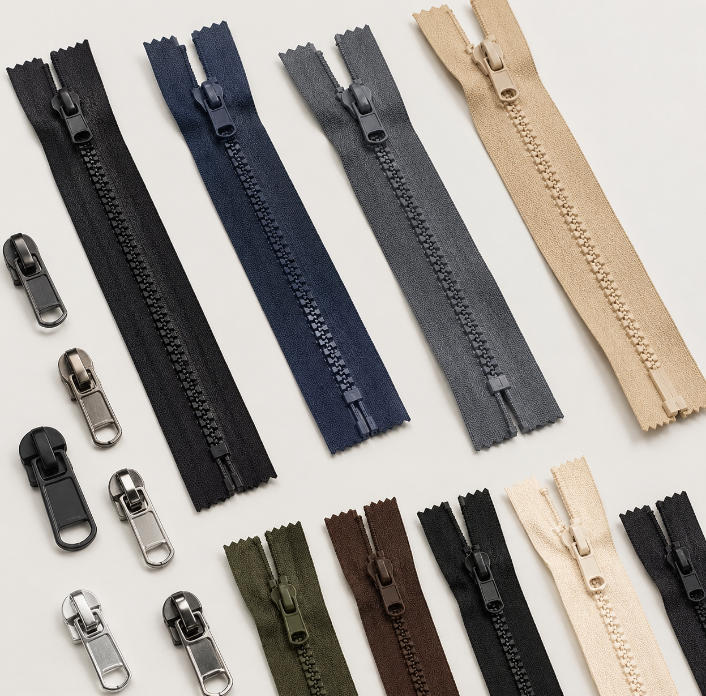
Table of Contents
The Role of Zipper Manufacturers in the Supply Chain
Zipper manufacturers turn raw materials into finished fastening systems that work as they should. These systems usually involve parts like teeth, tape, sliders, and stops, and they all have to align with precision, not loosely. But it’s not only about production, because many companies also support design adjustment, help with material choice, and run performance checks. So they aren’t just senders of parts, they can be technical partners in the whole product design phase. That matters a lot in fields where long life, weather resistance, or visual polish is key, outdoor clothing for example, or premium fashion pieces.

Types of Zippers Produced by Manufacturers
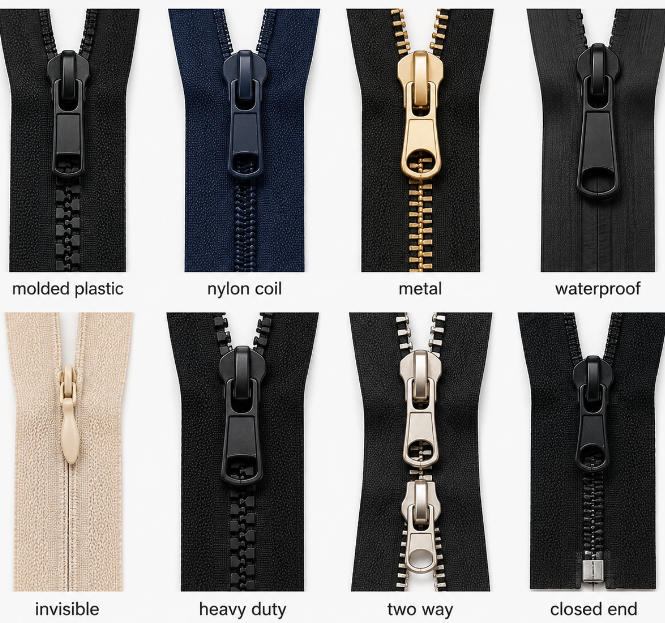
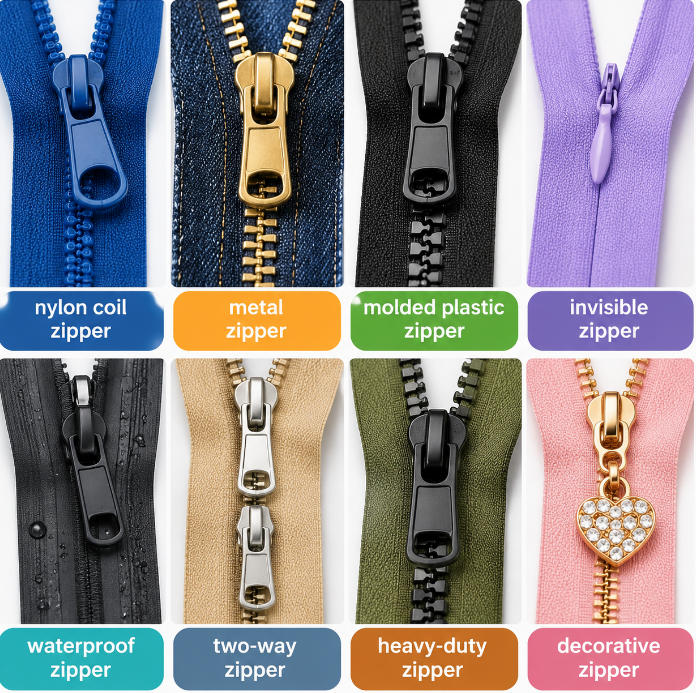
Manufacturers typically produce various types of zippers to meet diverse application needs.
| Zipper Type | Material | Key Features | Typical Applications |
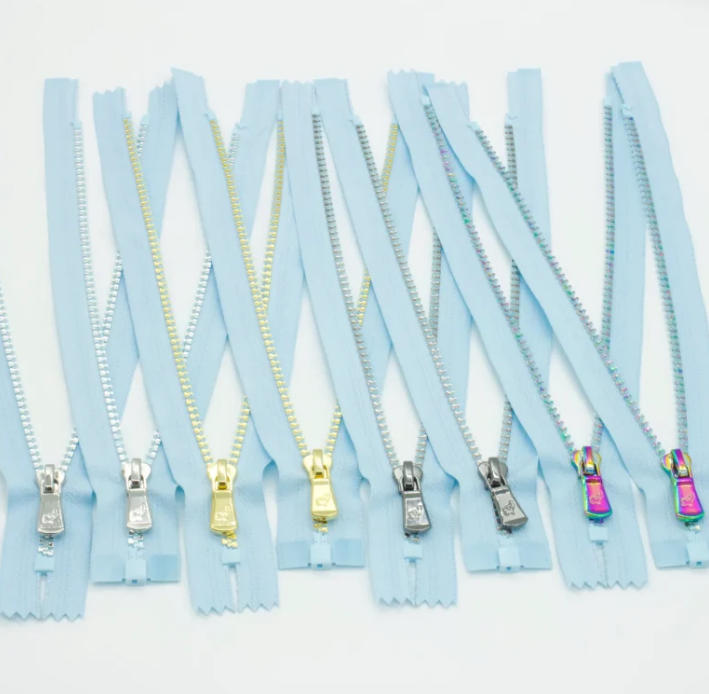
| Metal zippers | Brass, aluminum, or nickel teeth mounted on fabric tape | High strength, durable, premium appearance | Jeans, jackets, luggage, leather goods |
| Nylon coil zippers | Continuous nylon coil sewn onto tape | Flexible, lightweight, smooth operation | Garments, sportswear, backpacks |
| Plastic molded zippers | Individually molded plastic teeth attached to tape | Corrosion-resistant, colorful options | Outdoor gear, children’s clothing, bags |
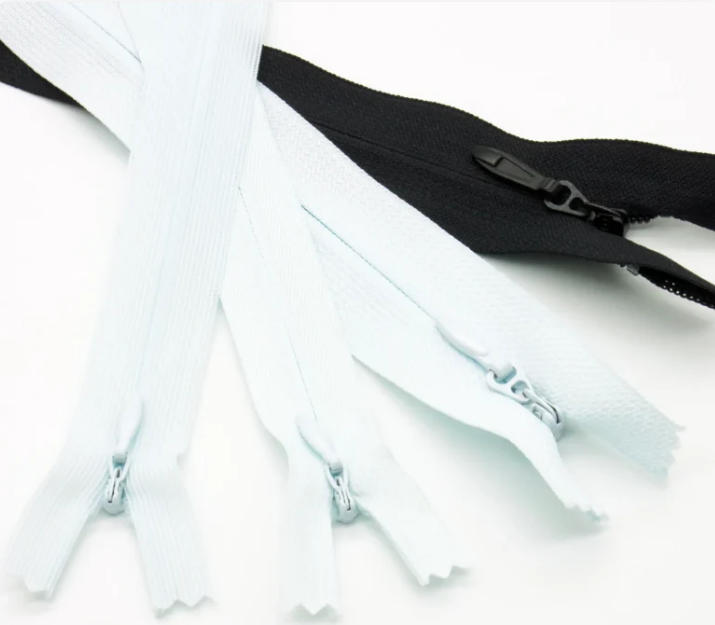
| Invisible zippers | Fine nylon coil hidden behind fabric tape | Concealed design for aesthetic finish | Dresses, skirts, formal wear |
| Waterproof zippers | Coated or laminated coil/teeth with sealing film | Water and moisture resistance | Rainwear, outdoor jackets, marine gear |
| Fire-resistant zippers | Special heat-resistant metal or treated materials | High-temperature durability and safety compliance | Protective clothing, industrial uniforms |
| Two-way zippers | Dual sliders on single or double chain systems | Flexible opening from top and bottom | Long coats, sleeping bags, tents |
Key Manufacturing Processes of Zippers
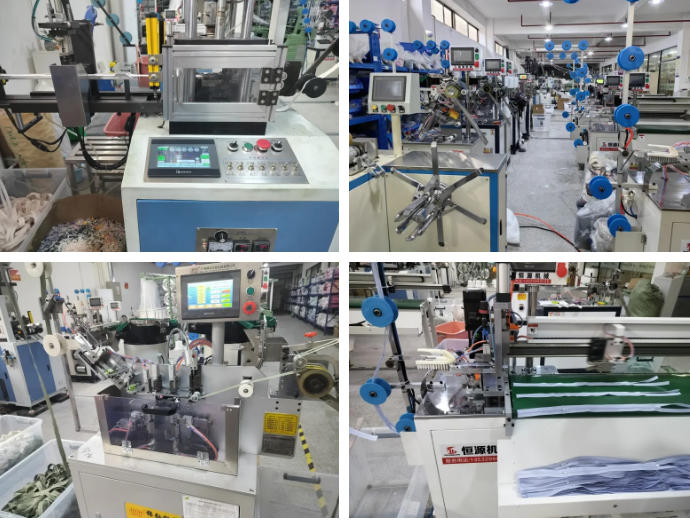
The production of zippers involves several precision-controlled steps.
| Manufacturing Stage | Process Description | Key Materials | Quality Focus |
| Raw material preparation | Selection and processing of base materials for different zipper types | Polyester yarn, metal alloys (brass/aluminum), plastic resins | Material consistency, purity, strength |
| Tape weaving / forming | Fabric tape is woven or formed as the base structure for zipper attachment | Weaving machines, polyester/cotton fibers | Uniform width, tensile strength |
| Teeth production (metal/plastic/coil) | Formation of zipper teeth depending on type | Metal stamping machines, injection molding machines, nylon extrusion systems | Tooth shape accuracy, durability |
| Teeth attachment | Teeth are attached to tape in precise alignment | Chain forming machines, ultrasonic or mechanical bonding systems | Alignment accuracy, spacing consistency |
| Chain assembly | Continuous zipper chain is formed by joining both sides | Automated assembly lines | Smooth engagement, consistent pitch |
| Slider manufacturing | Sliders are produced separately and designed to match zipper type | Die-casting machines, polishing equipment | Smooth movement, dimensional precision |
| Top & bottom stop installation | Stops are added to prevent slider detachment | Crimping tools, stamping machines | Secure locking, positioning accuracy |
| Cutting and sizing | Zippers are cut into required lengths | Automatic cutting machines | Length accuracy, clean edges |
| Dyeing / finishing | Coloring and surface treatment for appearance and durability | Dyeing tanks, coating systems | Color uniformity, fade resistance |
| Quality inspection | Final inspection for function and defects | Automated inspection systems, manual testing | Smooth operation, defect-free performance |
| Packaging | Sorting, labeling, and packing for shipment | Packaging machines, labeling systems | Product protection, traceability |
Key Factors to Consider for Choosing the Right Zipper Manufacturers
1. Understanding Product Requirements Before Selection
One of the most important steps in choosing a zipper manufacturer is defining what your product actually needs, and not only what you think it needs. Zippers are not universal parts; their performance depends a lot on the application environment. A zipper used in lightweight fashion garments must act differently from a zipper used on outdoor tents or heavy-duty backpacks. Environmental exposure, load stress and how often it gets used all shape the technical requirements.
When the manufacturer understands your use case clearly, they can suggest suitable materials and internal structures. If this match is missing, even a high-quality zipper can underperform in daily use because it was not built for the right conditions.
2. Evaluating Manufacturing Capability and Technical Expertise
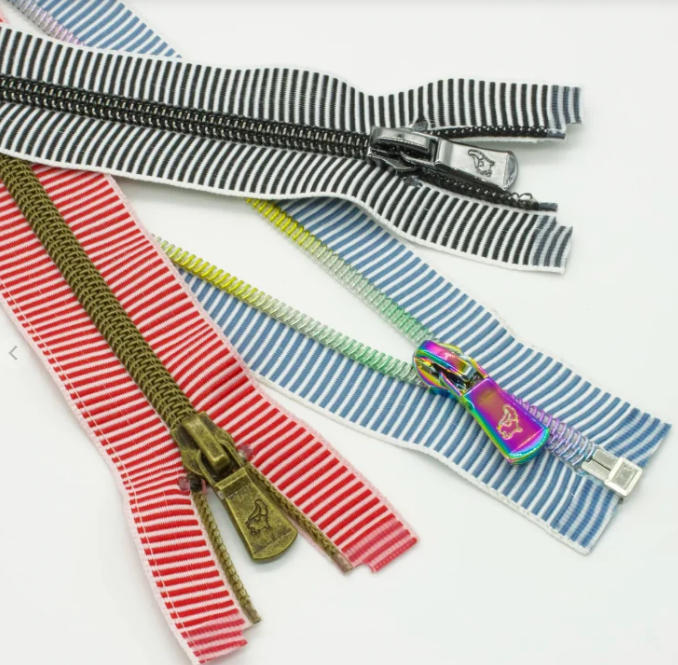
A solid zipper maker should show real technical depth and real production readiness, not just marketing. This means being comfortable with different zipper types like coil, metal, and molded plastic structures, plus having the capability to manage precision at every phase, even when the tolerance is tiny.
The better industry names usually run highly integrated production setups, where each manufacturing step is handled tightly. In practice this lowers batch-to-batch variation, and keeps the performance steady , which becomes crucial when you scale up volume.
Technical knowledge also shows up in application specific problem solving, like making the slider glide smoother , strengthening tensile performance without sacrificing flexibility, or upgrading corrosion resistance.
3. Quality Control and Testing Systems
Quality control is one of the most decisive things when judging zipper manufacturers. A dependable supplier should not just lean on the last look at the end; instead, they should carry out continuous checks across the whole production run.
That means running tests for zipper strength after repeated opening and closing cycles, measuring wear resistance against abrasion, and verifying that teeth or coils stay aligned in a steady way. Companies with more mature systems can spot problems early and prevent those defects from sliding into bulk production.
Without a strong quality control routine, even tiny inconsistencies can stack up into serious performance faults in the final items. That often shows up as product returns or customer dissatisfaction.
4. Customization Capability and Design Flexibility
Modern markets increasingly demand customization, making design flexibility an essential factor when selecting a manufacturer.
| Customization Area | Description | Importance | Typical Applications |
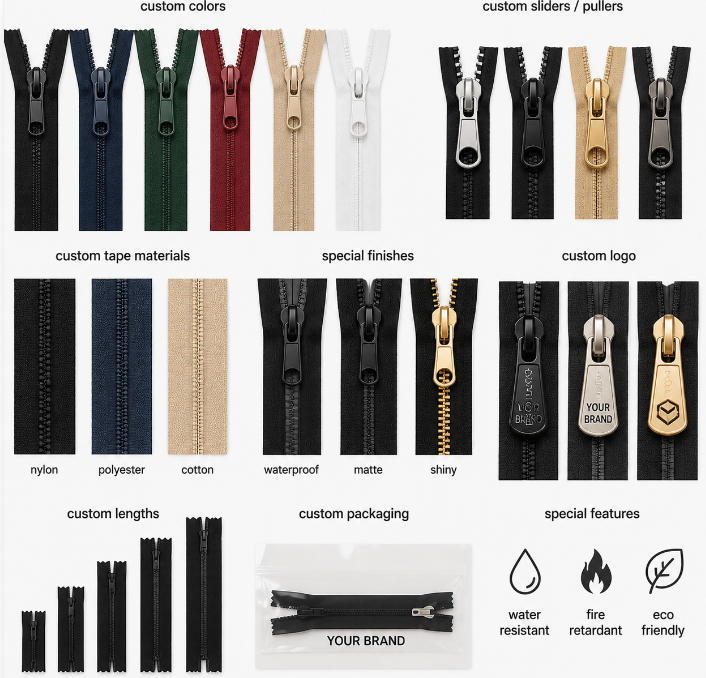
| Color & Dye Matching | Ability to match zipper tape and teeth colors with fabric or brand identity | Very High – ensures visual consistency and branding alignment | Fashion apparel, uniforms, accessories |
| Logo Branding on Pullers | Custom engraving, printing, or molding of brand logos on zipper sliders/pullers | High – strengthens brand recognition and product differentiation | Luxury goods, luggage, jackets |
| Waterproof Coatings | Application of coatings or laminated structures to prevent water penetration | Very High – enhances performance in harsh environments | Outdoor gear, sportswear, tents |
| Fire Resistance Treatment | Special treatment or materials that resist high temperatures or flames | Medium–High – critical for safety compliance in industrial use | Military gear, automotive interiors, safety clothing |
| Slider Design Customization | Modification of shape, grip, and functionality of zipper sliders | High – improves usability and product aesthetics | Fashion, bags, technical gear |
| Tape Material Selection | Choice of polyester, nylon, recycled fibers, or reinforced fabrics | Very High – impacts durability, flexibility, and sustainability | All zipper applications |
| Size & Length Adaptation | Custom production of different lengths and sizes for specific product designs | High – ensures compatibility with product structure | Apparel, luggage, upholstery |
| Eco-friendly Material Options | Use of recycled or biodegradable materials and sustainable production methods | Medium–High – increasingly important for brand sustainability goals | Sustainable fashion, eco-product lines |
5. Supply Chain Stability and Delivery Reliability
Even the best zipper has limited value if it cannot arrive when promised. Supply chain stability is a key topic. Manufacturers need the ability to keep output steady, particularly during peak demand seasons.
Large-scale manufacturers usually run multiple production facilities in different regions, and it reduces the chances of supply disruption, because the whole thing is not tied to one location. It also makes the operation more resilient when logistics get delayed or when there are raw material shortages.
Smaller manufacturers should still be checked, but not only for pricing or market name. You really need to look at their production planning strength, their inventory handling, and how fast they react during urgent orders. Otherwise, the timeline can slip, and then you notice the gap too late.
6. Pricing Strategy and Long-Term Value Consideration
Price is always part of the equation, but if you focus only on it you can miss expenses that show up later. A zipper that seems cheaper at first glance might feel like a bargain, yet it can bring higher failure rates, more returns, or even harm to the brand reputation. That kind of ripple is rarely free.
A better route is to judge total value. This includes durability, defect rates, production efficiency, and overall lifecycle performance. Higher quality manufacturers may charge a little more per unit, though they often lower operational risk and can cut long-term costs.
7. Compliance, Certification, and Sustainability Standards
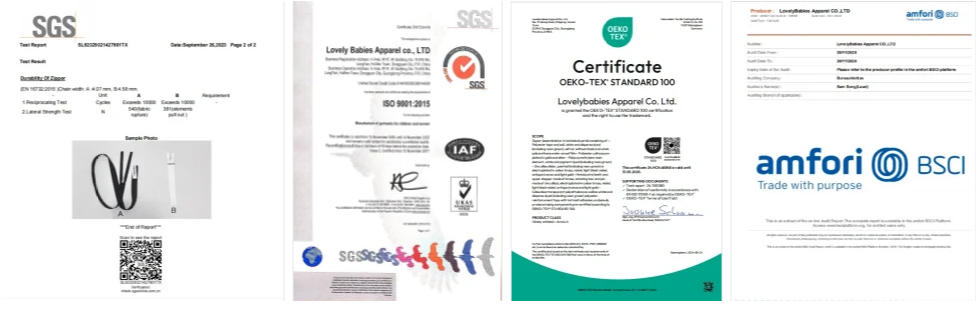
In global markets, keeping up with safety requirements and environmental rules is getting more and more important. Certifications such as ISO quality management systems, or textile safety standards help make sure the producer sticks to production practices that are recognized internationally. Even when the language is hard, the idea stays the same, documentation matters and audits matter.
Sustainability is also turning into a big selection factor. Many factories are switching toward eco-friendly materials, recycled fibers, and environmentally mindful dyeing methods. These moves can lessen the environmental footprint, but they also match the increasing customer preference for sustainable goods.
8. Communication Efficiency and Technical Support
Good communication between the buyer and the manufacturer is needed so production runs smoothly. A solid manufacturer should answer quickly when technical questions come up, provide sampling procedures that are easy to follow, and offer engineering guidance when problems appear. When communication is organized, revisions and adjustments feel less confusing, more predictable.
This collaboration becomes especially valuable during product development, where early feedback can prevent expensive design errors. Manufacturers that actively join in problem-solving often end up long-term strategic partners instead of just being basic suppliers.
Final Thoughts
Choosing the right zipper manufacturer means balancing overall quality, specialization, the degree of customization, cost, and reliability. The best manufacturer is not merely a supplier; it also becomes a durable ally that helps protect product quality, brand identity, and the stability of the supply chain. Spending time to assess technical capability, quality control mechanisms, and how quickly they respond to service requests will really improve your final product outcome.