
Aluminum vs Stainless Steel Carabiners: Which Material Fits Your Application?
Sourcing custom carabiners usually starts with the questions. Buyers ask which metal is stronger or more premium, when the real question is which one holds up for the specific job the product is doing. A camping brand shipping lightweight gear clips needs something different than a pet accessories company building leash hardware that has to survive rain, saliva, and daily wear for years.
Below is a practical breakdown of aluminum and stainless steel carabiners, covering strength, weight, corrosion resistance, and cost, so you can match the material to your application.
Table of Contents
Aluminum Carabiners: Strengths and Limitations
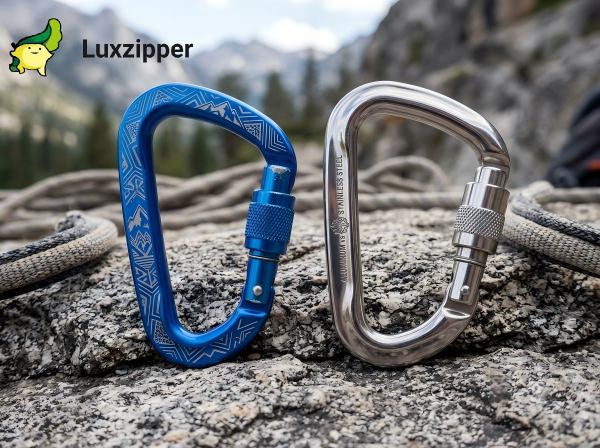
Aluminum is the default material people picture when they think of a carabiner, and that reputation is earned. It weighs roughly a third of what steel does, making it the natural choice anywhere weight matters to the end user: backpacking gear, keychains, gift-with-purchase items, and branded accessories that customers carry around all day.
On strength, aluminum carabiners built for real load-bearing use typically fall in the 20 to 30 kN range, depending on shape and gate design. That’s more than enough margin for most consumer applications, since the carabiner is rarely the weakest link in whatever system it’s attached to. Aluminum also anodizes well, giving brands a wide color palette along with a surface that takes laser engraving and printed logos cleanly, which matters a lot when branding is part of what sells the product.
Where aluminum runs into trouble is durability under repeated stress and exposure. It dents and deforms more easily than steel, and while it doesn’t rust in the traditional sense, it can develop surface oxidation and pitting if it’s regularly exposed to salt water or harsh chemicals. For a keychain that lives in someone’s pocket, none of this matters much. For hardware that’s dropped, dragged, or left outdoors for months at a time, it becomes a real consideration.
Stainless Steel Carabiners: Strengths and Limitations
Stainless steel takes the opposite trade-off. It’s heavier, often two to three times the weight of an equivalent aluminum piece, but it makes up for that with strength and resilience. Steel carabiners commonly test well above 40 kN, and some industrial-grade pieces are rated even higher, which is part of why steel remains the standard choice for rescue equipment and heavy rigging work.
The bigger advantage for most commercial buyers, though, is corrosion resistance. The chromium content in stainless steel forms a passive oxide layer on the surface that regenerates itself even after scratching, which is why it holds up so much better than plain aluminum in wet, humid, or salty conditions. That makes it the more sensible choice for pet leash hardware, marine accessories, or any outdoor product that’s going to sit outside in the elements rather than get put away after each use.
Cost and weight. Stainless steel is more expensive to produce and machine than aluminum, and the added weight isn’t ideal for products where the customer is expected to carry the item constantly. It’s also a somewhat less forgiving material during certain finishing processes, since engraving depth and plating adhesion need tighter control to get a clean, consistent result across a full production run.
Key Differences Aluminum vs Stainless Steel Carabiners
| Factor | Aluminum | Stainless Steel |
| Typical strength rating | ~20–30 kN | ~40 kN and above |
| Weight | Light (about 1/3 the density of steel) | Heavier, 2–3x aluminum |
| Corrosion resistance | Moderate; can pit or oxidize over time | High; self-healing oxide layer |
| Logo engraving / plating | Excellent, takes anodizing and engraving well | Good, but needs tighter process control |
| Typical cost per unit | Lower | Higher |
| Best suited for | Lightweight gear, keychains, promotional items | Outdoor hardware, pet accessories, industrial-grade OEM |
How Material Affects Custom Carabiners Logo Engraving and Finishing
Most buying guides skip this part, but it’s the one that actually affects your production run. Aluminum’s softer surface takes laser engraving cleanly and holds anodized color well across large batches, which is why most promotional and fashion-accessory carabiners are made from it. Stainless steel can be engraved and finished to a premium standard too, but it needs more precise laser settings, and for plated finishes, tighter control during application to avoid flaking or uneven coverage later on.
If your product line depends on consistent branding across thousands of units, raise this with your manufacturer before locking in a material. It affects both unit cost and how the finished piece looks after months of everyday handling.
Which Carabiner Material Fits Your Product Line?
- Promotional gifts and keychains — Aluminum is almost always the right call here. It’s inexpensive at scale, light enough to give away without cost concerns, and takes custom branding well.
- Outdoor and camping gear brands — Aluminum works for lightweight accessories, but if the product is marketed on durability, a stainless option gives you a stronger claim to back that up.
- Pet accessories — Stainless steel is generally the safer choice, given constant outdoor exposure and the wear that comes with daily use.
- Industrial or rescue-grade OEM products — Stainless steel, and only steel that meets recognized load ratings. Products marketed for safety-critical use should reference established standards such as ANSI Z359 in the U.S. or EN 12275 in Europe, and buyers sourcing for these categories should confirm certification documentation before placing a production order.
Choosing between aluminum and stainless steel really comes down to matching the material to what the product needs to survive and who’s going to use it. If you’re still weighing this for a specific product line, Luxzipper offers custom carabiners in both materials and can walk you through samples, MOQ, and lead times based on your application.